Published on 6/29/2026
|
Last update: 6/30/2026 01:41 (Mecca time)
After British Prime Minister Keir Starmer, leader of the Labor Party, announced his resignation from his position, Downing Street is preparing to receive the seventh prime minister in one decade, which is a large number for a country that has historically been known for the relative stability of its governments compared to its neighbors in the European Union countries, thanks to its simplified electoral system based on winning a majority of votes (a simple majority), as well as the nature of the adopted political system.
But that image was shaken as the United Kingdom entered a period characterized by political turmoil following the “Brexit” referendum, during which all prime ministers were unable to complete a full term in power, in a list that included David Cameron, Theresa May, Boris Johnson, Liz Terrace, and Rishi Sunak.
Although the United Kingdom has emerged within a few years as an arena of political polarization and an environment that conflicts with the stability of governments, it is not considered an exceptional case in Europe. So which countries change their leaders the most?
Romania is in the lead
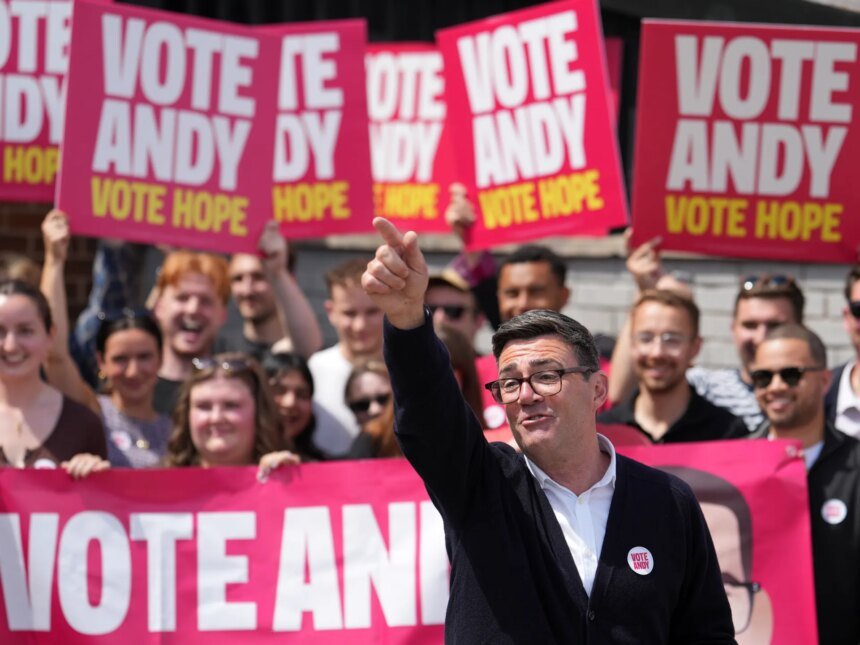
With Andy Burnham – the former Mayor of Greater Manchester – nominated to take over the leadership of the Labor Party, thus becoming the seventh British Prime Minister since 2016; The country finds itself at the center of debate today as “ungovernable” and has the highest rate of leadership turnover in Europe. But European political reality indicates that Britain is not alone in the fray.
A report published by the European Euronews network – which included prime ministers and any other position equivalent to it in governance and powers in European countries – indicates that Britain ranks third, shared with Austria, with seven prime ministers between 2016 and 2026. This investigation conducted by the network does not include interim prime ministers or those who secured a transitional period between one government and another.
Romania tops the list – alone and undisputedly – with eleven prime ministers during the same period, as the last prime minister who completed his full term in office dates back to 2008, noting that the prime minister in Romania shares his powers with the president at the top of the executive branch.
Bulgaria comes in second place with ten prime ministers due to years of political instability and the fragility of party coalitions, while Italy has confirmed its reputation as a politically volatile country with an average of one government per year since World War II, by coming in fourth place, equally with Latvia and Slovakia, with five prime ministers each.
Conflicting standards
However, this investigation process acknowledges the difficulty of comparisons in light of the complexities and differences in governance styles between parliamentary and presidential systems, and between the position of prime minister, chancellor and president, and the president who shares his powers with the prime minister, which is the identical model in France in particular.
These differences – along with the legal and constitutional conditions adopted for removing or replacing politicians – usually represent an element affecting the stability of leaders in their positions.

If we limit ourselves to the position of Prime Minister, France will occupy third place in the classification, as it witnessed nine changes at this level under the weight of the political paralysis that followed legislative elections in 2024 that did not result in a clear parliamentary majority, but rather created three ideologically disparate blocs, which led to a rapid succession of prime ministers, starting with Gabriel Attal, then Michel Barnier, then François Bayrou, all the way to the current Prime Minister, Sebastien Lecornu.
But returning to the position of president, France slides to the bottom of the ranking with only two presidents between 2017 and 2026, just like Spain and Portugal, which had two prime ministers in the same period.
government every year
The debate in Europe is not limited to the number of changes that affect heads of government or ministers, but also deals with the duration of the government as a whole. Returning to the British example, Liz Trass’ term in 2022 – for example – only lasted 49 days, which raises a legitimate question about the average tenure of governments in Europe.
To answer this question, an analysis conducted by the Pew Research Center (based in the United States) indicates a change – at least once – of governments in most European countries, from the end of World War II until 2022.
However, governments in countries such as Belgium, Finland and Italy often do not actually exceed one year. In these countries, the average term of government – since World War II – has been less than 365 days, that is, much less than the full constitutional term granted to the new government.
When a government fails – whether through withdrawal of confidence, resignation, or restructuring the Council of Ministers – a new government is formed in one of two ways: either through the formation of party coalitions or through early elections.
Interim governments
This situation leads to the emergence of temporary governments whose duration varies from one country to another.
The Netherlands has had the largest number of provisional governments of any country in this analysis, with 11 since World War II.
Belgium and Bulgaria come in second place in terms of the number of interim governments, with nine and eight governments, respectively. They are followed by Finland and Austria, with seven governments each.
However, Belgium is distinguished by having the longest interim government among all the countries included in the study, as Yves Leterme’s third government served as a caretaker government for approximately a year and a half (541 days) between 2010 and 2011.