Published on 6/30/2026
|
Last update: 10:34 (Mecca time)
There were conflicting reports about holding American-Iranian meetings in Qatar to discuss technical issues in the Islamabad Memorandum of Understanding, at a time when Tehran threatened to obstruct ships crossing outside specific routes in the Strait of Hormuz, amid its assertion that the negotiations took place in coordination with Supreme Leader Mojtaba Khamenei.
US President Donald Trump said that an American team is preparing to travel to the Qatari capital, Doha, to participate in a session of talks that will be held today, Tuesday.
In statements from the White House, Trump added that the Doha meeting may be important and that this will be known later.
For her part, White House spokeswoman Carolyn Levitt said that US envoys Steven Witkoff and Jared Kushner will go to Doha to hold high-level meetings this week.
In turn, Politico quoted two informed sources as saying that Witkoff told lawmakers in Congress that the technical team concerned with the nuclear negotiations was on its way to Qatar.
The two sources added that Secretary of State Marco Rubio and Witkoff also assured lawmakers in Congress that the goal is to negotiate a final agreement that prevents Iran from retaining its highly enriched uranium.
The Washington Post reported that the United States and Iran have already discussed technical issues, and that a number of American officials specialized in various aspects of the negotiations will be present in Qatar, and others will participate remotely.
A diplomat familiar with the negotiations also confirmed to Agence France-Presse that technical teams will meet in the coming days, and that communication channels to contain the problems “are still working.”
A US official told the agency, “Technical talks are scheduled to continue on all areas of the memorandum of understanding.”
Iranian denial
In Tehran, the Iranian Ministry of Foreign Affairs said that an Iranian delegation will visit Doha to follow up on the implementation of the terms of the memorandum of understanding, and that no negotiating meetings will be held at any level with the American side in the coming days.
The Iranian Foreign Ministry added that the Iranian delegation will follow up in Doha on Washington’s implementation of the two provisions related to lifting oil sanctions and frozen funds.
The dispute over the possibility of holding meetings between the two sides highlights the fragility of an agreement they signed – on June 17 – to end a war that disrupted global oil flows through the Strait of Hormuz, and presented a political dilemma for Trump ahead of the midterm congressional elections scheduled for next November.
There is a period of no less than 60 days to implement the 14-item memorandum of understanding between the United States and Iran to extend the ceasefire that entered into force last April.
During this period, the two sides will also discuss Iran’s nuclear program, its research programs, and its stock of highly enriched uranium, which Trump wants to transfer from Iran, and negotiate to conclude a permanent truce. But progress is witnessing obstacles, with both sides exchanging accusations of violating the terms of the agreement.
Negotiate in coordination
In this context, Iranian President Masoud Pezeshkian stressed that all stages of negotiations with the United States took place in full coordination with the Supreme Leader and within the approved mechanisms.
He said, “We will not back down from our rights, interests, and national principles in negotiations with Washington under any circumstances,” as he put it.
He considered it “unfortunate that some movements are trying to distort the image of the negotiating team and question national decisions,” in light of Iranian political parties criticizing negotiations with the United States.
The Iranian President explained that Tehran is using all its capabilities to pursue crimes committed by America and Israel, saying, “We will not back down from this path.”
Mojtaba Khamenei has not appeared in public since he assumed the position of Supreme Leader after his father, Ali Khamenei, was killed in an Israeli-American raid at the beginning of the war on February 28, amid reports that he was injured in the raid that killed his father.
The Supreme Leader revealed – in a written statement published on Iranian television – that he agreed to the agreement with the United States after Pezeshkian assured him that Tehran would not give up its rights during the negotiations with Washington.
Hormuz trails
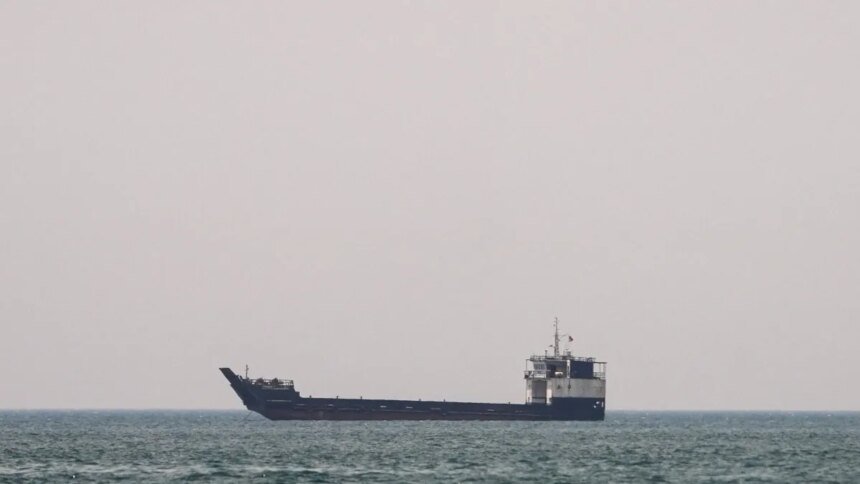
On the other hand, Iranian Deputy Foreign Minister Kazem Gharibabadi told state television yesterday, Monday, that Iranian and Omani experts will launch talks to determine transit routes in the Strait of Hormuz in the coming days, adding that Iran will try to obstruct the passage of ships outside the specified routes.
Abadi confirmed that they informed the Sultanate of Oman of the necessity of changing routes in the Strait of Hormuz, and that the situation there will not return to what it was before the war.
In this context, the American CNN network quoted Adam Smith, the senior Democrat on the Armed Services Committee of the US House of Representatives, as confirming that the Trump administration seems optimistic that Iran will agree to opening the Strait, that things will go well, and that Tehran will agree “to what they want it to agree to.” But at the same time, he pointed out that he does not see much evidence to support that.
Tehran only allows ships to pass through one lane along its coast, and threatens to target any ship that violates the instructions. Foreign Minister Abbas Araqchi stressed – yesterday, Sunday – that “exclusive responsibility” (in managing the Strait) lies with Iran and not any other party or country.
Tehran had expressed its dissatisfaction with Muscat’s announcement of opening an alternative and temporary shipping corridor, and it was reported that it was a coordinated initiative with the United Nations to evacuate sailors and stranded ships, and dozens of ships had taken it this week.
An Omani-French statement stressed commitment to the United Nations Charter, international law and the law of the sea, and the importance of reopening the Strait of Hormuz.

German claim
In international positions, the German Foreign Ministry stressed the necessity of reaching a practical solution to ensure safe passage in the Strait of Hormuz and to deal with Iran’s nuclear program.
She pointed out that the agreement between Tehran and Washington to stop the attacks and continue talks is an important step and provides an opportunity for diplomacy in a situation she described as “fragile.”
The Iranian Foreign Ministry reported that Araqchi called his French counterpart, Jean-Noel Barrot, and they discussed regional and international developments in light of the memorandum of understanding.
French President Emmanuel Macron made it clear that France and the Sultanate of Oman are working – with their partners – to remove mines from the Strait of Hormuz.