Published on 6/30/2026
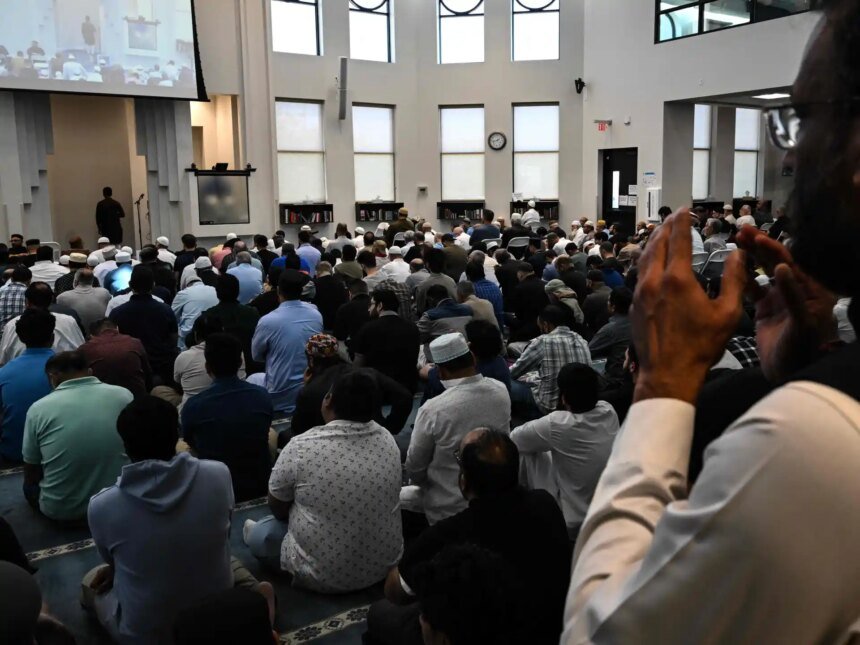
The US state of Texas is witnessing a noticeable increase in anti-Muslim rhetoric, amid accusations against leaders in the Republican Party of transforming Islamophobia from an electoral discourse into a phenomenon that is reflected in the daily lives of Muslims, in schools, universities and public places, according to a report published by The Guardian newspaper.
The newspaper says that what began during the Republican Party primaries with sharp political rhetoric against Islam has become reflected in public behavior that increasingly targets Muslims.
Read also
list of 2 itemsend of list
The report quotes Neela Syed, a member of the Social Justice Council of the Islamic Center of North America in Dallas, as saying that this discourse “certainly spreads to society,” noting that her two young daughters were exposed at school to questions based on stereotypical ideas about Islam, including the allegation that Muslims mistreat women.
The newspaper adds that a number of Muslims have begun to feel unsafe when they go out alone, while others preferred not to reveal their identities because of their exposure to threats and harassment online. Muslim students at the University of Houston were also subjected to an incident of burning a copy of the Qur’an while performing prayer, while veiled women were subjected to verbal abuse in public places.
The role of Republicans
The Guardian refers to a video clip of a woman who attacked two Muslim women inside a store, saying, “This is not a Muslim country, but a Christian country.” The video received widespread interaction, and a fundraising campaign in support of that woman even raised about $145,000.
The report highlights the role of a number of Republican politicians, including Representative Brandon Gale, in promoting this discourse. Gale called for a halt to immigration from Muslim-majority countries, and sent a message to his constituents entitled: “Stop Islamic immigration now or our children will pay the price.”
The newspaper believes that these positions are no longer individual, but rather have become part of the priorities of the Republican Party in Texas, which during its last conference adopted the slogan “No to Sharia in Texas,” in a call to criminalize Islamic Sharia, despite experts confirming that there are no attempts to implement it in the state.
One of the Muslim participants in the conference, who used a pseudonym “Omar,” said that he repeatedly heard people describing Muslims as terrorists and demanding that they leave the country. He added, “We care about the issues that every American cares about… We are fathers, husbands, employees, and business owners,” before asserting: “This is not the America I believe in, but I will not leave, and I will not go anywhere.”
Fear and anxiety
The Guardian quotes the Green Party candidate for the position of auditor in the state, Sheila Faydi, as saying that the rise in racism “is pushing Muslims to shrink in their daily lives,” considering that this climate instills fear and anxiety among Muslims who wish to engage in political work, especially with their weak representation in government institutions, as the Texas legislature only includes two Muslim representatives.
Muslim Rep. Suleiman Lalani, founder of the Interfaith Caucus in the Texas State Assembly, says, “Ignorance leads to fear, and fear leads to hate. When we connect with each other, we learn, raise awareness, unite, and make progress.”
The report also highlights the controversy raised by the state’s social studies curriculum revision, which gives more space to the idea of ”American exceptionalism” and Judeo-Christian influence, while reducing lessons related to slavery, civil rights, and world cultures and religions.
During the hearing, Nila Syed listened to speakers who objected to the teaching of Islamic civilization, and she felt – as she described it – that they were “talking about Muslims, not to them,” despite her presence in the hall wearing the hijab.
The report concludes by referring to efforts led by Muslim Representative Suleiman Lalani, founder of the Interfaith Dialogue Caucus in the Texas State Assembly, to confront the use of religion in political conflict.
He said during a symposium on “Politicizing Faith” that “ignorance leads to fear, and fear leads to hatred. When we communicate with each other, we learn, raise awareness, unite, and make progress,” while Democratic Representative Christian Manuel summarized the scene by saying: “They use people’s ignorance as a weapon.”