Published on 6/27/2026
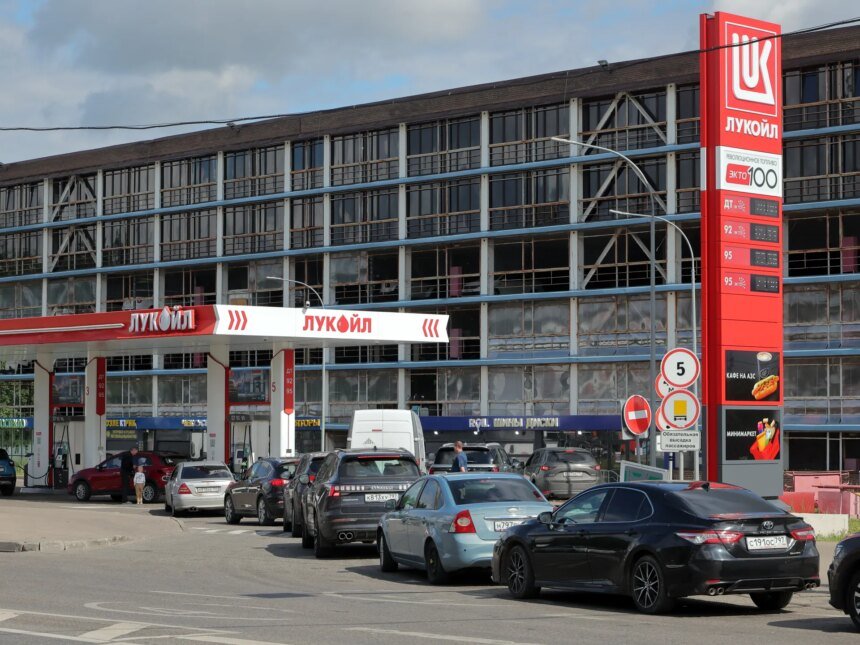
Russia is witnessing disruptions in fuel supplies after widespread shortages in a number of regions, including the Crimean Peninsula, at a time when economic reports link the disruption of some refineries to the repercussions of the war in Ukraine and Western sanctions imposed on Moscow.
Mikhail Razvozaev, the Moscow-appointed governor of Sevastopol, said that fuel trucks were unable to reach the city, adding via Telegram: “Unfortunately, fuel trucks were unable to reach the city last night.”
Read also
list of 4 itemsend of list
According to an investigation published by the German News Agency, Crimean residents are limited to 20 liters of gasoline per week through digital vouchers based on quick response (QR) codes, in light of continuing supply difficulties.
The German agency quoted Energy Intelligence estimates that Russian oil refining rates fell during June to less than 4 million barrels per day, which is the lowest level in 21 years.
She added that 8 of the 10 largest refineries in Russia were subjected to attacks by Ukrainian drones, while about a third of refining capacities stopped working temporarily as a result of damage or repair work.
She pointed out that major oil companies imposed restrictions on the sale of gasoline and diesel in 25 Russian regions, including Moscow and St. Petersburg, and also banned the sale of fuel in external containers (jerry cans), while the effects of the shortage extended to airports and the agricultural sector due to limited supplies of kerosene and diesel.

Economic challenges
The fuel crisis comes as the Russian economy faces challenges related to war, sanctions and high borrowing costs.
The investigation indicated that the gross domestic product contracted by 0.2% during the first quarter of the year, while Russian President Vladimir Putin said during the Economic Forum in St. Petersburg that “economic dynamism has been hampered at the present time.”
He added that the sovereign wealth fund’s liquid assets had shrunk to about 40 billion euros (about 43.2 billion dollars), at a time when it allocated nearly 40% of public spending to the army, armament, and security sectors, according to what the investigation reported.
Despite this, Putin points out that the unemployment rate is still at low levels, ranging between 2.5% and 3%, while experts believe that one of the most prominent challenges is the labor shortage as a result of demographic factors and the continuation of the war.
Since the outbreak of war in Ukraine in 2022, Western countries have imposed successive packages of sanctions on the Russian energy, finance and technology sectors, while Moscow has redirected a large portion of its oil exports to Asian markets, especially China and India, according to the International Energy Agency.
The Russian Central Bank also continues to keep interest rates at high levels to curb inflation, which increases the cost of borrowing and affects domestic investment, while the Russian government confirms that the economy has shown the ability to adapt to sanctions and redirect foreign trade, while international economic institutions believe that the continuation of the war will keep the pressures on growth and public finances.