Published on 6/30/2026
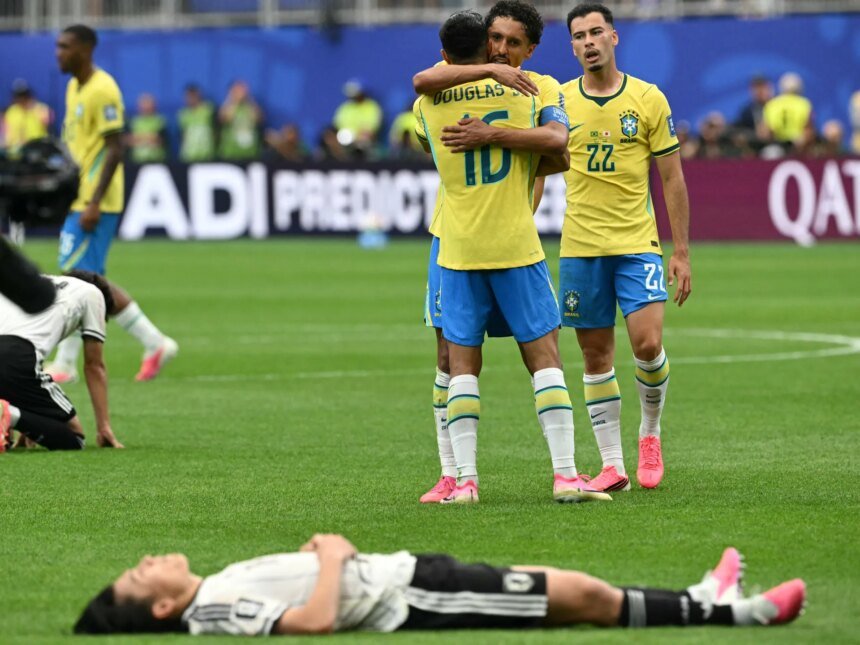
The confrontation between Brazil and Japan in the knockout rounds of the 2026 World Cup witnessed a historic moment after Gabriel Martinelli scored the winning goal at the minute (95:00), becoming the longest late goal scored during regular time in World Cup knockout matches since 1966.
The goal came at a fatal time, giving the Brazilian team a pass, and added a new record to the tournament’s record, confirming that the last minutes are still capable of changing the fate of the biggest matches.
Read also
list of 2 itemsend of list
Qualification was not the only gain for the Brazilian team, as it also succeeded in breaking a negative streak that accompanied it during the matches in which it conceded the first goal in the World Cup.
The Brazilian national team achieved only its second victory in the last nine World Cup matches during which it fell behind, after its record during those confrontations included one draw and six defeats, according to Opta.
This is also Brazil’s first victory in a World Cup match in which it trailed since its 3-1 victory over Croatia in the opening match of the 2014 edition.
Japan continues its historical suffering
On the other hand, the Japanese team’s dilemma continued in the knockout rounds, after it strengthened its negative record as the team that played the most knockout matches in the World Cup without succeeding in reaching the next round.
The Japanese national team has played five matches in the elimination rounds throughout its history, but failed to achieve any qualification, leaving its record without any victory at this stage of the tournament.
The irony did not stop there, as Japan opened the scoring in each of its last three matches in the qualifying rounds, but in the end it was eliminated from all of them, so the dream of surpassing this round remains postponed.

The 2026 World Cup continues to provide outstanding scoring rates, especially with regard to goals scored from outside the penalty area.
According to Opta, 34 of the 219 goals scored so far came from shots from outside the penalty area, representing 15.5% of the total goals in the tournament.
This percentage is the highest since the 2010 edition, which witnessed 27 goals out of 145 goals scored from outside the penalty area, a rate of 18.6%.
Kaisho Sano adds a new record for Japan
Kaisho Sano continued his brilliance in the Japanese national team shirt after becoming the sixth player to score for Japan in the 2026 World Cup.
Sano joined the team’s top scorers in the tournament, which includes Ayase Ueda, Daichi Kamada, Daisen Maeda, Keito Nakamura, and Junya Ito, making the Japanese team the highest number of scorers in a single edition of the World Cup.
The player also continued to provide distinguished numbers with his country’s national team, after contributing to four goals during the last eight matches he played in various competitions, by scoring one goal and assisting three goals.
This result comes after he finished his first eight matches in the Japanese national team shirt without any scoring contributions, in a remarkable development in his offensive level.
Casemiro enters the history list
Casemiro wrote his name in the records of the Brazilian national team after scoring his tenth international goal, continuing his brilliance with the national team.
Half of his international goals, five goals, came from headers, which reflects his excellence in air balls inside the penalty area, according to Opta.

The midfielder’s achievement did not stop there, as at the age of 34 years and 126 days, he became the second oldest player to score a goal for the Brazilian national team in the history of the World Cup.
He is surpassed only by Bebeto, who scored against Denmark in the 1998 edition when he was 34 years and 137 days old.
Bruno Guimarães is close to matching Pele’s feat
Bruno Guimarães continued to perform at exceptional levels during the tournament, after raising his tally to four assists in the 2026 World Cup.
With this number, Pele became the only Brazilian player to have provided a greater number of assists in a single World Cup since 1966, after making six goals in the 1970 edition.
This achievement confirms the importance of the role played by Guimarães in the playmaking industry, after he became one of the most prominent elements of the Brazilian national team in the current tournament.
Oldest Brazil squad since 2006
The remarkable numbers were not limited to the offensive aspects, as the match also witnessed the recording of a record related to the starting lineup of the Brazilian national team.
The average age of the main players was 29 years and 245 days, which is the oldest average age for the Brazilian squad in a World Cup knockout match since facing France in the quarter-finals of the 2006 edition, when the average age reached 30 years and 31 days.

The confrontation between Brazil and Japan carried more than just a qualification ticket to the next round, as it witnessed the recording of many historical records, starting with Gabriel Martinelli’s deadly goal, through Brazil’s return to victory after falling behind in the result for the first time in years, and all the way to the individual records achieved by Casemiro and Bruno Guimarães.
On the other hand, the Japanese national team was again eliminated from the knockout rounds, despite continuing to provide good attacking levels and recording distinguished numbers at the level of scorers, so that the knot of the knockout stages remained intact, while Brazil continued its confident march towards the next rounds, supported by a night that will remain present in the World Cup records.