

Published On 7/3/2026
|
Last update: 7/4/2026 08:19 (Mecca time)
The 2026 World Cup witnessed a remarkable and unprecedented phenomenon in terms of own goals, after the current version broke the historical record recorded in the 2018 World Cup, turning some matches into events full of unexpected details that changed the results of many confrontations.
In one of the most prominent moments, Egyptian national team defender Mohamed Hani entered the tournament record from an unusual angle, after scoring a new own goal against the Australian national team, becoming the talk of the tournament in terms of influential negative numbers.
Read also
list of 2 itemsend of list
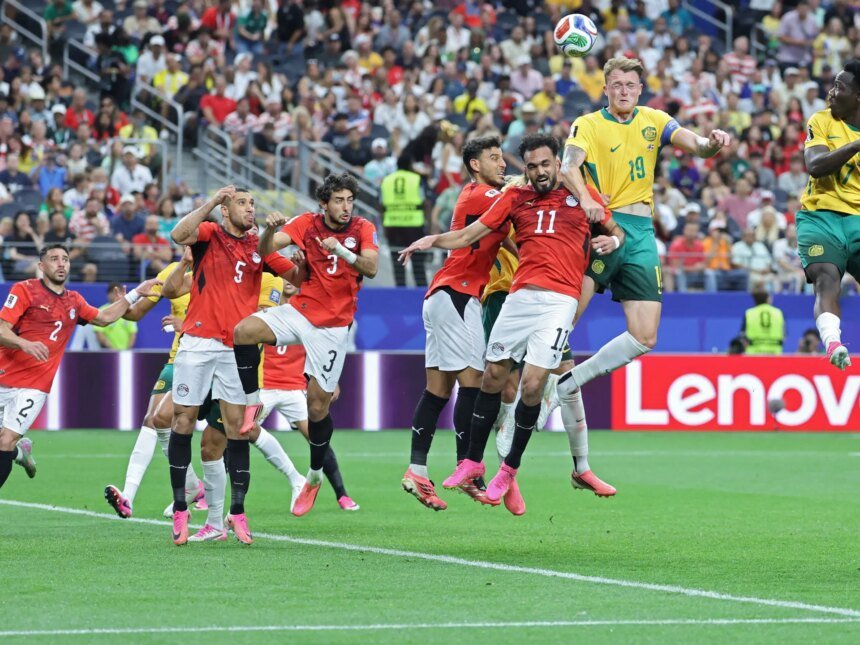
Mohamed Hani’s goal came in the 55th minute of the match between the Egyptian national team and its Australian counterpart, when he rose to a cross ball after a violation in favor of Australia, and accidentally headed it into goalkeeper Mustafa Schubert’s goal, announcing the equalizer goal in favor of the Australian national team.
This goal brought the match back to a draw point, and opened a new door of tension within the confrontation, in a moment that reflected the sensitivity of the details within World Cup matches.
Record numbers for own goals
This case raised the number of own goals in the current tournament to 13, making it the tournament with the highest score for own goals in history after breaking the record that was recorded during the World Cup in Russia (12).
These numbers confirm that own goals have become one of the decisive factors in the results of many matches, and are not just passing events.
With his goal against Australia, Mohamed Hani entered the history of the World Cup from an unusual gate, after he became the second player in the history of the tournament to score two own goals in one edition of the World Cup.
With this number, the player repeated a negative achievement that had only happened once before, and that was through Ivan Vostov in the 1966 World Cup.
At the Egyptian national team level, this is the third own goal in the history of the team’s participation in the World Cup.
Thus, the Egyptian team became the second team that conceded the most own goals in the history of the tournament, behind only Morocco and Mexico, as each of them conceded 4 own goals.
The numbers for the current tournament reflect that own goals are no longer just individual errors, but rather have become an influential factor in determining the results of matches, especially with their number increasing compared to previous editions.
As the tournament continues, the possibility of scoring more own goals remains, given the great pressure that accompanies the knockout round matches.