

Published On 2/7/2026
|
Last update: 23:41 (Mecca time)
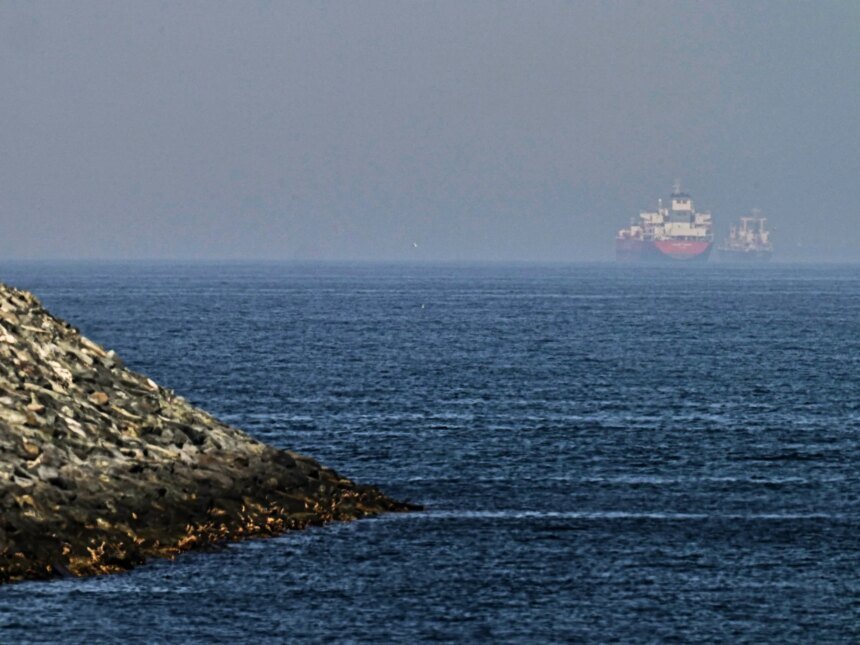
The incident of the grounding of a foreign container ship in the Strait of Hormuz – as announced by Iranian media – opened a new door to questioning the security of navigation in one of the most sensitive sea lanes, at a time when the issue of maritime traffic through the Strait is still present within technical talks between Iran and the United States, mediated by Qatar.
The Iranian News Agency said that a foreign container ship ran aground in the Strait of Hormuz after moving outside what it described as the Iranian-specified route, adding that the ship got stuck due to the shallow water on the path it chose, and was unable to continue sailing. The Iranian agency did not mention the ship’s name, flag, or maritime identification number.
Read also
list of 3 itemsend of list
Match the coordinates
An analysis of navigational data – conducted by the Al Jazeera Network’s open source unit via the Marine Traffic platform – showed that the visually announced and circulated location of the incident matches the location of the container ship “Arista”, which carries the international maritime identification number 9348493, and its data shows that it is in a state of “stranding” near the Iranian island of Hormuz.

A review of the ship’s records on the Marine Traffic platform shows that the status of the automatic identification system for the ship “Arista” changed to “aground” for the first time within the available data on March 17, after it had previously displayed its status as “anchored.”
The platform recorded another temporary change on May 1, when the ship’s state moved from “aground” to “cruising using the engine,” before returning after only 9 minutes to “aground” at a speed of zero knots. The ship’s latest data shows the same condition, with its position near the island of Hormuz, flying the flag of the Comoros, and showing its navigational destination to Asalouyeh in Iran.
Images taken via the European satellite “Sentinel-2” between March 18 and July 1 support this correspondence, as they show a fixed marine object in the shallow waters north of Hormuz Island, at a range close to the coordinates displayed by the ship’s navigational tracking data, with a clear color change in the water around its location.

Penalties and changing names and flags
Marine Traffic’s ship characteristics data reveal that “Arista” is a container ship with a carrying capacity of 1,578 containers, and records of the ship’s previous names show that it bore the name “Gaoja” before changing its name to “Arista” in September 2025.
This point places the ship in a broader context than just a stranding incident, as records from the Office of Foreign Assets Control of the US Department of the Treasury show that the ship with the same identification number 9348493 was included on the sanctions lists under its previous name, “Gauga,” and was flying the flag of Panama at the time.
In a notice published in the US Federal Register, Gauja was described as blocked property on the basis that Real Shipping has an interest in it under the program related to Executive Order 13902 regarding Iran.
The US Treasury Department said in July 2025 that the Hossein Shamkhani network is not limited to oil sales, but also operates a fleet of container ships transporting goods to and from Iran, noting that the “Real Shipping” company was managing 7 container ships within this network, including the ship “Ghaoja” with the same maritime identification number.
Hormuz is at the heart of the negotiation
The ship incident comes at a sensitive moment regarding traffic rules in the Strait of Hormuz, as the Qatari Ministry of Foreign Affairs said on June 30 that technical meetings between Iran and the United States are continuing directly and indirectly through mediators, and that the Strait of Hormuz is one of the main issues up for discussion, in addition to the Iranian nuclear program and the broader regional situation.
Doha affirmed its position rejecting any obstacles to freedom of navigation in the strait, and described Hormuz as an international waterway, stressing that its position is based on respecting international maritime law and ensuring freedom of navigation.
On the other hand, Iranian media reported that the Revolutionary Guard Navy is warning ship captains, owners, and shipping companies that any entry or exit via paths other than what Iran calls the “power path” in the Gulf may lead to irreversible accidents.