


Published On 5/7/2026
The meteorological services warned that residents of the US Pacific islands of Guam and the Northern Marianas are waiting for a “very dangerous” hurricane to pass through.
Authorities said that severe Hurricane Buffy is expected to arrive early Monday, with winds of up to 260 kilometers per hour, with gusts that could reach speeds of up to 315 kilometers per hour.
The US Meteorological Service described the hurricane as “extremely dangerous,” warning of the arrival of strong winds starting Sunday and catastrophic damage.
The authority expected major floods resulting from heavy rains and sea water on the coasts rising to more than 10 metres.
The Northern Mariana Islands are home to about 40,000 people, and about 170,000 live in neighboring Guam, which is a separate US territory.

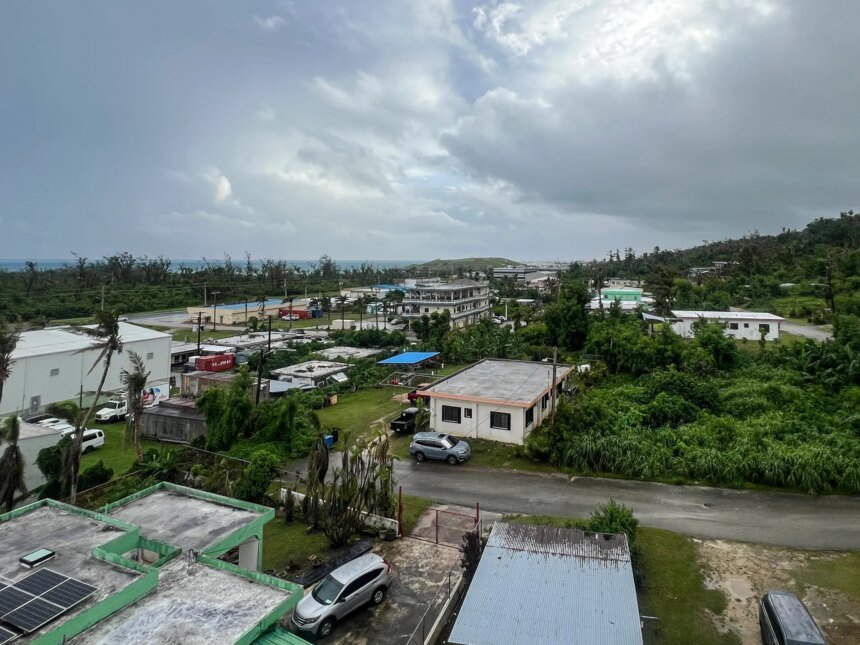
Supercyclone Sinlaku struck the region in mid-April, cutting off power to tens of thousands, uprooting trees, overturning cars, and tearing off the metal roofs of buildings.
FEMA teams prepared more than a million liters of water and more than a million meals, in addition to beds and electricity generators, in preparation for the hurricane.

Since Saturday, long lines of cars have formed in front of gas stations in the city of Saipan in the Northern Mariana Islands, and residents have flocked to building materials stores to buy wood panels to seal their homes, and to supermarkets to stock up on food and drinking water.
Rising ocean temperatures contribute to increasing the strength of tropical storms and providing more moisture that turns into heavy rain.

Also, the World Meteorological Organization warned on Friday that the “El Niño” phenomenon has already begun in the tropical Pacific Ocean, and is likely to be strong.
This natural climate phenomenon causes surface water temperatures to rise in the central and eastern tropical Pacific Ocean, causing widespread changes in wind patterns, atmospheric pressure, and precipitation around the world.