

Published On 5/7/2026
Researcher Dr. discusses Karim Al-Majri, in his study “The Law of the Sea and the Legal System of the International Straits: An Applied Study on the Strait of Hormuz,” issued by the Al Jazeera Center for Studies, covers the legal framework that governs the international straits, with a focus on the legal status of the Strait of Hormuz, and the extent of the legitimacy of the measures that can be taken by the riparian states, especially Iran, towards international navigation, in light of the United Nations Convention on the Law of the Sea and international jurisprudence and jurisprudence.
The study believes that the US-Israeli war on Iran, and the accompanying threats to close the Strait of Hormuz, have brought back to the forefront a legal debate that goes beyond direct military developments to a deeper question related to the nature of the legal system that governs the international straits.
Read also
list of 2 itemsend of list
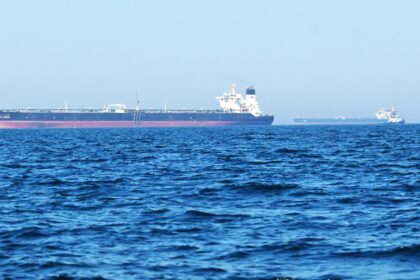
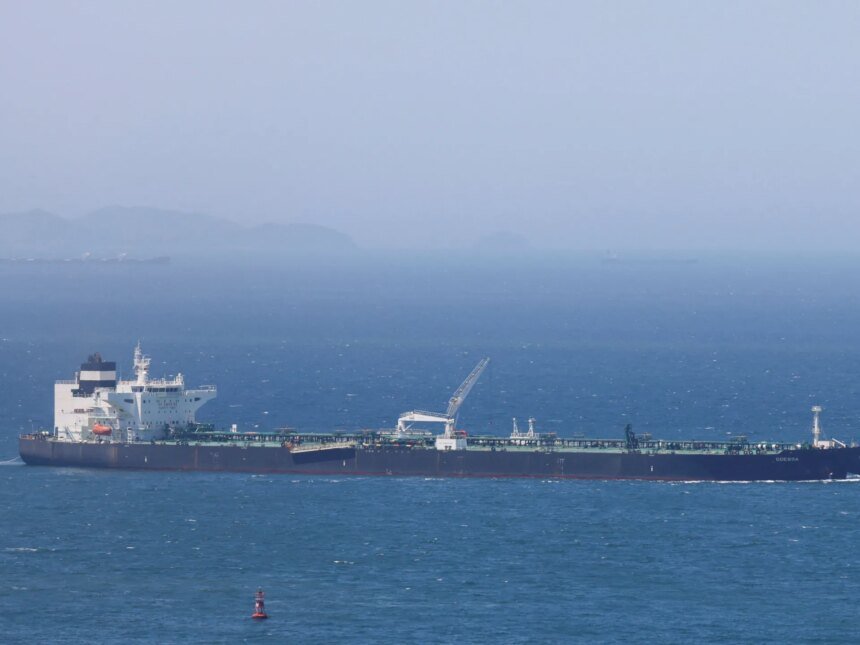
The Strait of Hormuz is not just a waterway used by the countries overlooking the Gulf, but rather represents one of the most important maritime arteries of the global economy, as a large percentage of oil and gas exports and international trade pass through it, which makes any development related to freedom of navigation in it an issue that affects the entire international community. From this standpoint, the study seeks to clarify the boundaries between the sovereignty of coastal states and the international community’s right to continue navigation, and the legitimacy of the threat to close the strait or impose restrictions on its use.
First: The Law of the Sea… How did the legal system for international straits emerge?
The study reviews the historical development of the law of the sea, explaining that it moved from the stage of traditional maritime customs to the stage of international codification, starting with the Geneva Conventions of 1958, all the way to the United Nations Convention on the Law of the Sea of 1982, which became the main reference for regulating various maritime areas.
It believes that this agreement succeeded in achieving a degree of balance between the right of the coastal state to exercise its sovereignty over its territorial sea, and the necessity of preserving freedom of navigation in sea lanes that perform an international function, which gave it the status of the “Constitution of the Seas” in contemporary legal jurisprudence.
The study shows that understanding the legal system of international straits requires distinguishing between the systems of innocent passage and transit passage.
Innocent passage applies in the territorial sea and gives the coastal state broader powers to regulate navigation, while transit passage represents a special system for the straits used for international navigation, and grants ships and aircraft an inherent right to continuous and rapid transit, so that the coastal states may not suspend, disrupt, or transform this right into a system based on prior permission or political considerations. The study believes that this system came to address the exceptional nature of international straits, which perform a function that goes beyond the national interests of the countries overlooking them to serve the entire global navigation.
The study also shows that the 1982 Convention established precise rules to regulate navigation in the straits, allowing coastal states to take technical measures related to the safety of navigation and environmental protection, but in return it prohibited them from disrupting traffic, imposing fees, or discriminating between ships, because the goal of the agreement was to prevent the transformation of territorial sovereignty into a means of obstructing international maritime communication.

Second: The Strait of Hormuz… What is its legal status?
The researcher moves on to applying the general rules of the law of the sea to the Strait of Hormuz, explaining that the strait connects the Arabian Gulf with the Gulf of Oman and then the Arabian Sea, and is considered one of the busiest and most important sea lanes in the world, as the Gulf states rely on it mainly for the export of oil and gas, and a large proportion of global maritime trade also passes through it.
Due to this strategic importance, the Strait of Hormuz acquires a special legal status as a strait used for international navigation, which makes it subject to the transit transit regime stipulated in the United Nations Convention on the Law of the Sea.
The study shows that the coasts overlooking the strait are distributed between Iran and the Sultanate of Oman, and that the territorial sea of the two countries covers the entire width of the strait, which allows passing ships to pass within the territorial waters of the two countries, without that strait losing its international character.
The study confirms that international law settled this issue when it decided that the straits connecting part of the high seas or the exclusive economic zone and a similar part are subject to the transit traffic system, ensuring the continuation of international navigation without interruption.
The study reviews Iran’s position on the Law of the Sea Convention, indicating that it signed the Convention but did not ratify it, which prompted it to announce its reservations on some provisions of transit passage, and to consider that benefiting from this system is limited to the states party to the Convention. However, the researcher believes that this position does not change the legal nature of the Strait, because the transit traffic system has become, in large part, part of the rules of customary international law to which states are bound, in addition to the fact that the international community has practically dealt with the Strait of Hormuz as an international strait in which navigation may not be subject to the will of a particular state.
The study also confirms that the coastal state, despite its sovereignty over its territorial sea, does not have the authority to disrupt transit traffic or require prior permission for ships to cross. Rather, its role is limited to regulating the technical aspects related to the safety of navigation, protecting the marine environment, and preventing pollution, in a way that does not lead to obstruction of maritime movement or discrimination between ships. The study believes that this balance reflects the philosophy of the law of the sea, which seeks to reconcile the sovereignty of the coastal state with the requirements of international navigation.
Third: Does international law allow the closure of the Strait of Hormuz?
The study then addresses the most controversial question, which is the legality of Iran’s closure of the Strait of Hormuz in light of armed conflicts or military threats. The researcher believes that the United Nations Convention on the Law of the Sea does not give the riparian state the right to unilaterally suspend or stop transit traffic, even in cases of political tension, because this system was established to ensure the continuation of international navigation and not subject it to political or military fluctuations. Therefore, the complete closure of the strait contradicts, in principle, the provisions regulating international straits.
The study shows that Iran may rely on other rules in international law, such as the right to legitimate self-defense or military necessities, but the exercise of these rights remains subject to strict conditions, most notably necessity and proportionality, and does not justify closing an international corridor in a comprehensive manner that affects the interests of all countries. The study also indicates that any measures taken by the coastal state must be directly related to confronting the danger, and must not exceed the limits permitted by international law.
The study also reviews the legal status of any attempt by the United States or other countries to use force to ensure the continuation of navigation, stressing that the United Nations Charter places clear restrictions on the use of force in international relations, and that the protection of navigation must be carried out within the framework of the rules of international legitimacy, whether through the Security Council or within the limits permitted by international law, which makes any military escalation in the strait the subject of wide legal debate.

Fourth: Future scenarios for the Strait of Hormuz
The study concludes by exploring possible scenarios for the future of the Strait of Hormuz in light of regional tensions, stressing that the economic and strategic importance of the Strait makes any escalation in it go beyond the borders of the conflict between Iran and its opponents, to affect global energy security, supply chains, and international trade. The study believes that this reality requires all parties to take into account the restrictions imposed by international law, because the cost of disrupting navigation will not be limited to the conflicting countries, but will extend to the entire global economy.
The study believes that the first scenario, which is the complete closure of the strait, remains the least likely, given the wide legal, political and economic repercussions it entails, as well as the difficulty of implementing it practically in light of the intense international naval presence in the region. Such a measure would also place Iran in direct confrontation with stable rules of international law, and would lead to international reactions that might go beyond the scope of the original crisis.
As for the second scenario, the study considers it more realistic, and represents the imposition of limited restrictions or partial disruption of navigation, through measures that do not amount to an official closure, such as increasing security risks, intensifying inspection operations, implementing military maneuvers, or threatening the use of force. The study believes that this scenario gives Iran space to exercise political and military pressure without bearing the legal and political costs resulting from declaring a complete closure of the Strait.
The study indicates that the third scenario is the continuation of the status quo, with the strait remaining open to international navigation, despite continuing regional tensions. It believes that this possibility remains the most likely, because the interests of most parties, including Iran itself, are linked to the continuation of navigation and the flow of energy exports, which makes the threat of closing the strait a tool for political pressure rather than a practical, implementable option.
The study confirms that the future of the Strait of Hormuz will remain dependent on the extent of the parties’ commitment to the rules of international law and their ability to manage regional conflicts away from targeting international sea lanes, which represent a common interest for the international community, and not for the countries overlooking it alone.
Conclusion
Researcher Karim Al-Majri concludes that the United Nations Convention on the Law of the Sea established a balanced legal system that simultaneously protects the sovereignty of coastal states and freedom of international navigation, and that the Strait of Hormuz, as an international strait, is subject to a transit traffic regime that does not allow riparian states to disrupt or suspend navigation unilaterally.
It also shows that any exceptional measures taken by states in times of armed conflict remain bound by the rules of international law, and may not be turned into a means of closing one of the most important sea lanes in the world.
The study believes that the repeated threats to close the Strait of Hormuz reflect the strategic importance of the Strait more than the possibility of implementing this option legally or practically, as economic considerations, the intertwining of international interests, and the restrictions imposed by international law make a complete closure a weak possibility, while the Strait remains a permanent focus of political and strategic competition, in light of the continuing tensions in the Gulf region.
Full study (click here)