


Published On 5/7/2026
|
Last update: 19:34 (Mecca time)
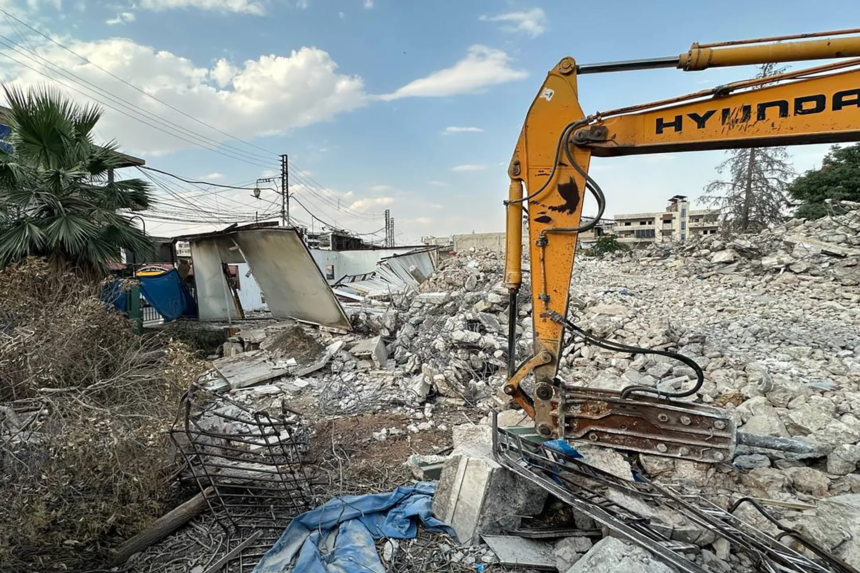
The demolition of the ancient Qamishli Municipality building (northeastern Syria) ignited a wave of criticism of the step carried out by the municipality affiliated with the Autonomous Administration two days ago, in the building that was praised in 1935, while the municipality justified its decision by “the artistic reality of the building, the growing needs of the city, the principles of urban planning and the capacity of municipal services.”
The first municipality in Qamishli was established in 1935, while the actual foundation of the city dates back to 1926. An old stone plaque dating back to 1935 shows the first official record of the city, where the phrase “Qamishli Municipality House” is engraved on it.

“Assault on memory”
The presidential team charged with implementing the January 29 agreement between Damascus and SDF said that the demolition of the building represents “an assault on one of the city’s historical and urban landmarks, and harms the cultural heritage that forms part of the memory of the people of Hasakah Governorate.”
He added, in a statement yesterday, Saturday, “Public property and government buildings are the property of all Syrians, and it is not permissible to dispose of them, change their reality, or their legal or administrative description, or make modifications to them outside the legal frameworks and competent state institutions.”
The presidential team called on “all institutions and entities affiliated with the SDF that have not completed the integration procedures to immediately stop any actions related to public property or government buildings, and to refrain from taking unilateral measures or imposing new facts on the ground.”
He also called on “citizens and investors not to enter into investments or contracts related to public property outside legal frameworks, and not to rely on any procedures he described as “illegitimate,” stressing that “all files will return to their legal path in a way that guarantees the protection of public rights and the preservation of state property.”
‘Unfortunate step’
In turn, several civil society organizations rejected the continuation of the demolition work, considering the building a historical and cultural landmark for Qamishli, and its removal represents a threat to the city’s memory.
The Assyrian Democratic Organization said in a statement that it followed “with great concern the decision to demolish the historic Qamishli municipality building, because this building represents a historical, cultural and urban value that goes beyond being a service facility, as it is considered one of the most prominent evidence of the city’s history, and forms part of its collective memory and cultural heritage that concerns all its people with their various components, including Arabs, Kurds, Syriacs, Assyrians and Armenians.”
She considered that what happened was of double importance “because it coincided with the first centenary of the founding of the city of Qamishli, an occasion that was expected to constitute an opportunity to celebrate the city’s history, preserve its historical monuments, and enhance its cultural presence,” considering that “the removal of this historical landmark represents an unfortunate step that would cause harm to the city’s urban heritage.”
Qamishli Municipality: Our decision is well thought out
On the other hand, the Qamishli Municipality of the Autonomous Administration said in a statement issued on Saturday that the decision to remove the old municipal building “was not an emergency decision, but rather came after years of study and evaluation.”
She explained, “The building was built in 1935 during the period of the French Mandate, when the population of Qamishli was approximately 5,000 people, while today the city includes approximately one million people,” considering that the building “is no longer able to meet the requirements of current municipal services after about 9 decades of its construction.”
The municipality said, “The project does not include transferring ownership of the property, but rather stipulates that the municipality will obtain a modern service building while retaining ownership of the land and the commercial project, and transferring its rental revenues to the municipality on an annual basis to support its services.”
The municipality addressed the controversy related to describing the building as a “historical landmark,” considering that “the age of the building alone does not grant it this status, and that classifying it as a cultural heritage requires proving that it has exceptional historical, architectural, artistic, archaeological, or social value.”