

Published On 7/3/2026
|
Last update: 14:25 (Mecca time)
Much ambiguity surrounds the initial diplomatic understandings between Washington and Tehran, amid the scarcity of information flowing behind the scenes of the indirect talks taking place in the Qatari capital, Doha.
In an analytical window on Al Jazeera, officials and specialists examined the extent of the parties’ commitment to the framework memorandum of understanding, at a time when there are reports of diplomatic progress being met with Iranian complaints about the continued freezing of assets and financial files.
According to the director of the Arab Center for Iranian Studies, Muhammad Saleh Sedqian, the state of optimism promoted by the American administration does not find any real echo or reflection in the field.
Sadeghian explained that a conviction has begun to crystallize in Tehran that US President Donald Trump and his vice president, J.D. Vance, are practicing a policy aimed at buying time without making concrete executive commitments.
Sadiqian stated that the Iranian side believes that Washington has not implemented a single line or sub-paragraph of the memorandum of understanding, as the first clause explicitly stipulates the end of military operations on the day immediately following the signing, in exchange for lifting the embargo on frozen Iranian assets amounting to billions of dollars.
Sadiqian added that Washington’s speeches are governed by what he called “procrastination” through deferred promises, while Iranian funds – which were previously transferred during the Biden era from South Korea to Qatari banks for humanitarian and medical purposes – remain completely frozen, and Tehran cannot open documentary credits (LC) through them to purchase basic goods.
He stressed that this financial stagnation has put the Iranian government in a critical position on the home front, given that current oil revenues do not cover basic requirements due to American restrictions, recalling the events of February 28, 2026, when Washington launched its military operations.
“Hormuz does not belong to Tehran or Muscat.”
On the other hand, former US Deputy Assistant Secretary of Defense Sergio de La Peña refuted the Iranian proposal, stressing that the strategic vision of President Trump and his deputy Vance is consistent regarding securing the global economy.
De La Peña explained that the United States of America will not accept that the Strait of Hormuz be subject to unilateral control or military measures outside the framework of international consensus.
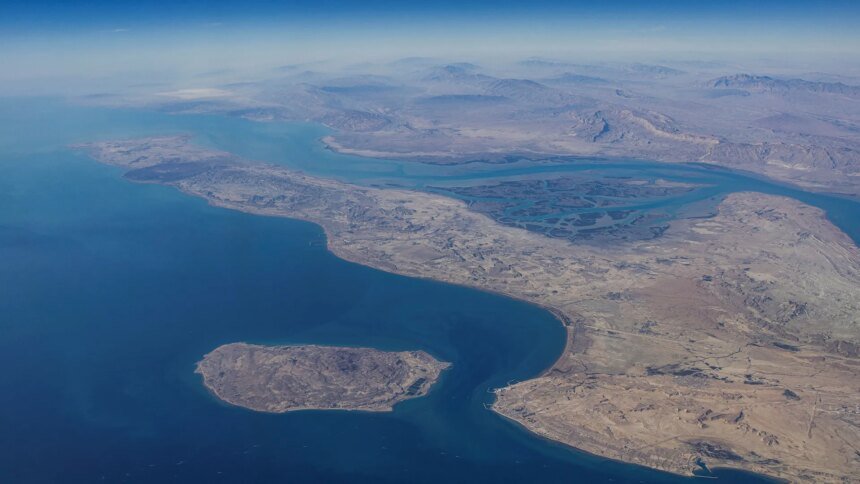
In response to questions about American intervention, De La Peña stated that the Strait of Hormuz is an international waterway through which 20% of global oil trade passes, in conjunction with the Bab al-Mandab Strait.
He added that the governing and regulatory body for these corridors is not the Sultanate of Oman or Iran, but rather the United Nations Convention on the Law of the Sea and international protocols that guarantee freedom of safe passage for all without fees or illegal restrictions.
De La Peña pointed out that Tehran began to violate the understandings by opening fire on naval vessels belonging to the Revolutionary Guard and targeting two commercial ships in territorial waters, considering this behavior as a violation that legitimizes the joint American military action to protect the security of international trade.
He stressed that Washington will not release any frozen financial assets to Tehran as long as military threats in the Strait continue, noting that the progress of the negotiations is conditional on Iran’s commitment to the international definition of free navigation.
“Trump Strait” or an international corridor?
Regarding the geographical sovereignty of the waterway, Sadiqian pointed out that the Strait of Hormuz falls geographically and legally within the joint jurisdiction of two riparian states, Iran and the Sultanate of Oman, pointing to the joint statement issued following the visit of Iranian Parliament Speaker Muhammad Baqir Qalibaf to Muscat, which approved a bilateral mechanism for managing inspection and navigation in accordance with international law.
Sadiqian wondered about the justifications for American intervention and directing ships to cross from the southern Omani or northern Iranian coast.
In his response, De La Peña stressed that the American-led international coalition does not aim to impose regional sovereignty, but rather to prevent the transformation of the strategic strait into a political pressure tool through which Tehran seeks to impose illegal measures, stressing that the upcoming negotiations will not give Iran the right to control international navigation.
Iranian exemptions and the sixty-day period
The current developments are related to the Iranian authorities’ decision to exempt commercial ships and oil tankers from fees imposed on crossing the Strait of Hormuz in a temporary manner extending for 60 days.
This measure comes in accordance with the preliminary understandings signed in the joint memorandum of understanding between Tehran and Washington, as the Iranian Strait Management Authority requires that crossing requests be submitted 48 hours before arrival and adherence to the specified route and timing, to ensure the opening of the waterway and facilitate the removal of sea mines in conjunction with the technical negotiation rounds.
Diplomatic reports indicate that the process of reaching an interim agreement between America and Iran faced technical obstacles related to Washington’s request to obtain commitments from Tehran regarding the disposal of its stock of highly enriched uranium.
Behind the scenes of the indirect negotiations, it is clear that the current memorandum of understanding does not amount to a comprehensive nuclear agreement, but rather is limited to a mutual pledge to freeze the escalation on the ground and begin a gradual approach to dealing with the files, first and foremost the monetization of funds and the release of oil revenues estimated at billions of dollars.