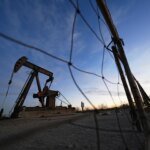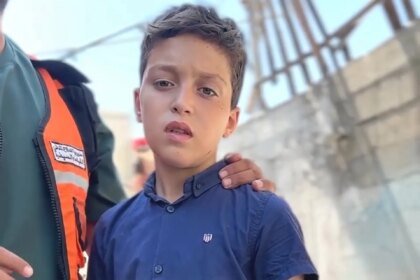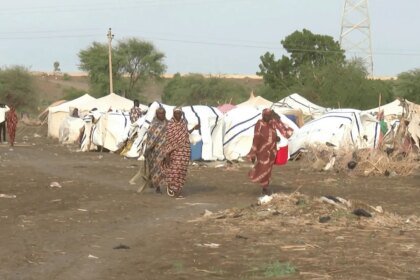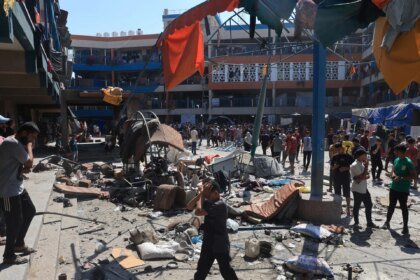


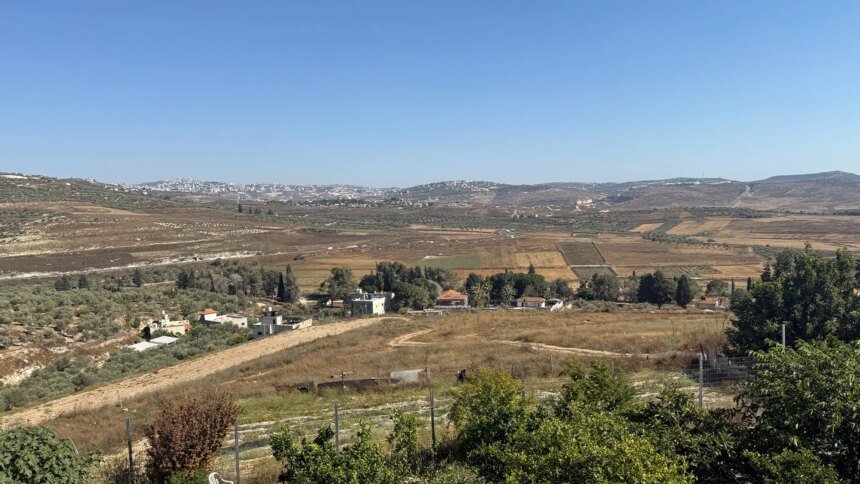
Nablus- On a rugged dirt road that cuts through the heart of the Masoudiya Plain near the city of Nablus in the northern West Bank, the Al Jazeera Net crew accompanied a worker at the “Sebastia-Masudiyah” well on a journey that was not devoid of real danger. We asked him if it was safe to arrive, and he answered without hesitation: “The danger is certain. The settlers are monitoring us, and it is impossible to predict what they might do.”
With these daily fears, workers continue to access and operate the well despite repeated attacks and persecution, while threats targeting both people and water are escalating in its vicinity.
The “Sebastia Well – Masoudiyah” is one of the largest wells in the Palestinian Authority, pumping between 350 and 400 cups of water per hour. It is the main source of supply to Nablus and the surrounding villages, and any malfunction in it will lead to a stifling water crisis that will force the villages to search for alternative sources that are already scarce.

War on water
The anti-settlement activist in northern Nablus, Dhiyab Hajji, recounts a series of attacks that began with stone-throwing and then developed into burning a mobile room “caravan” used by the well’s guard with Molotov cocktails. He told Al Jazeera Net that the well has 9 guards who work on a daily basis (day to day), and they continue day and night in order to protect and operate it.
The Masoudiyah area, where the well is located, is known for its historical and archaeological importance, as it was one of the most important stations of the Hejaz Railway and has buildings that still document that stage. Israel targeted it with settlement in 1975, but it failed due to the resistance of the people.
Other sites are targeted
Targeting is not limited to the well alone; Hajji, a member of the Committee for the Defense of the Lands of Saudi Arabia and one of its residents, refers to what happened to the “Treated Water Irrigation Project”, which is a strategic project that cost about 13 million euros (about 14.8 million dollars), and was aimed at irrigating two thousand dunums of land (a dunum = 1,000 square meters) to serve 250 farmers from 4 surrounding villages through the local Wadi Al-Sha’ir Association.
He says that the project was subjected to attacks that affected all its components, as the settlers destroyed the fence, seedlings, and irrigation networks, leading to the destruction of all cultivated lands, the last of which was a banana farm.
Hardly a single water source in the region is safe from attack. At the end of last April, settlers and Israeli occupation forces seized Ain al-Dilba in the town of Burqa, which is a vital and historical water spring that provided about 30% of the water needs of the people of the town located northwest of Nablus.
The National Office for Land Defense and Settlement Resistance, which is affiliated with the Palestine Liberation Organization, revealed that settlers’ bulldozers destroyed the main water tank near Ain al-Dilba, which led to the disruption of supplies to large areas, while the settlers began extending water lines from it towards the “Homesh” settlement, which is located on the town’s lands, and the settlement outposts adjacent to it.

Gates and fences for protection
Since October 7, 2023, the Masoudiya area, which extends over about 12 thousand dunams, and whose lands overlap between the villages of Burqa, Sebastia, Ramin, Deir Sharaf, and Bazaria, northwest of Nablus, has been subjected to systematic restrictions by the occupation army and its settlers.
Hajji explains that the turning point began with the establishment of a pastoral settlement outpost, which not only controlled the lands and plains of Al-Qaryatayn, but also extended towards the Cyrenaica Plain, and expanded from areas classified “C,” which are subject to full Israeli civil and security control according to the Oslo Accords, to penetrate areas classified “B” and “A,” which are politically subject to the Palestinian Authority, where settlers set up new tents west of Saudi Arabia, preventing farmers from reaching their lands.
Hajji represents 12 families (about 75 people) residing in Masoudiya, and describes how the settlers bulldozed the main paved road leading to their homes, turning it into a destroyed dirt street full of potholes to prevent residents from passing their cars. This prompted people to fortify their homes with iron gates and a fence that closed all entrances to confront night attacks launched by settlers, who are often armed, masked, and wearing black uniforms.
On a personal level, Hajji now coordinates daily the departure times of his family and his four children to their schools and universities and transports them himself in his car, for fear of being pursued by settlers who use mountain four-wheel drive vehicles and motorcycles to harass residents.

Existence associated with the well
A few meters away from Hajji, his neighbor, Musa Deis, describes the situation of the people of Masoudiya since the establishment of the pastoral outpost, just 300 meters from their homes, as “hell,” and confirms that their existence is entirely linked to the nearby water well, as it is their only source of water and electricity.
Deis revealed to Al Jazeera Net that settlers recently cut the plastic water pipes leading to his house as an intimidation tactic, warning that cutting the main lines of the well would mean “the end of life” in the region, as “no one will dare to supply us with water through tanks in light of the existing security threat.”
He recounts how settlers stormed the vicinity of his house and explicitly threatened the family: “Leave from here. This land is ours. We will burn you, your children, and your homes if you do not leave.” The attacks developed to include removing the doors of locked houses and forcibly entering them, which was documented by surveillance cameras of Dais and other residents.
The family’s life became a “vortex of terror,” as he described it, as its members adopted a “shift” sleeping system, with some staying awake on guard, while others slept for short periods, after the sudden attacks extended from night to daylight hours.
Dais only has a pile of stones with which to confront settler violence and a “resilience tent” in which volunteers and activists sometimes participate in an attempt to strengthen the steadfastness of the people of the area.
He concludes, “The presence of people supporting families is the only deterrent that may prevent settlers from committing massacres, especially with our fear that attacks will develop from stones and sticks to the use of firearms, as happened in other areas.”

The battle of existence
For its part, the Nablus Municipality is aware of the strategic weight that the well represents. Mayor Annan Al-Atira told Al-Jazeera Net that her achievement is the result of years of struggle to overcome the obstacles imposed by the occupation, and what the water facilities of the Nablus municipality are exposed to, specifically the “Sebastia-Masudiyah” well and the Odla well south of the city, “are not random incidents, but rather a systematic attack, targeting human resources and physical facilities together with the aim of destabilizing the water sector in the governorate.”
It reveals that the arrival of municipal crews to the wells is no longer a normal process, but rather requires “drawing a mini-security plan before every move,” which includes monitoring the roads and ensuring that they are free of settlers and occupation forces, before allowing the engineering crews to proceed.
She emphasized: “Defending the Sebastia Well is defending stones, trees and water against attempts at theft and Judaization, and the battle for water is an integral part of the battle for Palestinian existence.”
International warning
Data published by the United Nations Office for the Coordination of Humanitarian Affairs in the Occupied Palestinian Territories (OCHA) on June 12, 2026 indicate injuries or material damage in more than 230 communities in the West Bank as a result of settler attacks, and the numbers indicate the displacement of more than 2,200 Palestinians as a result of these attacks since last January.
With regard to water infrastructure specifically, the same report recorded more than 100 demolitions or settlement violence that damaged or destroyed more than 190 water and sanitation facilities in the West Bank since the beginning of 2026, which led to an escalation in reliance on water trucks in the most fragile communities.