

Published On 2/7/2026
The city of Damazin, the capital of Blue Nile State in southeastern Sudan, is witnessing a worsening humanitarian crisis with the advent of autumn, coinciding with the ongoing military operations in the vicinity of the city of Kurmuk, which threatens the lives of thousands of displaced people who live in worn-out tents that cannot withstand rain and wind.
An informed source revealed to Al Jazeera that the Sudanese army launched a massive attack on the positions of the Rapid Support Forces and the Popular Movement (North) in the vicinity of the city of Kurmuk, targeting their advanced defenses and destroying a number of them, as it approached retaking the entire city.
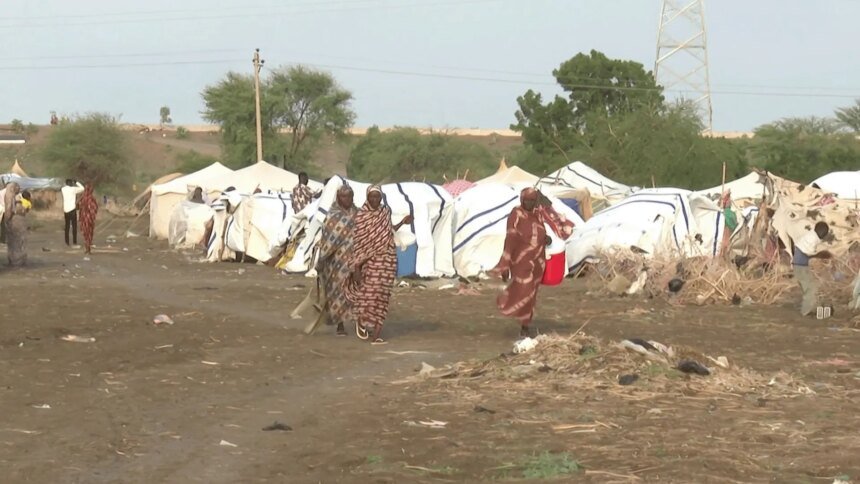
According to an intervention by Al-Jazeera correspondent Wadah Al-Taher from Damazin, Al-Karama III camp hosts about 3,000 families who were displaced from the areas of Kurmuk, Qaysan, Bout, Ruru, and other areas, and they suffer from a severe shortage of food, clothing, water, and medicine, a suffering that is expected to worsen with the advent of the fall.
The displaced people in the camp fear heavy rains in the fall season, especially since their tents made of sacks of sugar, flour, mats, and plastic bags cannot resist the strong winds or heavy rains, which are two features that characterize the fall season in the city of Damazin, as Al-Taher explains.
To protect their children, the displaced people appeal to the local authorities, the Humanitarian Aid Commission, and relief organizations to provide plastic bags and materials from which they can build a shelter to protect them from rain, wind, and the heat of the sun, in light of the deteriorating living conditions and the absence of the minimum requirements for a decent life.
Dropping marches
In a related context, the Sudanese army announced in a statement that its air defenses were able to shoot down an enemy strategic drone in the sky of the city of Tandelti in North Kordofan state, and it also shot down two other reconnaissance drones in the vicinity of the cities of Umm Rawaba and Al-Obeid.
The report points out the escalation of fears of deteriorating humanitarian conditions in the Blue Nile region, with the continuation of military operations and the increasing number of displaced people, at a time when humanitarian organizations are unable to meet basic needs, amid warnings of an imminent humanitarian catastrophe with the onset of the fall season.
The International Organization for Migration announced in a statement – at the beginning of last April – the displacement of 329 families from the city of Qaisan in the Blue Nile “as a result of the worsening insecurity.” According to civil organizations and volunteers, the number of displaced people in Karmuk and Qaisan is more than 20 thousand, distributed among the cities of Damazin, Roseris and Wad Al-Mahi.
The Sudan Doctors Network called on national and international organizations to intervene urgently to provide aid to more than 10,000 displaced women, children and the elderly from Qaisan to Roseires, in light of “extremely bad humanitarian conditions as they face an acute shortage of food and medicine and a lack of the most basic necessities of life.”
On March 24, the Rapid Support Forces announced their control of the strategically important city of Kurmuk near the border with Ethiopia, following violent battles that lasted for hours with Sudanese army forces.