


Published On 2/7/2026
While the eyes of hundreds of millions of football fans turn to the green rectangle to watch the 2026 World Cup, the largest football event in history, other eyes – unseen by the fans – are watching what is happening outside the boundaries of the stadium.
These eyes do not follow passes and goals, but rather monitor faces, monitor movements, and capture the smallest details of behavior. Behind the loud festive atmosphere, a World Cup stands out that is described as the most dependent on surveillance technologies in the history of the tournament, as fans turn, without realizing it, into a permanent source of data within a large-scale digital security system.
Read also
list of 2 itemsend of list
Everyone who moves between host cities finds himself – in theory – under constant surveillance. His movements are monitored, his behavior patterns are analyzed, and the data of the smart devices he carries is recorded within an integrated network in which government agencies and private technology companies participate. This is a reality that raises increasing questions about the line between security requirements and privacy protection.
One billion dollars to build an unprecedented security system
This system did not come out of nowhere, as the US government allocated more than a billion dollars to enhance security measures for the World Cup, and directed a large portion of this budget to modernize the security infrastructure around the stadiums, transportation centers, and host urban areas. The investments also included modernizing the equipment of anti-explosives teams and rapid intervention units, in a move that represented a great economic opportunity for technology and cybersecurity companies.

Critics point out that this expansion of surveillance tools was justified under the title of combating the illegal use of drones. According to this vision, this threat has led to the strengthening of the partnership between security institutions and software development companies, which has provided extensive funding for the development and acquisition of highly sensitive surveillance technologies, amid fears that the security motive will turn into a justification for expanding surveillance powers at the expense of civil liberties, including freedom of expression and the right of individuals to assemble without being tracked.
Smart cameras that recognize faces and collect biometric data
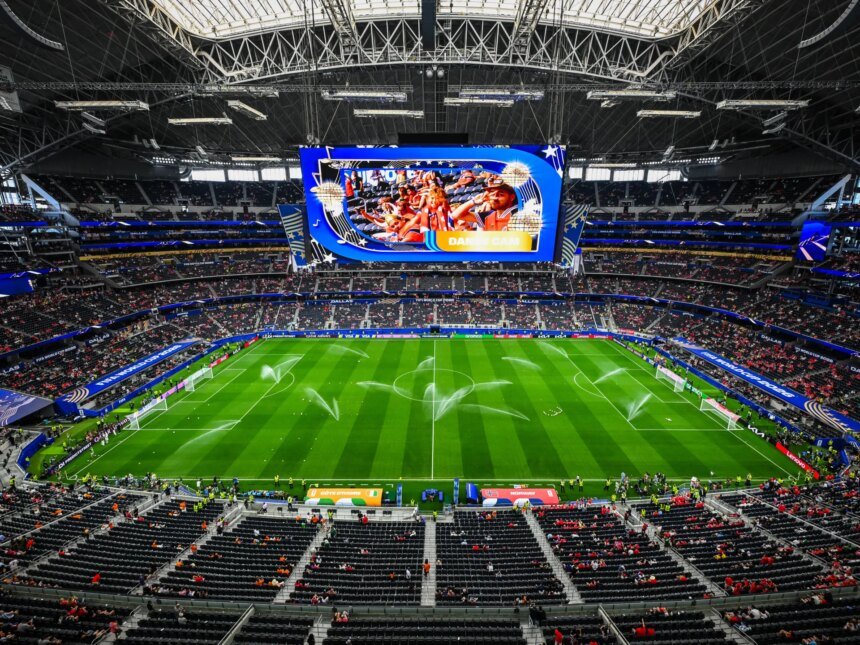
Inside the stadiums, cameras are no longer limited to broadcasting matches or monitoring riots, but rather are equipped with advanced facial recognition systems that rely on artificial intelligence techniques, and are capable of creating fingerprints and biometric maps for attendees. The source of concern – according to privacy experts – lies in the possibility of keeping this data and using it later for purposes that its owners have no power to control or know how to use.

Surveillance extends everywhere
Outside of stadiums, some US states – including New York – are using federal funding to deploy advanced drones equipped with high-resolution cameras, thermal sensors, and multiple sensors. Reports say that some of these platforms are capable of carrying out large-scale surveillance operations, while other models possess technologies that mimic the work of telecommunications towers, allowing the locations of mobile phones to be determined or the collection of some communications data within the framework of the legal powers granted to the competent authorities, which continues to spark widespread debate between security advocates and advocates of privacy protection.