Published On 4/24/2026
The health situation in Sudan reveals a double crisis, as the citizen no longer only suffers from the bullets of war, but also faces a health siege imposed by geopolitical tensions in the Middle East.
This additional crisis is represented by the American war with Iran and the subsequent blockade of the Strait of Hormuz, which is the vital region through which energy and medicine supplies pass to the world.
According to a report prepared by Al Jazeera correspondent Ahmed Al-Issawi, the repercussions of the war in the Middle East were not limited to cutting off vital shipping routes and creating a global energy crisis, but rather went beyond it to undermining the ability of relief organizations to deliver food and medicine to millions of needy people around the world, and Sudan is at the forefront of those affected.
The suffering of the Sudanese is evident on a daily basis with a severe shortage of medicines, as one citizen describes a bitter reality, saying: We may have very small doses remaining from each package of medicine, so we try hard to search to provide the remaining ones. We may go to hospitals or search through various communication groups, and yet we may not be able to obtain it.
In the same context, another citizen describes the complexities of the current situation, stressing that obtaining money itself represents a major problem in light of the war, and even if money is available, medicines are not available, and that the recent war in the Middle East has made matters worse.
UN warnings
The United Nations warns of a dangerous deterioration of the situation, noting an increase of up to 20% in the cost of global shipping, as well as delays resulting from changing the course of goods. The organization believes that the rise in transportation costs, fuel prices, and insurance is reducing the required supplies in a way that threatens the lives of millions.
Relief organizations confirm that the war in the Middle East not only cut off shipping routes, but also undermined their ability to respond to escalating humanitarian crises, considering that Sudan is experiencing the worst health crisis in the world.
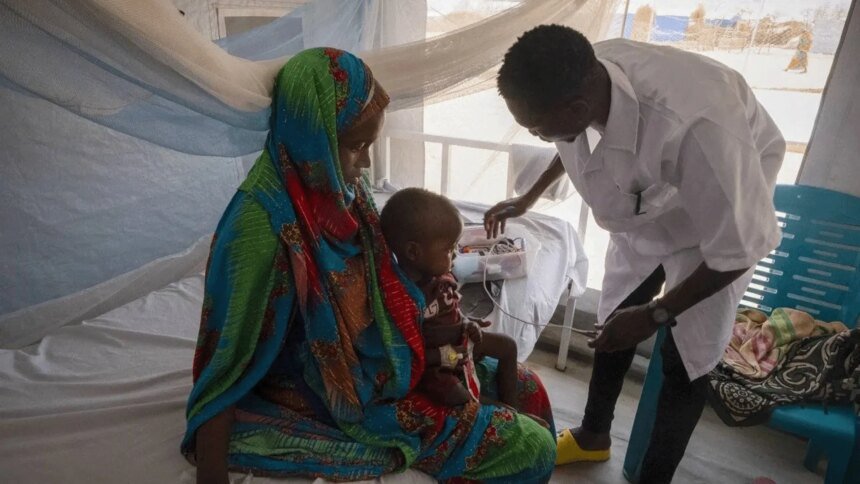
United Nations figures indicate darker dimensions, as the organization warns of a worsening situation with the spread of epidemic diseases such as cholera, malaria, dengue fever, and measles. The organization adds that more than 4 million people suffer from acute malnutrition, which increases the fragility of the health situation and doubles the pressure on the few facilities that are still working in Sudan.
The report points out that the Sudanese health system, which was exhausted by the civil war, has now become hostage to a war far from its borders, and that distant waterways are now controlling the quantities of medicine that reach patients’ beds in Khartoum and Darfur.