Published On 1/6/2026
|
Last update: 6/2/2026 10:31 (Mecca time)
The ongoing Israeli raids on Lebanon are no longer mere military attacks, but have become an existential threat that affects the basic lifeline of millions of Lebanese, and portends an unprecedented environmental, water and humanitarian catastrophe.
In this context, the Director of the National Authority for the Litani River, Sami Alawiya, confirmed to Al Jazeera that targeting the dam’s vicinity is the most dangerous event witnessed in the current war so far, noting that Israeli warplanes launched intense and continuous raids targeting the facilities affiliated with the dam, specifically the vital secondary road linking the villages of (Sohmar, Mashghara, and Qaraoun).
The danger of this bombing lies in the fact that this road has become the only and last passage for the people of the region, after the occupation destroyed all other roads and isolated the villages from their surroundings. “The Qaraoun Dam is a civilian facility par excellence and enjoys international immunity, and targeting it may lead to a major environmental, water and humanitarian massacre that cannot be contained.”
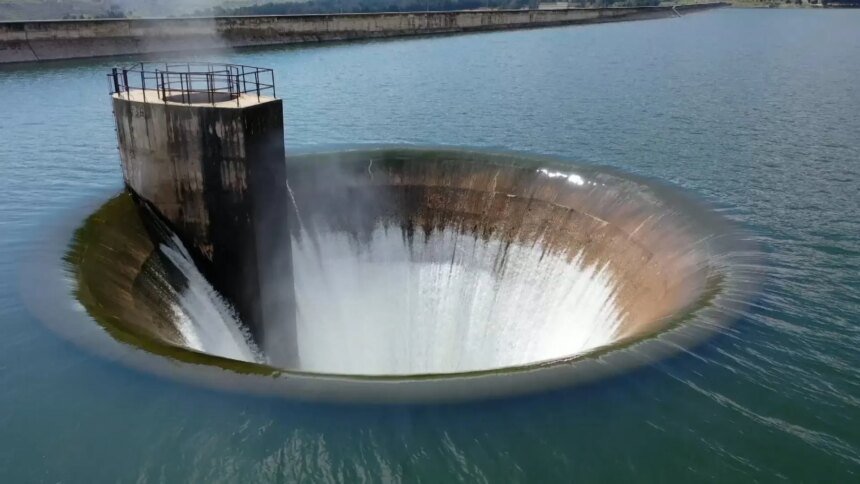
The seriousness of the Israeli threat is evident in the extreme strategic importance that the dam represents for the Lebanese infrastructure, as it represents the basic pillar of water and energy, as the dam is the largest water reservoir in the country, as it accommodates about 220 million cubic meters of water. The dam supplies water to the capital, Beirut, and its suburbs, and is the main source of irrigation for the vast agricultural lands in the south and the southern coast.

The dam also feeds 4 hydroelectric power plants, which are the strategic plants that maintain the stability of the currently dilapidated Lebanese electricity network, and is a lifeline for hundreds of towns and villages with electricity in the regions of Jezzine, the Western Bekaa, Rashaya, the upper Chouf, Iqlim al-Tuffah, and Iqlim al-Kharroub, in addition to operating vital public facilities.
To confront this imminent danger, Alawiya said that the National Authority for the Litani River urgently communicated with the highest political levels in the country, led by the President of the Republic, to quickly intervene and neutralize the dam from military operations.
In a decisive field step to prevent the occupation from creating any justifications, the Commission categorically banned entry and exit to and from the dam to remove the pretexts. In parallel, the Commission began documenting these attacks to prepare an integrated legal file to be submitted to the relevant international bodies, first and foremost the World Bank, to hold the occupation accountable for its targeting of vital civilian installations.

The Qaraoun Dam, or Albert Naqqash Dam, is one of the most prominent and largest development projects in the modern history of Lebanon. It is located in the western Bekaa on the upper course of the Litani River (the longest river in Lebanon). The dam was inaugurated in 1959 and its artificial lake was completed in the 1960s as part of an economic revival plan. The height of the dam is about 61 meters, its length is about 1,090 meters, and its lake expands to 220 million cubic meters. It represents the backbone of the strategic “Litani Project,” and aims to provide drinking water, irrigation, and generate clean hydroelectric energy.
Compromising the body of this huge dam does not only mean cutting off water and electricity to millions of people, but it will threaten a catastrophic flood that could sweep away entire villages in the Litani Basin all the way to the Mediterranean Sea, making it a time bomb that the occupation will press its detonator.