

Published On 4/7/2026
|
Last update: 18:38 (Mecca time)
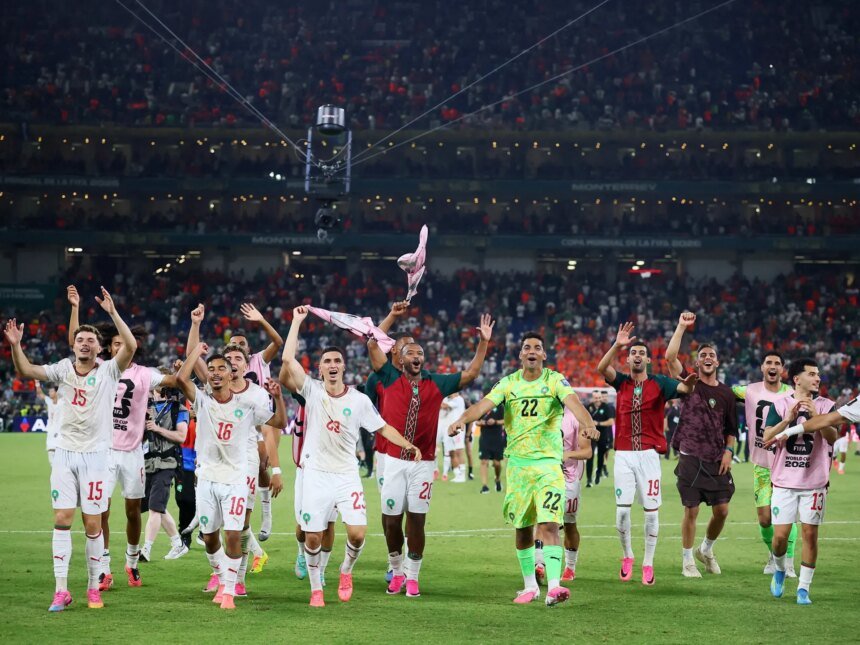
A Reuters report says that Morocco’s rise in the world of football derives its momentum from an unexpected source of funding: the country’s huge phosphate reserves, as the giant state fertilizer company is financing the development of the national team.
The report adds that the OCP Group – the largest producer and exporter of phosphate fertilizers in the world – strongly supported Moroccan football by establishing a “National Fund for Football Training” in 2024 in cooperation with the Moroccan Federation and private sector funders to push this game to new heights.
Read also
list of 2 itemsend of list
Reuters quotes Hicham El Habti, president of the OCB-funded Mohammed VI Polytechnic University and the group’s executive director in charge of innovation and education, as saying that a fertilizer producing company’s investment in football came under a “royal directive” to state-owned enterprises. He says, “We have this commitment to the development of the country.”
Al-Habti continues: “OCB Group is making huge investments in the fields of training. There is an official partnership with the International Federation of Association Football (FIFA).”
Morocco is preparing for its World Cup Round of 16 match against Canada, one of the three countries hosting the tournament, in Houston today, Saturday.
Al-Habti believes that investing the Moroccan state’s money in football achieves results that he can see whenever he is among his country’s citizens. The 2022 World Cup, in which the Moroccan national team ranked fourth after overthrowing Spain and Portugal and defeating Belgium, raised the morale of millions, and the situation today is similar.
He said, “You will see all the faces smiling… This reminds us of the year 2022… Morocco was a very happy country for two months after the (World Cup) ended. I feel exactly the same energy, and the same atmosphere now.”

Greater power in football
OCB’s recent contributions are not the beginning of Morocco’s efforts to become a greater force in African and international football.
In 2009, King Mohammed VI directed the government to invest in the country’s football infrastructure, including stadiums, youth training academies, stadiums and professional coaches.
According to a Reuters report, the OCB Group joined this project in 2024 to push the level of Moroccan football to new heights.
The group stated at the launch of the fund that it finances training academies “through developing modern infrastructure and managing facilities and facilities effectively, in addition to providing advanced technical expertise.”
Morocco’s growing football excellence is now widely recognized as the team reached the semi-finals of the 2022 World Cup and won the 2025 Africa Cup of Nations after a controversial final earlier this year.

Phosphate riches
Phosphate is a limited and vital resource for agriculture and cannot be manufactured from simple raw materials other than nitrogen fertilizers that are usually produced from natural gas.
Josh Linville, an expert and global fertilizer market analyst at Stone
The Kingdom also does not face most of the challenges that most of its competitors suffer from. The administration of US President Donald Trump recently lifted some restrictions imposed on imports of Moroccan phosphate to alleviate the shortage and high prices resulting from the Iran war.
Morocco alone currently accounts for approximately 50 billion metric tons (about 70% of the world’s total phosphate), and is the third largest phosphate producer in the world.