Oman – “I lost my job, I lost my family, my friends, and my university… 16 years of my life were in vain.” With these heavy words, the young Jordanian Mahmoud Al-Asmar, 33 years old, summarizes a long journey with drugs that began in his teens, and ended only 6 months ago with a serious attempt to restore a life that was almost completely lost.
Mahmoud did not imagine that a hashish cigarette given to him by one of his friends when he was 17 years old would open a long door of losses. He was told that day that it was a “passing experience” that was harmless, but today he sees it as the moment after which the slide began.
Read also
list of 4 itemsend of list
Al-Asmar told Al-Jazeera Net that temptation often begins with the same phrase: “Try… nothing will happen.” However, what seemed like a simple experience turned, over time, into an addiction that lasted 16 years, during which he lost his job, his university studies, his social relationships, and even his self-respect.
The hardest thing Mahmoud carries from those years is not the loss of work or study, but the memory of his father, who passed away thinking that his son had stopped using. The father was reassured that Mahmoud had emerged from the cycle of addiction, while the son was still using and hiding the truth.
Mahmoud says in a voice filled with grief: “My father died thinking that I had recovered, but I was lying to him. This feeling accompanies me every day, and I do not want anyone to live this guilt.”
From this experience, he directs his message to every addict not to wait for the moment of loss to begin treatment, as addiction not only steals health, but also steals relationships, memory, and dignity, and leaves behind a heavy feeling of remorse.

Mahmoud graduated from cannabis use to Captagon, then to more dangerous substances. He says that obtaining drugs was easier in the past, while the task has become more difficult today with the tightening of security measures and the prosecution of dealers.
But the decision to recover was not just a security one, but a family and humanitarian one. He found himself on the verge of losing his mother as well, after she gave him the choice between his family and addiction, so he chose to return to life.
Although he was able to quit voluntarily, after gradually stopping the most dangerous substances, he confirms that crystal meth and Captagon users need treatment within specialized centers, praising the confidentiality of procedures and respect for patients’ privacy in treatment centers in Jordan. He summarizes his advice with a direct phrase: “Earn yourself and your life…and go to them before they come to you.”
A loss in another way
Mahmoud Awaida’s story does not differ much in its beginning from the story of Al-Asmar, but it reveals another facet of loss within the house itself.
Awaida, a young man who recovered from the danger of drugs, tells Al Jazeera Net that addiction led him to sell his mother’s gold, then the gas cylinders in his home, and even his sister’s clothes and mobile phone, to secure the price of the doses, while his family was unaware that he was using drugs.
When he realized that he was heading towards the abyss, he decided to voluntarily surrender himself to an addiction treatment center, despite his fear of being exposed or legally prosecuted. But he was surprised by the confidentiality of the procedures, as he was treated with a number inside the center to preserve his privacy, and his parents did not know about his addiction throughout the treatment period, which lasted 3 months.
Owaidah left the center recovering, without any legal restrictions being registered against him, because he himself took the initiative to seek treatment. His story, like the story of Mahmoud Al-Asmar, seems to be evidence that fear of treatment may sometimes be more dangerous than the treatment itself.

“With awareness we break the cycle.”
Mahmoud’s story comes in conjunction with the world commemorating, today, Friday, June 26, World Anti-Drug Day, while the Jordanian Public Security Directorate, represented by the Narcotics Control Department, chose the slogan “With awareness…we break the cycle” as the title of its awareness activities this year.
The campaign carries a message based on prevention, awareness and treatment, in addition to continuing to pursue smuggling and trafficking networks. The Narcotics Control Department also organizes a series of awareness-raising events and exhibitions in the governorates of the Kingdom, aiming to enhance community awareness, especially young people, of the dangers of drugs and their health, social and security effects.
While the seizures and numbers highlight the scale of the security confrontation, the stories of those recovered reveal another side of the battle. An aspect that begins with fear, stigma, and denial, and sometimes ends with a courageous decision to seek treatment.
From 18 beds to a specialized center
Jordan began experimenting with addiction treatment in 1993, establishing the first specialized center for treating addicts in the Jabal al-Lweibdeh area in the capital, Amman, with a capacity of 18 beds. The center was the first of its kind in the Kingdom, and the only one in the world that is affiliated with a police force.
In 2009, the center moved to a new building in the Arjan area, increasing its capacity to 60 beds, before witnessing a new expansion in 2012 that raised the capacity to 170 beds, under the supervision of cadres specialized in medical and psychological treatment and rehabilitation.
The treatment is based on successive stages, starting with medical and psychological evaluation, then dealing with withdrawal symptoms, passing through behavioral and psychological rehabilitation programs, all the way to subsequent follow-up after the recovering person is discharged, which helps him return to his normal life and reduce the possibility of relapse.
Addiction treatment services in Jordan are not limited to government centers. Al-Rashid Hospital, located in the Abu Nseir area, north of Amman, is the first psychiatric hospital in the private sector in the Kingdom, with a capacity of 140 beds, and includes separate departments for men and women, in addition to a specialized unit for treating addiction to drugs, alcohol, and tranquilizers.
According to those in charge of it, the hospital adopts a therapeutic approach that provides a safe environment and specialized care under the supervision of a medical, psychological and social team, with a commitment to complete confidentiality and respect for patients’ privacy, in addition to psychological and occupational therapy services, psychological tests, evaluation, follow-up and health consultations.

Confidentiality of treatment leaves no excuse
The head of the media department at Al-Rashid Hospital, Anas Al-Tantawi, confirms that Jordanian legislation provides legal protection for those seeking treatment, as a public right lawsuit is not filed against those who apply for treatment on their own, whether in the public or private sector, while ensuring complete confidentiality and privacy.
Al-Tantawi told Al-Jazeera Net that fears related to social stigma have decreased in recent years, with citizens’ confidence in treatment centers increasing. He explains that treatment programs are built according to the condition of each patient, and include medical, psychological, sports and religious treatment, in addition to involving the family in some cases, and follow-up programs after the end of treatment.
Al-Tantawi warns against delaying seeking treatment, saying that the addict may turn into a source of danger to himself, his family, or society at any moment, whether due to overdoses, committing crimes, or transferring addiction to his social environment. He calls on families to take the initiative and not be satisfied with the abuser’s promises that he is able to quit on his own.
Numbers reveal the scale of the phenomenon
Despite remedial and preventive efforts, drug crimes still represent a security and social challenge in Jordan.
According to the criminal statistical report monitored by Al Jazeera Net, the number of drug crimes in Jordan decreased by 12.78% during the year 2025 compared to 2024, recording 22,031 crimes, compared to 25,260 crimes in the previous year.
The number of crimes of possession and use of narcotic substances reached 15,720 crimes, while trafficking crimes recorded 6,311 crimes during the same year. The total number of drug crimes recorded between 2021 and 2025 reached more than 104,000 crimes.
These numbers reflect that confrontation is not limited to arrest and prosecution, but also requires early prevention, available treatment, and social messages that break the embarrassment and fear of seeking help.
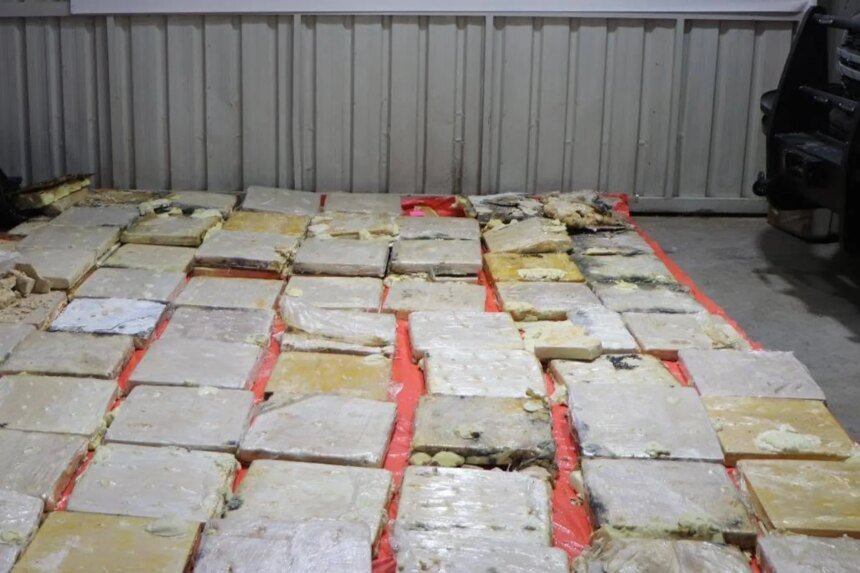
Prior to World Anti-Drug Day, the Narcotics Control Administration announced the thwarting of 5 specific cases, most notably the seizure of 6 liters of liquid cocaine coming through Queen Alia International Airport, and the thwarting of an attempt to smuggle 150,000 narcotic pills through the Jaber border post.
The cases also included the arrest of a wanted person classified as dangerous, the seizure of a farm containing 2,300 marijuana seedlings, and the arrest of two dealers in possession of 9,000 narcotic pills.

In a remarkable development, the Jordanian army announced the thwarting of an attempt to smuggle narcotic substances using electronically guided balloons on the Syrian-Jordanian border, which reflects the diversity of smuggling methods and the development of network tools that attempt to circumvent border controls.
Despite all the numbers and seizures, the stories of those recovered remain the strongest message. For Mahmoud Al-Asmar, recovery was not just stopping using, but rather an attempt to regain a full life that he had lost for years.
Today, 6 months after a new beginning, Mahmoud does not offer a ready-made sermon as much as he presents a summary of an experience for which he paid with his life, his family, and his relationships. He tells young people: “Do not try drugs even once… Recovery is worth the experience, but addiction is not worth losing your life for.”