Published on 6/25/2026
Khadija opens a bag in which she has kept pieces of frozen cereal since Eid al-Adha. She examines them carefully before adding some to the steaming pot of couscous in her kitchen.
For her, it is not just about preparing a meal for Ashura night, but about restoring a custom that has accompanied Moroccan families for decades.
Read also
list of 2 itemsend of list
Khadija told Al Jazeera Net that her mother and grandmother were keen every year to dry part of the sacrificial meat and keep it for this occasion, until the presence of the Qadid at the Ashura table became part of the family’s rituals and memories.
She adds that the women of the family gather on this occasion to prepare food while chanting popular chants and songs related to Ashura, in an atmosphere where the flavor of the food blends with childhood memories and the spirit of celebration.
What is qidd?
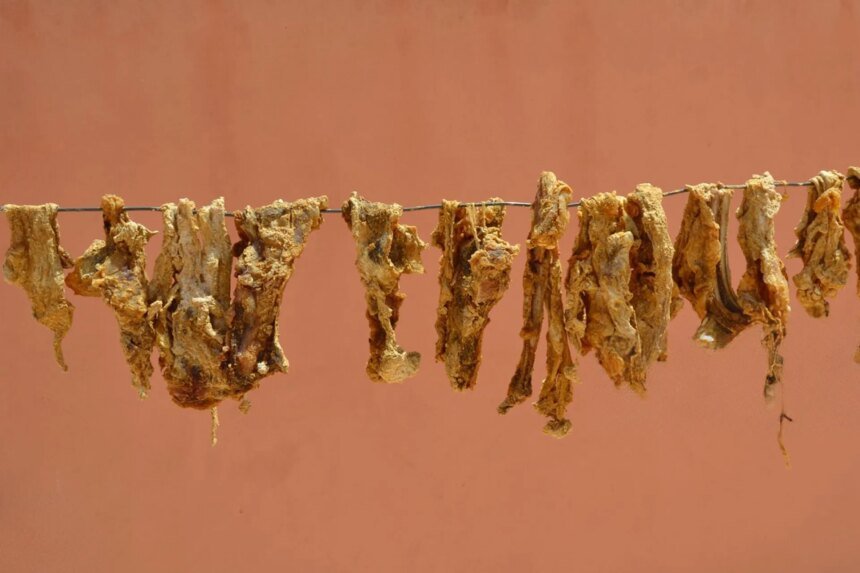
Qadid is one of the most popular methods of preserving meat in Morocco. It is prepared immediately after Eid al-Adha by choosing pieces of meat, often from the thigh or lean parts, then cut into long slices and seasoned with salt, garlic, cumin, red pepper, and dried coriander.
After the slices absorb the spices, they are hung under the sun in well-ventilated places for several days until they lose most of their moisture and become suitable for preservation for many months.
The drying period varies according to the region and climatic conditions, but may extend from a few days to more than a week. After the process is complete, the qadid is stored until used in various dishes, most notably couscous and tagines, as it imparts a strong and distinctive flavor acquired from salting and drying.
Despite the change in lifestyles and means of preserving food, this custom is still present in a number of Moroccan homes. Weeks after Eid al-Adha, the old man reappears on the tables, connecting two religious occasions that share a single food memory.
Scarcity management
Historian of the history of Moroccan cuisine, Hisham Al-Ahrash, says that man’s relationship with meat goes back to the beginnings of civilization, as it was one of the first foods he knew during the hunting stage, which made it occupy a central place in human food culture.

As societies moved to agriculture and livestock raising, the need emerged to preserve and store meat as it is a precious resource that is not available throughout the year, which is known as scarcity management.
People have developed different methods of preservation, such as drying in hot areas and smoking in cold or low-sun areas.
Al-Ahrash told Al-Jazeera Net that meat in Morocco has historically been associated with holidays and occasions more than with daily life, as its presence on the table was an exceptional event in long periods of history. Therefore, the Moroccans were keen to benefit from the various parts of the carcass, and they devised ways to preserve what was left of it, the most prominent of which were khaliya (small pieces of meat preserved with fat) and qadid, to ensure the continued presence of meat on their tables after the slaughter seasons ended.
The researcher in the history of Moroccan cuisine adds that qadid was not just a means of preserving food, but rather part of a social culture linked to resource management and confronting scarcity. Over time, its consumption was linked to specific occasions, including Ashura, as it constituted a stock of sacrificial meat that could be used months after the Eid, at a time when fresh meat was not easily available to many families.
An inheritance preserved in palaces
Hence, couscous with qadid has become one of the dishes prepared on Ashura in a number of Moroccan families, along with other social rituals that vary between family gatherings after a day of fasting, chanting popular songs, and celebrating the occasion by buying dolls and games for children, and wearing traditional Moroccan dress.
Al-Ahrash told Al-Jazeera Net that the continuity of many Moroccan food traditions was not the result of coincidence, as the Royal Palaces played a role in preserving and passing on this heritage, by preserving recipes and dishes that have remained present in Moroccan culture for centuries.
Despite the spread of modern cooling methods and the change in eating habits, Al-Qadid still maintains its place in many Moroccan regions.
Between a piece of meat that was dried after Eid al-Adha and a dish of couscous served on Ashura, the story of an ancient tradition continues that has succeeded in crossing time, carrying with it the flavors of the past and the memory of generations that made preserving meat more than just a necessity of living, but rather part of the cultural identity of Moroccans.