Published on 6/25/2026
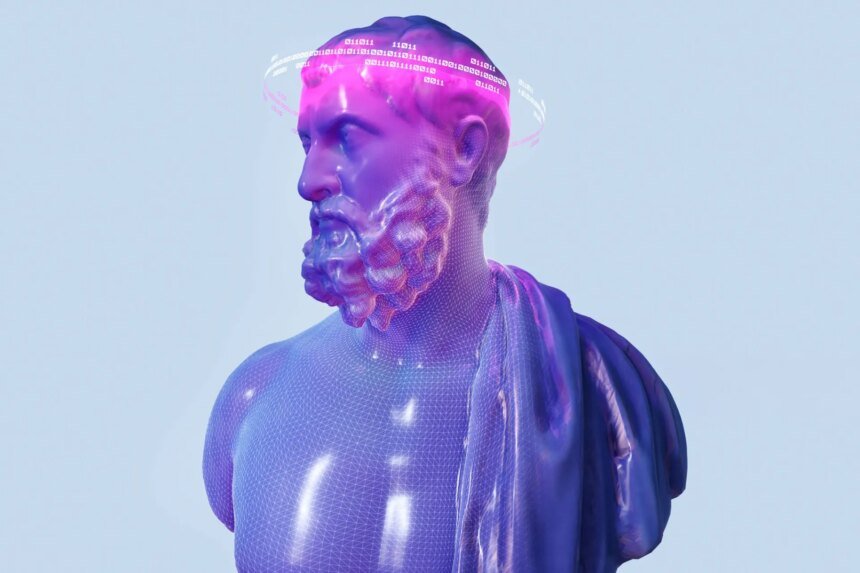
At a time when many believe that artificial intelligence threatens human jobs, an unexpected beneficiary of this technical revolution has emerged: philosophers.
At a time when fears are increasing about the ability of machines to perform the tasks of programmers and computer science specialists, giant technology companies are looking for philosophers and luring them with salaries and job opportunities in artificial intelligence laboratories.
The unemployment rate among computer science graduates in the United States will reach 7% in 2024, compared to only 5.1% among philosophy graduates.
The British Economist magazine explained that these companies are attracting philosophy graduates to help answer complex questions related to truth, ethics, and decision-making, which are issues that cannot be solved with algorithms alone.
Read also
list of 2 itemsend of list
In light of these changes, the unemployment rate among computer science graduates in the United States will reach 7% in 2024, compared to only 5.1% among philosophy graduates, according to data reported by the magazine from the Federal Reserve Bank in New York.
Socratic method
According to the magazine, philosophy provides intellectual tools that help artificial intelligence developers address complex problems related to human moral and ethical issues.
Among these tools is what is known as the “Socratic Method,” which relies on asking successive questions to uncover contradictions and test the validity of ideas. It is a method that researchers believe helps smart models reduce the tendency to flatter users or provide inaccurate answers.
AI developers also benefit from the concept of “Socratic ignorance,” that is, acknowledging the limits of knowledge and acknowledging a lack of understanding rather than evasion, according to the report.
Researchers believe that incorporating this concept into models helps reduce overconfidence and “hallucinations,” when systems present incorrect information as fact.

Moral constitutions
The magazine adds that philosophers have begun to play a pivotal role in designing the ethical principles that guide the behavior of artificial intelligence systems in companies leading the artificial intelligence revolution.
One of the most prominent examples of this is Anthropic, the company that owns the “Claude” model, as it built what resembles a “moral constitution” for the model based on various sources, from the ideas of the philosopher Immanuel Kant to the Universal Declaration of Human Rights. Some of the company’s employees call this document, which extends over 78 pages, “The Spirit of Claude.”
The debate within the sector is centered around two main philosophical schools: the first is based on adherence to fixed ethical rules that prohibit lying or harming others, regardless of the consequences, and the second is based on balancing benefits and harms and choosing the option that achieves the greatest possible benefit according to the scenario.
The Economist believes that these questions will become more important as the use of artificial intelligence expands in sensitive areas such as self-driving vehicles, military systems and psychological care, where it is not just about technology, but about how decisions are made that affect human lives and their future.