Gaza – Although tomorrow, Saturday, is the first day of the high school exams in Palestine, student Siwar Muhammad has not received the “sit number” for the exam nor the address of the exam hall in which she will join.
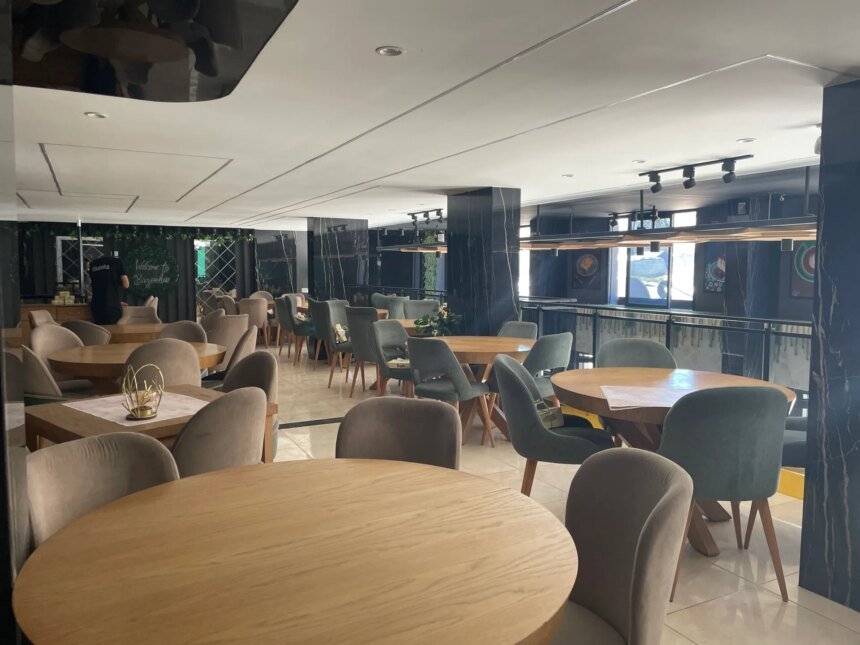
In the morning, Siwar will head to a “public place” that she has not yet determined. She will go out nervous, searching among the existing cafes for the best ones in terms of quality and stability of their Internet waves, as well as the availability of electricity.
Siwar, a displaced student whose house in Gaza City was demolished, and today she lives inside a tent in Deir al-Balah. Her situation sums up the tragedy of an entire generation in the Gaza Strip that takes exams – for the third year in a row – via a remote electronic system without designated halls or institutional care, as each student must manage his affairs on his own.

3 years without education
These exceptional exams come after 3 full years during which these students did not enter any regular school, but rather relied on education through self-efforts.
Siwar speaks to Al Jazeera Net in a tone filled with tension and psychological exhaustion about her upcoming journey over a week and a half of tests, which is a short period of time but loaded with heavy fears of any sudden “bumps” or technical obstacles that may overturn her efforts. Such as when the Internet goes out or the power goes out suddenly.
Her suffering does not stop at the confines of securing the virtual exam hall, but rather extends to the details of her daily life and studying inside the tent. The surrounding atmosphere does not give her any psychological stability in light of the absence of calm, the continued bombing, and the intense flight of drones that haunt the sky and put the nerves in a state of constant tension 24 hours a day.
The suffering deepens inside her tent, which does not insulate sound. Where the noise of neighbors and the crowding of family members into a narrow space interferes with the constant and annoying buzzing of drones; Which completely deprives her of having a designated corner for studying or any margin of privacy that any student needs at this crucial stage of his life.

Phone.. school
The enormity of the suffering deepens when Siwar turns to the huge educational gap left by the three years of displacement. She and her generation did not set foot in any regular school throughout the entire secondary stage (grades 10, 11, and 12).
In the face of this comprehensive interruption, the girl who was known for her academic excellence before the war had no choice but to fight the battle of “self-education” driven by her will alone.
In this exceptional reality, the mobile phone has become the school, the stairs, and the library. There are no paper books, notebooks, or pens here, just PDF files stacked on a small screen, exhausted by the constant search for a means of charging and an Internet signal in distant cafes.

Dreams under fire
Close to the contact lines, student Tala Afana is experiencing a different kind of battle. The stillness that any high school student needs to study seems an impossible luxury in her current place of displacement in the town of Al-Zawaida, adjacent to Salah Al-Din Street.
For an entire month, Tala was unable to study a single word during the night hours, as she told Al Jazeera Net. The sounds of gunfire and explosions in the eastern area adjacent to her residence have become a terrifying daily reality that destroys any ability to concentrate.
What compounds this suffering is the endless and annoying buzzing of drones flying at low altitudes that seem as if they are right above the roof of their house.
This nightly deprivation represents one episode in a series of woes Tala has endured since the beginning of the war. The aggression robbed her of her family’s home in the northern Gaza Strip, and she was saddened by the martyrdom of her father in the first weeks of the war as a result of a bombing that targeted a store where he was located.
Despite the harshness of loss and the complete dropout from regular schools for 3 consecutive years, Tala’s old excellence – where her averages were no less than 98% before the war – sparked an exceptional determination within her.
As she entered high school, she set her sights on a big goal: to be one of the first students in the Gaza Strip, an ambition she paid for with her hard work and health. She had to walk about 6 kilometers a day to reach an educational center in the middle of the Strip.

A different concern
The situation of student Abdullah Nour is no different from that of his two colleagues. It is accompanied by an overwhelming feeling of dread and extreme tension as the crucial hours for the start of exams approach.
This tension stems not only from awe of the scientific subject, but also from a constant anxiety that ravages his thinking for fear of any sudden technical obstacle. The idea that the Internet will be disconnected or the electricity will be cut off in the middle of the electronic test tomorrow puts him in a state of constant psychological alert.
Until the last moments, Abdullah is still confused and does not know exactly where he will take his exams. Will that be at home or will he have to go out and look for a “café” that provides a strong, stable internet point that doesn’t interrupt his signal.
Abdullah, who was displaced with his family in his grandfather’s house in the Tal al-Hawa neighborhood after the occupation completely destroyed their home in the Shuja’iya neighborhood, is facing – as he told Al Jazeera Net – this educational battle with a purely personal and financial effort.
While schools and institutional support were absent over the past 3 years, he was forced to print educational packages at his own expense, rely on a mobile phone, and join an educational center to make up for what he missed. The stifling electricity crisis cast a heavy shadow on his study schedule. The early power outage, at nine or ten o’clock at night, prevented him from studying.
Abdullah remembers with bitterness and heartache his schoolmates who rose as martyrs, led by his cousin and close friend Omar Nour, who was an outstanding student with a 98% average and aspired to study medicine, but he was martyred on January 11, 2025 while he was studying on his mobile phone and preparing for the high school stage, so his memory remains a motivation for Abdullah and a witness to the dreams of an entire generation assassinated under the rubble.

Deferred future
In contrast to his predecessors, student Hamza Abu Beid made up his mind early and decided not to take the exams because he was not prepared for them at all.
For 3 full years, Hamza was completely cut off from the educational process. He did not set foot in a school, nor was he registered in a remedial center, nor did his circumstances allow for independent self-study, which made the young man who had excelled before the war feel that his entire future was at stake.
In a tone filled with oppression, Hamza complains – in his interview with Al Jazeera Net – about the extent of the injustice that is happening to him and his generation. Over the past three years, he has replaced school seats with arduous living work imposed by the details of displacement and survival. Since the early morning, he spends most of his time transporting and filling water, collecting and bringing firewood, and lighting a fire to secure his family’s livelihood. These are daily tasks that drain time and effort and make studying impossible, even if books are available.
His duties were not limited to household tasks, but the young man experienced hard work for a long period in a bakery under the stress of war conditions.
Numbers and preparations
The Palestinian Ministry of Education and Higher Education announced the completion of its preparations for holding high school exams, confirming that they will be held entirely electronically for students in the Gaza Strip, while they will be conducted for West Bank students in the usual face-to-face manner.
Ministry spokesman Sadiq Al-Khadour said in press statements published by the official Palestinian News Agency, Wafa, that the number of applicants for the exams this year is estimated at about 91,000, including about 51,500 in the West Bank, approximately 37,700 in the Gaza Strip, and less than 2,000 students abroad, while 65 students were prevented from taking the exams due to their detention in Israeli prisons.
Al-Khadour explained that the West Bank exams will be held inside the classrooms until next July 8, noting that the halls have been fully prepared and that teachers specialized in technology will be provided inside each hall to help students and address any technical problems that may arise during the exams.
Regarding the Gaza Strip, Al-Khadour stated that the exams will be held entirely electronically during the period from 20 to 29 June, as happened during the past two years, due to the impossibility of holding them in person.
He confirmed that the Ministry carried out a pilot test and simulation of electronic exams for Gaza students, and the process was generally successful, and all technical problems that appeared during the experiment were addressed.
Absent seats
This year’s high school exams come in light of the unprecedented human losses incurred by the Palestinian education sector during the war.
According to the latest data issued by the Ministry of Education and Higher Education on June 9, the death toll in the education sector has risen to 21,701 students and educational staff in the Gaza Strip and the West Bank since October 7, 2023, including 20,647 male and female students, in addition to the destruction of hundreds of schools and educational institutions.
While the Ministry did not clarify the number of high school students who were martyred since the start of the war, the then Minister of Education and Higher Education, Amjad Barham, announced in June 2024 that about 4,000 high school students in the Gaza Strip were martyred during the war.