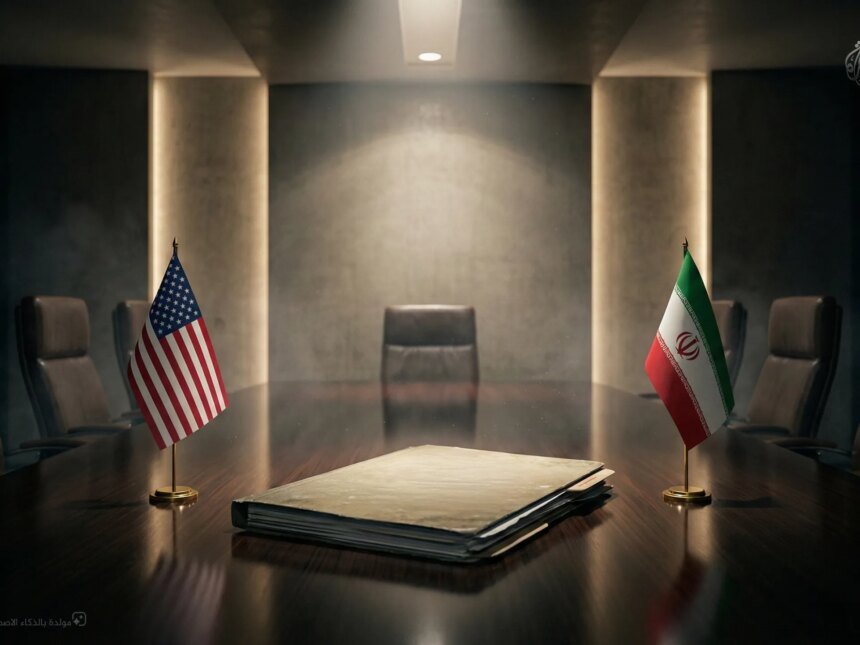
The memorandum of understanding signed by the United States and Iran to end the war and move to a new phase of negotiations in pursuit of a final agreement reopened the discussion about the winners and losers of the conflict, and raised questions about its repercussions on the balance of regional and international power in the next phase.
In this context, writer Michael Hirsch believes that the “unjustified and failed” war on Iran sparked a radical change in the global balance of power that would make Washington and Tel Aviv “relatively weaker” in the coming months and years, considering that the memorandum of understanding signed this week is considered a “document of surrender” for Washington in particular.
Read also
list of 2 itemsend of list
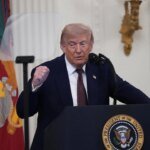
In an article in Foreign Policy magazine, Hersh says that US President Donald Trump emerged from the war in a much “weaker” manner on the internal and international levels, considering that this harmed the US deterrence power during the foreseeable future, not only in the Middle East, but also in the Indian and Pacific Ocean regions and Europe.
Did Trump win?
The writer confirms that the American President did not achieve any gains from the war, considering that he suffered many political and military losses, which he summarizes as follows:
- Spending tens of billions of dollars on war.
- Thousands of lives lost, including at least 13 Americans.
- Causing serious damage to the American economy, which suffers from inflation.
- Betrayal of his political base at home.
- Dangerous depletion of America’s vital weapons supply.
- Strengthening China’s influence and relative position on the international arena.
- Alienating US allies and weakening its relationship with them.
Among these failures, what may most undermine Trump’s standing during the remaining two years of his term – according to the article – is his direct collision, like a number of previous presidents, with the limits of American military power.

Did Tehran lose?
On the other hand, Hirsch believes that the war contributed to Iran becoming a prominent geopolitical player despite the losses it inflicted on it, expecting that Tehran will soon reap new financial gains.
According to the article, one of the most prominent gains achieved by Tehran is strengthening the legitimacy of its political system internally. For 47 years, its regime established its legitimacy by adopting a military mentality based on the idea that it was targeted by hostile external powers, and now it can boast that it has succeeded in confronting global and regional superpowers.
Iran has also gained additional influence – as the author explains – thanks to its continued ability to control the Strait of Hormuz and use it as a pressure card. Therefore, Tehran has now enjoyed a level of influence on the region and the global economy that was not previously available to it.
In this regard, Hersh quotes Iranian affairs expert and former CIA officer Reuel Mark Gersht as saying that the Iranians “now realize the power of the Strait,” suggesting that Tehran will seek to use this card to dismantle the entire system of sanctions that the United States has imposed over decades.
According to the memorandum of understanding, Trump is also prepared to negotiate the abandonment of most – if not all – of the sanctions regime imposed against Iran, including many of the same sanctions that he imposed during his first term, according to the article.

What are the new balances?
Hirsch argues that the repercussions of the war were not limited to Iran and the United States, but rather extended to contribute to reshaping the balance of power at the international level, highlighting in particular its repercussions on both Israel and China.
Regarding Israel, the writer believes that Israeli Prime Minister Benjamin Netanyahu led what he describes as a war that exceeded its borders, which led to the opposite results of re-empowering his most prominent opponent, Iran, and at the same time weakening his country’s relations with its closest ally, the United States.
According to the article, the war resulted in a rift in American-Israeli relations that no one in American political circles had imagined possible just a few years ago.
The article indicates that Israel received a harsh political message when it was not included as a party in the memorandum of understanding signed between Washington and Tehran, even though it started the war in close coordination with the United States.
Inside America, traditional support for Israel – which for decades was seen as a constant in the positions of the Republican and Democratic parties – has become a political burden. Here, the writer warns that Israel may face the risk of losing not only its only true ally, but also its main strategic pillar of support in the world.
In light of these changes in the balance of power, China emerges as one of the most prominent parties capable of benefiting from the transformations revealed by the war, according to the author’s vision.
He attributes this to what he considers to be a major weakness of the US President, which is his deep fear of any economic decline or market turmoil during his rule, which – according to his critics – prompts him to retract his positions.
Hirsch asserts that there is no country more aware of this weakness than the United States’ first competitor, China, citing the economic pressure that Beijing was the first to exert during the tariff war, by stopping the export of vital minerals, which threatened the American technology and defense industries sectors and prompted the Trump administration to reach an early truce.
In light of these developments, Hirsch points out that Chinese President Xi Jinping is now testing the fragility of Trump’s support for Taiwan, especially in light of his reluctance to risk entering into another major war.
The article concludes in its entirety that the effects of the war were not limited to its immediate parties, but rather contributed to redrawing the balance of international power and opening the way for competing powers, most notably China, to strengthen its position in the global system.