
Published on 6/18/2026
|
Last update: 6/19/2026 02:13 (Mecca time)
“Moscow will burn,” with these words threatened by Ukrainian President Volodymyr Zelensky. The intensity of the political rhetoric accompanying developments on the ground between Moscow and Kiev escalated, at a time when the Russian capital witnessed, at dawn on Thursday, a massive drone attack, which Russian media described as the most violent in nearly two years, targeting vital installations inside and around the city.
This escalation comes within the framework of an ongoing war in which Russia and Ukraine exchange intense air strikes, amid escalating human losses and the expansion of the targeting circle, to include civilian facilities and strategic infrastructure.
Zelensky confirmed that the strikes come in response to Russian attacks inside Ukraine, at a time when there are increasing indications of a mutual escalation that raises the level of tension between the two sides.
The following are the most important questions raised by this development:
What happened in the recent attack on Moscow?
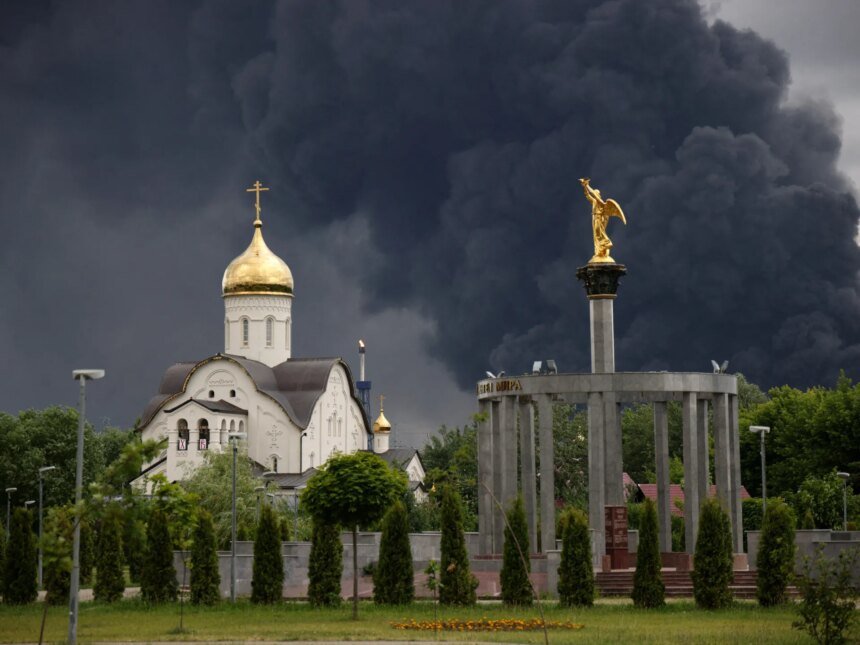
On Thursday morning, the Russian capital was subjected to a large-scale attack by Ukrainian drones targeting several sites, the most prominent of which was the Kapotnya oil refinery southeast of Moscow.
Video clips circulated showed a large explosion in one of the refinery’s oil tanks, followed by a widespread fire and heavy smoke.
Other footage also documented attempts by Russian air defenses to intercept the drones, as some of them were able to reach their targets despite launching anti-missiles at them, while other drones fell after being intercepted, leaving powerful explosions.
Why did Ukraine launch this attack now?
President Zelensky linked the attack directly to the recent Russian strikes on Ukraine, especially the attack that took place last Monday, which led to the death of a number of civilians and damage to the historic Kiev-Pechersk Lavra, which dates back about a thousand years.
Zelensky stressed in an audio message to reporters that Kiev does not seek to prolong the war, but in return he stressed that Ukraine will respond to Russian attacks, and added a warning: “If Ukraine burns, Moscow will burn,” if Russia continues targeting Ukrainian cities and facilities.

What is the importance of targeting the Kapotnia oil refinery?
The refinery represents one of the important oil installations in the vicinity of Moscow, and targeting Russian energy facilities is seen as an attempt to cause damage to the Russian oil sector. It also reflects Ukraine’s ability to carry out strikes inside the Russian interior, at a time when the confrontation between the two sides is escalating to include strategic infrastructure within Russian and Ukrainian territory, which expands the scope of the war and increases the intensity of the military escalation.
How does the attack reflect the development of Ukraine’s military capabilities?
Over the past two years, Ukraine has increased its reliance on long-range drones to compensate for the difference in conventional air capabilities with Russia.
These drones have become a major tool for targeting oil refineries, airports, military bases, and fuel depots inside Russian territory.
The arrival of a large number of drones in the vicinity of Moscow indicates a significant development in Ukrainian planning and implementation capabilities, and also highlights the challenges faced by Russian defenses in confronting simultaneous and multi-directional attacks.
What is the Russian position on the Ukrainian attacks?
The Russian authorities announced that the Ukrainian attacks on Moscow and its surroundings led to the injury of 16 people, according to Andrei Vorobyov, Governor of the Moscow Region, noting that the drones targeted the capital in several waves.
The Russian Ministry of Defense confirmed that the air defense forces intercepted and shot down a large number of attacking drones and missiles, explaining that the attack was widespread and included dozens of drones that targeted the capital and other areas inside the country.
The ministry added that during the past 24 hours, it shot down about 992 drones, along with winged missiles and guided aerial bombs in various areas, considering this as part of an ongoing military escalation targeting Russian infrastructure.
In the field context, Moscow stressed the continuation of its military operations in Ukraine, announcing progress in several combat axes and control of sites and towns in the east and south, with Ukrainian forces inflicting human losses, as part of its ongoing military response to the escalation.
Does the escalation herald a greater expansion of the war?
These developments come at a time when the conflict is witnessing a mutual escalation in air strikes, as Ukraine announced that Kiev and other regions were subjected to Russian missile attacks in conjunction with the attack on Moscow.
The escalation also coincides with Western diplomatic and military movements to support Ukraine, and with calls made by Zelensky to tighten sanctions on Russia and increase defense support for Kiev.
Observers believe that the continuation of the policy of mutual strikes in depth may push the two sides to further escalation, especially as the confrontation increasingly moves from the front lines to targeting infrastructure and vital installations within the territories of the two countries.
Commenting on international political movements, Kremlin Foreign Affairs Advisor Yuri Ushakov accused European leaders of trying to “charge” US President Donald Trump with “harmful ideas” and providing him with misleading information about the situation in Ukraine during the G7 summit held this week.