

Published On 2/7/2026
The Catholic Church is facing one of its most serious internal crises in nearly four decades, after the Society of St. Pius
Two reports published by The Independent and The Guardian newspapers highlighted that this confrontation represents the first major test for the leadership of the new Pope, who made reunifying the Church and healing the rift with traditional movements one of the most prominent goals of his papacy.
Read also
list of 2 itemsend of list
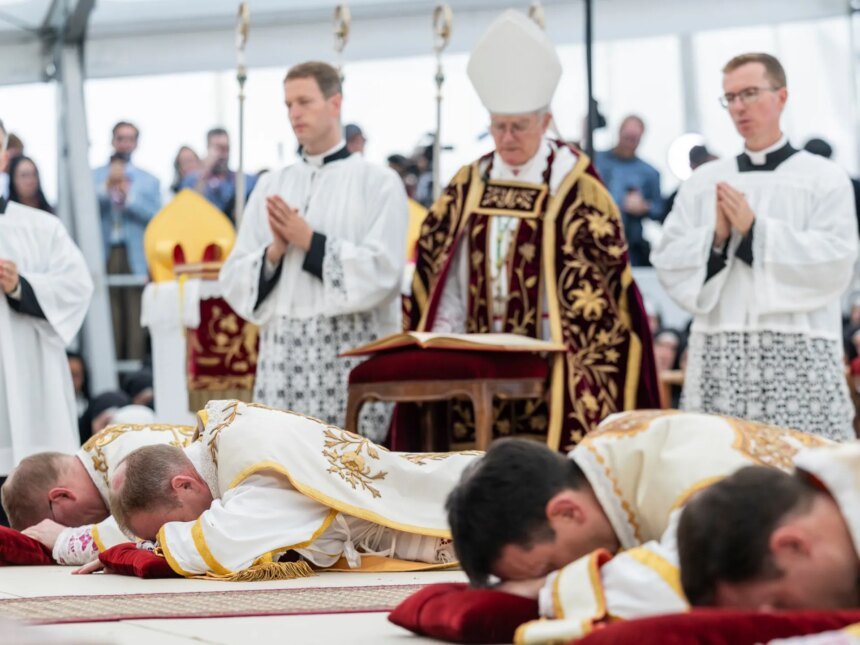
The two newspapers explained that the inauguration ceremony was held on Wednesday at the association’s headquarters in the Swiss town of Ekon, in the presence of large crowds of its supporters who adhere to the traditional Latin Mass and reject the reforms that the Catholic Church has witnessed over the past decades.

A final papal appeal
The two newspapers indicated that, before holding the ceremony, Pope Leo
But the association ignored the call and confirmed that it would not change its plans, considering that what it is doing is a necessity imposed by its responsibility to preserve what it describes as the authentic Catholic tradition.
The two newspapers stated that appointing a bishop without the approval of the Pope under canon law results in the automatic excommunication of the bishop who is appointed and of the bishops who are installed, and the act in itself is considered a split from the Catholic Church.
The ceremony was presided over by Bishop Alfonso de Gallarita, who himself had been installed without papal approval in 1988, placing his hands on the heads of the four new bishops according to the traditional Catholic ritual, which is believed to transfer spiritual authority to the bishop.
Guardian:
Critics of the association assert that defending tradition cannot be at the expense of obedience to the Pope, which is one of the foundations of the Catholic ecclesiastical system, warning that the continuation of this approach may deepen the division within the church.
A sacred duty
During the mass, a statement was read on behalf of the association affirming that proceeding with the inauguration represents a “sacred duty” towards the church and serving the believers, adding that any church sanctions that may be issued against the participants “do not have any legitimacy.”
The association’s leadership believes that this step does not aim to challenge or reject the authority of the Pope, but rather aims to ensure the continued installation of priests and the establishment of the religious confirmation ritual according to the ancient Latin rites, especially with only two of its former bishops remaining alive.
The association says that it serves a wide network that includes about 800 religious centers spread over 77 countries, and within which approximately 1,500 priests, theology students, and members of religious institutions work, making the appointment of new bishops an organizational and pastoral necessity.
Roots of disagreement
The roots of the dispute go back to 1970, when French Archbishop Marcel Lefebvre founded the association in protest against the decisions of the Second Vatican Council, which was held between 1962 and 1965 and launched broad reforms within the church, most notably allowing Mass to be held in local languages instead of Latin, and openness to other Christian sects, Judaism, and other religions.
The association still considers these reforms a departure from the traditional Catholic faith, and accuses the modern Church of being influenced by liberalism, modernity, and the ecumenical movement, which is a movement that seeks to unite Christians or bring them closer together despite their doctrinal and traditional differences, stressing that it alone preserves the true Catholic faith.
On the other hand, Catholic clerics and thinkers believe that the issue goes beyond a mere dispute over the language of the Mass or religious rituals, to the rejection of a number of basic principles approved by the Second Vatican Council, which concluded its work in December 1965, including the concept of religious freedom, the nature of the church’s relationship with the state, and its openness to other religions.

Papal obedience
Critics of the association also stressed that defending traditions cannot be at the expense of obedience to the Pope, which is one of the foundations of the Catholic ecclesiastical system, warning that the continuation of this approach may deepen the division within the church.
The current crisis brings to mind the events of 1988, when Lefebvre appointed four bishops without the approval of Pope John Paul II. The Vatican considered the move at that time an act of schismatics and declared excommunication against those participating in it.
Although Pope Benedict XVI lifted the excommunication of these bishops in 2009 in an attempt to open the door to reconciliation, the doctrinal differences between the two parties remained unresolved.
Observers believe that the new inauguration may return the relationship between the Vatican and the Assembly to point zero, and put Pope Leo