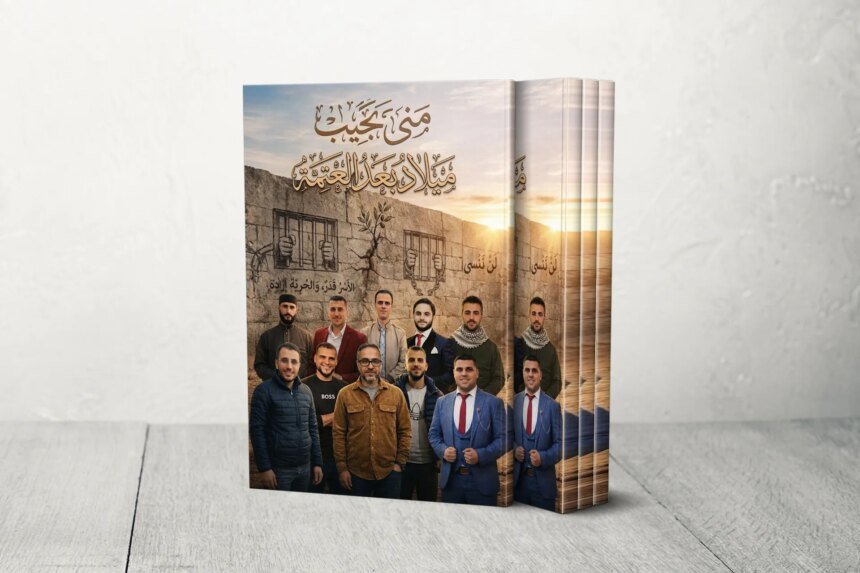
Egypt – Gaza – In the midst of increasing interest in documenting the human experiences left by the genocidal war on Gaza, the book “Birth After Darkness” by Egyptian writer and novelist Mona Naguib stands out as a literary and humanitarian project that seeks to transfer the voices of liberated prisoners from the sphere of oral memory to the space of writing and documentation, to preserve their living testimonies and document what they lived inside the prisons during their period of detention after October 7, 2023.
The work is based on direct testimonies of liberated Palestinian prisoners who lived through the conditions of detention and the harsh experiences that accompanied them, which included – according to their accounts – torture, deprivation, starvation, and psychological isolation, in addition to the profound effects that these experiences left on their lives after liberation.
Read also
list of 2 itemsend of list
From testimony to memory and documentation
Through a series of individual interviews conducted by the author with prisoners, 21 human testimonies were transformed into narrative texts that contain details of the experience from the moment of arrest, through the years of suffering inside prisons, all the way to the moment of freedom and beyond.
The book presents a deep human picture of the reality of prisoners and detainees, revealing the pain, oppression, and violation of human dignity that the experience of detention carries, through testimonies that convey details of abuse, isolation, starvation, and psychological and physical humiliation, far from reducing their perpetrators to numbers or statistics.

“Birth After Darkness” does not merely recount the facts, but rather gives these experiences a vibrant literary voice that restores respect to people behind bars, and turns individual stories into part of contemporary Palestinian memory.
The work also represents a humanitarian and literary document that preserves the stories of prisoners for future generations, and affirms that what they lived should not remain locked in silence or oblivion, and that the will for freedom and dignity remains stronger than shackles and imprisonment.
The Egyptian writer and novelist Mona Naguib, the author of the book, told Al Jazeera Net: “The idea of the work was born from my feeling of the importance of documenting the testimonies of prisoners liberated after October 7,” explaining that she wanted to transfer these human experiences from the circle of individual memory to a broader space that would preserve them from oblivion and make them part of historical and human memory.

Writing in the face of forgetting
Naguib adds that the title of the book carries a profound meaning, as it symbolizes the human ability to rise up after the harshest experiences. Darkness represents the years of captivity with the pain and oppression it brought, while Christmas reflects the restoration of hope and freedom despite the effects left by harsh experiences.
She explains that literature has a special ability to document human suffering, because it not only conveys the facts, but also gives them an emotional dimension that brings the reader closer to the details of the experience.
She continues: “My choice to present the testimonies in a narrative form came with the aim of highlighting the psychological and humanitarian aspects of the prisoners, while preserving the honesty and essence of their testimonies.”

She confirms that the most difficult thing she faced while preparing the book was the human and psychological aspect, noting that listening to those painful stories left a deep impact on her, and sometimes made her stop writing until she could comprehend the extent of the suffering.
She believes that “Birth After Darkness” is an attempt to give those with these experiences a voice, and to present their stories to generations as part of contemporary history.
Revealing testimonies and scandalous violations
Since October 7, 2023, the West Bank and Gaza Strip have witnessed a widespread escalation in arrests, amid human rights reports speaking about thousands of arrests, coinciding with the expansion of detention centers and camps belonging to the occupation army.
This was accompanied by an escalation of human rights reports about detention conditions and violations inside these sites, the most prominent of which was the “Sde Teman” camp, which was linked to reports of torture practices and cruel and degrading treatment, in addition to other detention sites such as “Rakeft,” “Anatot,” “Ofer,” “Naftali,” and “Mensha.”
According to a report by the Euro-Mediterranean Human Rights Monitor for the year 2024, which was based on direct testimonies and interviews with Palestinian detainees who were later released, the testimonies revealed repeated patterns of violations during periods of detention.
These violations, according to the report, included arbitrary arrest, enforced disappearance, depriving detainees of fair trial guarantees, in addition to physical and psychological torture.

Testimonies also documented the use of multiple methods during detention, including beatings, restraints for long periods, blindfolding, and deprivation of food and medical care, which led to deaths, in addition to psychological pressure, threats, and insults that affect human dignity.
The Observatory considered that these testimonies indicate a dangerous pattern of violations that requires investigation and accountability in accordance with international law.
Between the memory of pain and trying to endure
The testimonies of a number of liberated prisoners documented in the book “Birth After Darkness” reveal some of the harsh experiences they lived inside prisons, where years of detention turned into a memory burdened with pain and resilience, and a constant attempt to preserve human dignity in the face of extremely harsh conditions.
Freed prisoner Ikram Al-Mabhouh narrates her experience after moving between a number of detention places, including the “Anatot” camp and “Damoun” prison, explaining that the investigations included, according to her testimony, beatings, insults, solitary confinement, psychological pressure, and threats.

Al-Mabhouh describes the first moments of detention as one of the most difficult stages of her life, stressing that what remained most stuck in her memory was the loss of a sense of security and being away from family, in addition to the conditions of transportation and inspection, which she described as humiliating.
She points out that deprivation of basic needs and isolation from the outside world left profound psychological effects on male and female prisoners, stressing that what prompted her to document her experience was to convey the voice of the prisoners and convey their suffering to the world.
Severe psychological and physical pressure
As for the freed prisoner, Musab Madoukh, he explained that he moved between several prisons, including “Sde Teman,” “Ofer,” and “Negev,” in addition to “Ashkelon” during the investigation period, noting that, according to his testimony, he was exposed to psychological and physical pressure and harsh treatment.
Madoukh confirms that the experience of captivity was more difficult because of the loss of his wife, children, and mother during the war, which made him live in a deep state of loss and anxiety for the rest of his family.
He added that the prisoners faced food shortages, medical neglect, and isolation from the outside world, stressing that faith and patience were his source of strength during the detention period.
In turn, the freed prisoner Nabih al-Ghazali describes his prison experience as an exceptional stage full of suffering, explaining that he moved between the “Sde Teman” camp and the “Ofer,” “Nafha,” and “Negev” prisons.
He points out that, according to his testimony, he was subjected to harsh interrogations and psychological and physical pressure, in addition to difficult detention conditions that included severe restrictions, lack of food, and isolation from the outside world.
He confirms that the experience of captivity changed his outlook on life and strengthened his appreciation for human relationships and the value of freedom.
In their interview with Al Jazeera Net, the three prisoners believe that the book “Birth After Darkness” represents a space to transfer their testimonies and preserve their memories from oblivion, stressing that literature and documentation constitute an important means of conveying the suffering of the prisoners and transforming individual experiences into a human testimony present in the public consciousness.

A window of hope despite the harsh experience
Researchers in documentary literature also believe that the book “Birth After Darkness” represents an important addition to the Arab library, because of the human documentation it provides that preserves collective memory and transfers individual experiences into a literary and historical record that can be studied.
In this context, Raafat Hamdouna, a specialist in prisoners’ issues and prison literature, confirms that literary and documentary works in this field highlight the values of steadfastness and hope among prisoners despite the harshness of the experience. They also reveal the deep human dimension of their suffering inside prisons, and contribute to conveying the image to public opinion away from marginalization or reductionism.
He told Al Jazeera Net: “The testimonies contained in this type of book open an important window to understanding the psychological and social effects of detention, and enhance the presence of the prisoners’ issue in public awareness,” stressing that individual stories are capable of conveying the voice of prisoners and defending the meanings of dignity and freedom.

He points out that prison literature represents a very important documentary and humanitarian space, because it presents details and experiences that are often absent from the Arab recipient, even though they constitute an essential part of national and humanitarian memory.
He points out that interest in this literature gives the issue of prisoners greater priority, especially in light of the decline in the presence of many humanitarian issues in the media arena.
He describes the process of chronicling this experience as a difficult but necessary task, given its absence from many official historical records, and restores consideration to this experience and places it in its correct human and historical context.
Deep scars and deep wounds
The experience of captivity was not just a loss of freedom, but rather it was a harsh human experience that left profound effects on the body and soul, as a result of the difficult conditions of detention that the prisoners were exposed to, which included, according to their testimonies, torture, isolation, deprivation, and psychological pressure.

These experiences left wounds that are not visible to the eye, but remain present in memory and conscience. Regarding this, Hanadi Skaik, a consultant in social support and mental health, points out that every prisoner carries a different story of pain and patience, and that documenting these experiences represents a humanitarian necessity to preserve memory and not allow this suffering to disappear from public awareness.
She explains that captivity does not end once one is released from prison, as its psychological and social effects remain lasting, and may appear in the form of constant anxiety, fear and anticipation, sleep disturbances, symptoms of psychological shock, a feeling of loss of security, and difficulty returning to a normal lifestyle.
She told Al Jazeera Net: “Years of detention leave many prisoners with a deep sense of loss, whether due to being away from family or losing life moments that cannot be regained, in addition to the psychological exhaustion resulting from isolation and deprivation of communication and basic needs.”
Skaik confirms that recovery after the experience of captivity requires a long course of psychological and social support and rehabilitation, which helps the prisoner regain his balance, build his self-confidence, and deal with the effects of the experience that remain stuck within him.
Behind every liberated prisoner is a human story that needs to be contained and cared for, not just to celebrate the moment of freedom.