Published on 5/30/2026
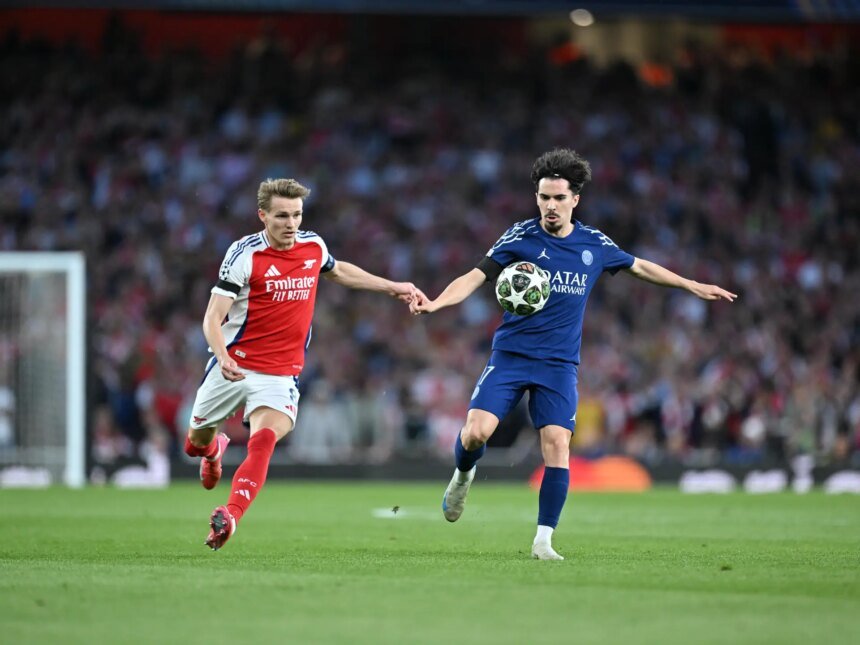
The world of football is preparing to crown a new European champion, this Saturday evening, at exactly six o’clock in the evening, Central European Time, as the Puskas Arena in the Hungarian capital, Budapest, will host the final scene of the Champions League in a historic confrontation between Paris Saint-Germain of France and Arsenal of England.
Despite the absence of Spanish clubs from the final scene, this final match has a clear symbolic winner: Spanish football, specifically “Catalan philosophy and spirit.”
Read also
list of 2 itemsend of list
For the first time in the history of the most powerful European leagues, two Spanish coaches meet on the bench outside the borders of La Liga, and both of them graduated from the prestigious FC Barcelona school.

Luis Enrique project
Enrique succeeded in achieving the difficult equation that the Parisian administration had been searching for for years. It is building a solid collective team that goes beyond the brilliance of names and individual talents.
Lucho has crafted a style characterized by ferocity, high pressing, and an unparalleled ability to compete in the darkest of tactical conditions.
The influence of Barcelona’s “DNA” on Enrique’s career is clearly evident. The man who arrived at Camp Nou in 1996 from Real Madrid turned into one of the greatest Blaugrana leaders in the late 1990s, and shared the dressing room with Pep Guardiola.
Enrique began his coaching career at Barcelona B, before moving between Roma and Celta Vigo, later returning to Barcelona’s first team and leading the historic MSN trio (Messi, Suarez, and Neymar) to achieve the historic treble.
After an international trip in which he led the Spanish national team in the 2022 World Cup in Qatar, Enrique arrived in Paris in 2023. Now, he is leading Paris Saint-Germain to the Champions League final for the second time in a row, looking for his second personal European title with the club after winning his first title last season.
Guardiola’s disciple who reshaped the Gunners
On the other side, stands Mikel Arteta, the coach whose football identity was completely crystallized within the walls of “La Masia”.
The San Sebastian native was imbued with the positional playing style that was established by Johan Cruyff, to the point where he was nicknamed “Guardioleta” among Barça’s youth, in comparison to Pep Guardiola.
Although his career as a player took him away from the Camp Nou to represent clubs such as Paris Saint-Germain, Rangers, Everton, and Arsenal, his work as Guardiola’s assistant at Manchester City is what refined him as a coach with international standards.
Since taking over the leadership of Arsenal in the 2019-2020 season, he has made a qualitative shift in the London club, bringing it back to the podium and the European elite after a long absence. Indeed, his efforts this season culminated in lifting the English Premier League Cup after an absence of 22 years, bringing to mind the historic “Invincibles” generation of Arsene Wenger in 2004.
Tactical variation in a common spirit
Despite the common roots, the two teams reflect a different development of the same football school:
- Paris Saint-Germain (Enrique): He tends to have physical intensity, high dynamism, and a fierce attacking tendency as soon as he recovers the ball.
- Arsenal (Arteta): attaches utmost importance to defensive solidity, strict tactical organization, control of the rhythm of the match, and intelligent exploitation of spaces, which made the Gunners the most stable and stubborn opponent in this edition.