

Published On 7/8/2026
Chinese President Xi Jinping is not content with reformulating his country’s policies, but is also working to rewrite the official narrative of the history of the Chinese Communist Party, ensuring for himself a historical position independent of his predecessors, according to the assessment of Chinese writer and researcher Ding Yuen.
In an article in Foreign Policy magazine, Yuen believes that President Xi has effectively declared the end of the “reform era” that has led China since the late 1970s, and replaced it with what he calls the “new era.”
Read also
list of 2 itemsend of list
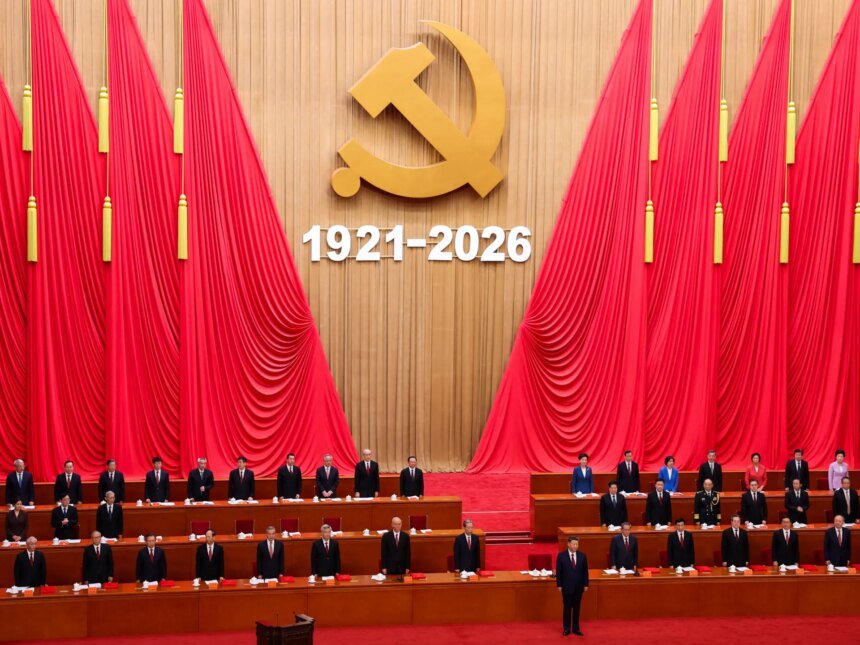
The author relies on a speech Xi gave on July 1 on the occasion of the 105th anniversary of the founding of the Communist Party, in which he spoke about four successive stages in the party’s history: revolution, construction, reform, and then the “new era.”
It is considered that this division is not just a historical description, but rather carries deep political connotations, because it separates the phase that began with Xi’s arrival to power in 2012 from the reform era launched by Deng Xiaoping in 1978.
The era of reform is over
Deng Yuwen points out that the party’s official narrative previously viewed reform and opening-up as a continuous and open stage, and Xi himself even stressed on previous occasions that reform “is still on the way.” But the introduction of the “new era” as an independent stage means, according to the writer, that the era of reform has officially ended, and that China has entered a different stage that bears the imprint of Xi alone.
The writer believes that the division of history within the Communist Party is not related to events as much as it is related to the distribution of political legitimacy. Every historical stage is linked to the name of a specific leader. Mao Zedong monopolized the stages of revolution and state building, while reform was linked to Deng Xiaoping, although this legacy was also shared by him with former presidents Jiang Zemin and Hu Jintao, who continued to deepen economic openness and integrate China into the global economy.
As for the “new era,” according to the author, it represents the stage in which President Xi is the sole leader, which reflects his desire to consolidate his position as the founder of a new historical era, and not merely an extension of the policies of his predecessors.
He adds that Xi does not seek to compete with Mao directly, because his status is still firmly established in Chinese official memory, but rather is focused on moving beyond Deng’s legacy. If Deng answered the question, “How does China become rich?”, Xi is trying to present himself as the one who answered the question, “How does China become strong?”, putting power and national security at the forefront of the state’s priorities.
President Xi’s reforms are moving in a different direction, making national security, party leadership, self-sufficiency and Chinese modernization top priorities, while strengthening the party’s control over the economy and society.
National security priority
The writer stresses that declaring the end of the reform era does not mean stopping official talk about reform or abandoning some of its economic measures, as the Chinese leadership is still putting forward plans to deepen reforms.
However, the content of the word changed fundamentally; Reform no longer represents a stand-alone political value or the title of a historical stage, but rather has become a tool that serves the goals of the “new era” as defined by Xi.
According to the article, Deng’s reforms were based on gradually liberating the economy and society from the grip of politics, encouraged openness to the world, benefited from Western expertise, and gave markets and society a wider space for movement.
Xi’s reforms move in a different direction, placing national security, party leadership, self-sufficiency, and Chinese modernization at the top of priorities, while strengthening the party’s control over the economy and society.
The reform that for decades formed the basis of the legitimacy of the ruling party in China no longer determines its present and future, after it became subject to the priorities of the “new era.”
New era
The writer points out that this transformation is also reflected in the official discourse. Instead of slogans such as “liberating minds,” “opening to the world,” and “letting some people get rich first,” the Chinese leadership now focuses on concepts such as “overall leadership of the Party,” “security,” “struggle,” “self-reliance,” “common prosperity,” and “the rise of the East and the decline of the West.”
Ding Yuen concludes that China has not abandoned the word “reform,” but has radically changed its meaning. Reform, which for decades formed the basis of the ruling party’s legitimacy, no longer defines China’s present and future, after it became subject to the priorities of the “new era.”