

Published On 7/6/2026
|
Last update: 17:57 (Mecca time)
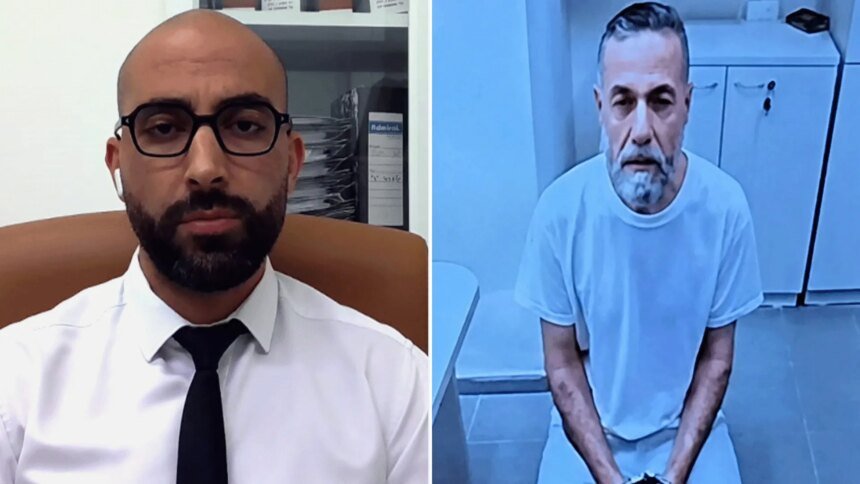
Nasser Odeh, the lawyer of the Palestinian doctor Hossam Abu Safiya, said that the Israeli occupation authorities transferred his client to solitary confinement, stressing that his health condition has become in serious danger as a result of his exposure to head and facial injuries that caused him difficulty breathing, as a result of the “systematic brutal assault” he is subjected to on a daily basis inside Israeli prisons.
Odeh explained, in an intervention on Al Jazeera, that he was able to visit Abu Safiya two days ago. The doctor was brought to the visiting room with his hands and feet shackled, and he showed clear signs of difficulty walking and moving around.
During the conversation that took place between them, the prisoner doctor expressed his real fears that this visit would not be repeated again, indicating that the practices of the Israeli authorities aimed to intentionally harm him, which, according to the lawyer’s assessment, indicates that there was a prior decision to liquidate him and execute him inside the prison.
In an attempt to remedy the critical medical situation of Abu Safiya, Odeh demanded his immediate transfer from the Israeli “Rakivit” prison in the city of Ramla, to which he was recently transferred and the lawyer described it as a “human slaughterhouse.” He also submitted an urgent request to visit him and check on him again, but the occupation authorities met this request with complete rejection in order to prevent them from knowing his condition.
The lawyer also called on the Israeli authorities and the prison administration to immediately release the doctor and provide medical treatment, but he explained that he had not received answers from the Israeli authorities until the time of his meeting with Al Jazeera.
Frequent transfer between prisons
Regarding the constant transfer of the doctor between detention centers, Odeh revealed that this frequent transfer represents part of systematic torture operations and an intentional punitive pattern. With the aim of conveying a clear message to the detainee that he does not have any rights and to inspire lawyers and the international community that there are legal procedures.
The lawyer narrated that a few days after submitting the petition, Dr. Hossam was transferred to solitary confinement and deprived of his basic rights, such as simple medical treatment and seeing his lawyer.
After the end of the trial session, the doctor was transferred to the department rooms, where five jailers attacked him and severely beat him, using hands, batons, and hammers, without him receiving any medical treatment until this moment.
Judicial cover
Regarding the legal path and the expected response from the court, lawyer Nasser Odeh stressed that the Israeli judicial system cannot be built on it. Because it acts as an umbrella that supports the occupation authorities and always gives them full cover, especially in the file of detained doctors.
Odeh explained that the numerous petitions submitted by the defense did not achieve any tangible progress, describing the function of the judiciary as “beautifying the role of the occupation authorities.”
Haaretz newspaper reported that the Israeli Supreme Court gave the prosecution until tomorrow, Tuesday, to submit its response to the appeal demanding the release of 14 doctors from Gaza, including Hussam Abu Safiya.
The newspaper added that the court requested information about the health condition of Dr. Abu Safiya, who is detained in solitary confinement.

In response to the court’s recent decision, the lawyer explained that it was a purely formal procedure. The court contented itself with asking the prosecution to clarify the medical condition of Dr. Abu Safiya, without any order to release him or setting a date for his release, which, according to him, requires continued pressure to stop the series of violence and criminality practiced against him and the rights of more than 9,000 Palestinian detainees.
In light of the freezing of legal effectiveness within the Israeli system, Odeh acknowledged the absence of legal tools available for defense within the occupied territories, as resorting to the Israeli judicial system contributes to reducing and limiting the space for movement.
In the face of this blockage, the lawyer announced that they would immediately and urgently go in parallel to a number of ambassadors, European countries and relevant international institutions to urge them to exert actual pressure on the occupation authorities to protect Dr. Abu Safiya, sending a decisive appeal to all international bodies to take proactive and urgent steps before it is too late.
The lawyer revealed that more than 100 medical personnel were detained without any charges being brought.
For its part, the United Nations Human Rights Council on Monday described Israel’s arrest of Dr. Abu Safiya in Gaza as arbitrary, and called for his immediate release, at a time when human rights organizations warned that his life was in imminent danger.
The United Nations Working Group on Arbitrary Detention confirmed in its report that Israel’s actions violate many articles of the Universal Declaration of Human Rights, as well as the International Covenant on Civil and Political Rights.
On the other hand, the Israeli Prison Service denied the rumors about the ill-treatment of Abu Safiya and other doctors in prison, and the Israeli Supreme Court had at one time refrained from commenting on the appeals submitted for his release.