


Published On 5/7/2026
|
Last update: 7/6/2026 00:06 (Mecca time)
Every war has its leaders, and every crisis has its beneficiaries, and the stifling heat crisis currently hitting Europe is no exception. The record-breaking climate has opened the door to an unprecedented boom in the air conditioning market, bringing this industry into its golden age, achieving huge profits for manufacturers and marketers in record time.
To confront successive heat waves, employers of public institutions, hospitals, and private homes in Europe today are racing against the clock and runaway temperatures to put in place the first nucleus of temporary air conditioning systems.
This challenge has prompted a change in priorities, as demands for the universalization of air conditioning systems have become more public and bold across Europe, despite the political and societal debate driven by the reservations of green and left-wing parties and environmental activists on this issue.
The solution coming from the East
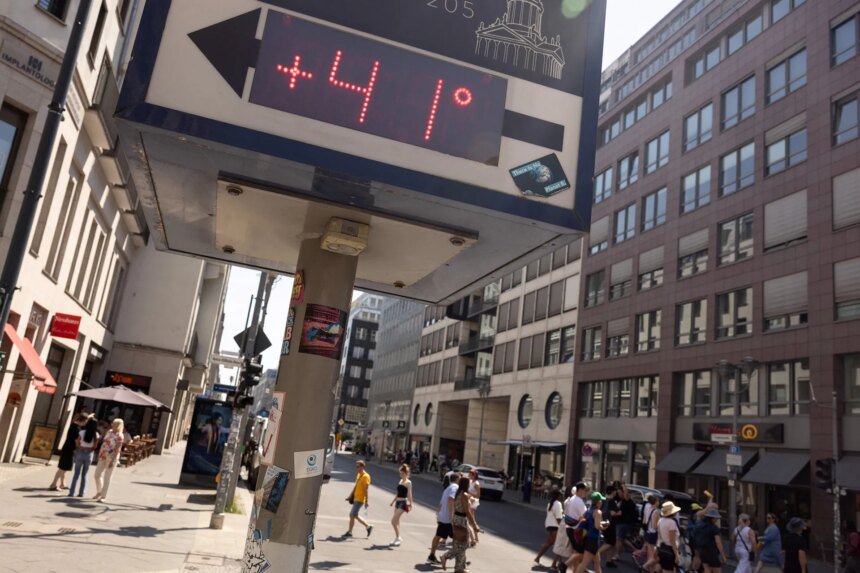
From Spain to France, and from Germany to the United Kingdom and Eastern Europe, unprecedented temperatures, most of which exceeded 40 degrees, force people to search for available solutions to reduce the severity of the heat and avoid collapse.

But fountains, rivers, and water spray alone do not seem sufficient to cool the atmosphere throughout the day, while fixed and portable air conditioners appear as a magic solution coming from the East to turn things upside down for a trade that has been forgotten for many decades on the Old Continent.
Because benefits may sometimes be born from misfortunes, countries that own well-known brands of air conditioning equipment, such as China, Japan, and South Korea, will certainly benefit from the heat boom that has turned life in Europe into a daily test of resilience, especially for the elderly, vulnerable groups, and those suffering from chronic diseases.
So far, the following data, issued by manufacturing companies and published in international media, including Reuters, reveal the extent of the change that trade is witnessing as the effects of climate change intensify:
- The Japanese company Mitsubishi Electric announced a noticeable increase in demand for air conditioners from Europe, especially in France, Spain, the United Kingdom and Germany, which were severely affected by heat waves.
- Samsung Electronics achieved record double-digit growth in sales in Europe during the first half of this year, with demand expected to rise at the height of the summer cooling season.
- LG Electronics said that air conditioner production lines at one of its factories in South Korea have been operating at full capacity since April, in preparation for “summer seasonal demand in Korea and global markets.”
- The Chinese company Midea announced an increase in its annual sales of air conditioners in Western Europe by 70%.
China is in the lead
The numbers announced so far lean towards the Chinese market as the largest manufacturer of air conditioners, and the largest supplier to the European market through continuous shipments despite the European Union’s protectionist policies.
Media company data, reported by Reuters, indicates that its sales through German e-commerce channels increased by about 37% in May compared to last year, while shipments in Spain and France jumped by 108% compared to last year.
The company told the local newspaper “Global Times” that its factory in the city of Shunde, Guangdong Province, south China, is currently working around the clock to increase production of “Porta Split” models. The company also explained in a statement that these units are being shipped urgently to European countries via freight trains between China and Europe, in an attempt to take advantage of what remains of the peak summer season.
China’s air conditioner exports will reach 27.2 billion US dollars in 2025, accounting for about 40% of global exports, according to data from the Economic Cooperation Organization, confirming China’s dominant position in the global refrigeration equipment supply chain.
According to experts, the wide spread of Chinese portable split air conditioners and other cooling products is due to the increasing demand of consumers and the innovative design of products specifically targeted to meet local needs.
The Global Times newspaper quotes Cui Hongjian, a professor at the Academy of Regional and Global Governance at Beijing Foreign Studies University, as saying that China, with its integrated industrial chain and strong competitiveness in the manufacturing sector, offers complementary trade advantages to Europe, and should have no problem meeting growing European demand.
However, despite the significant growth in Chinese air conditioning shipments to European countries, expert Hongjian pointed out in his analysis obstacles related to Europe’s increasing tendency to take protectionist measures in its trade with China.
However, there are doubts about the ability of these policies to withstand in the future in light of the pressures of heat and the repercussions of global warming that loom strongly in all aspects of life in Europe.
Between the obsession with cost and the obsession with heat
Despite the urgent need for urgent cooling methods, the transition to this stage in Europe today may not seem smooth enough for several reasons.
Europe has always maintained a low penetration rate of air conditioners. In Paris, for example, and other historical areas, many buildings are subject to strict facade protection regulations that prevent drilling into the walls to install traditional split air conditioning systems, which makes this process expensive and complex, and often requires long waiting periods.

On the other hand, the costs of professional installation of these equipment often exceed the price of the air conditioner itself. For these reasons, local consumers have been cautious about purchasing air conditioners for several years, which has contributed to keeping the percentage of air conditioner ownership at low levels in Western Europe in particular.
For comparison, a study conducted by the International Energy Agency indicates that 59% of the world’s air conditioners are located in the world’s two largest economies, the United States and China, followed by Japan, South Korea, India and Brazil.
In Europe, estimates indicate that the percentage of homes equipped with air conditioning is 20% across the continent, but this percentage is constantly rising.
In France, for example, data shows continuous growth, as the percentage of ownership of air conditioners in homes did not exceed 14% in 2016 (a decade ago), to receive a major boom and reach 25% in 2020, according to a report issued by the French Agency for Environmental Transition. The current continental heat may push this percentage to double by the end of the current decade.