

Published On 4/7/2026
It seems that Sudan’s day will not differ much from yesterday, as international organizations continue their warnings of the possibility that the city of El-Obeid, the capital of Kordofan Region, will face what El-Fasher faced months ago, while operations continue on the ground due to the combatants’ feeling that the international position will not go beyond statements and warnings, analysts say.
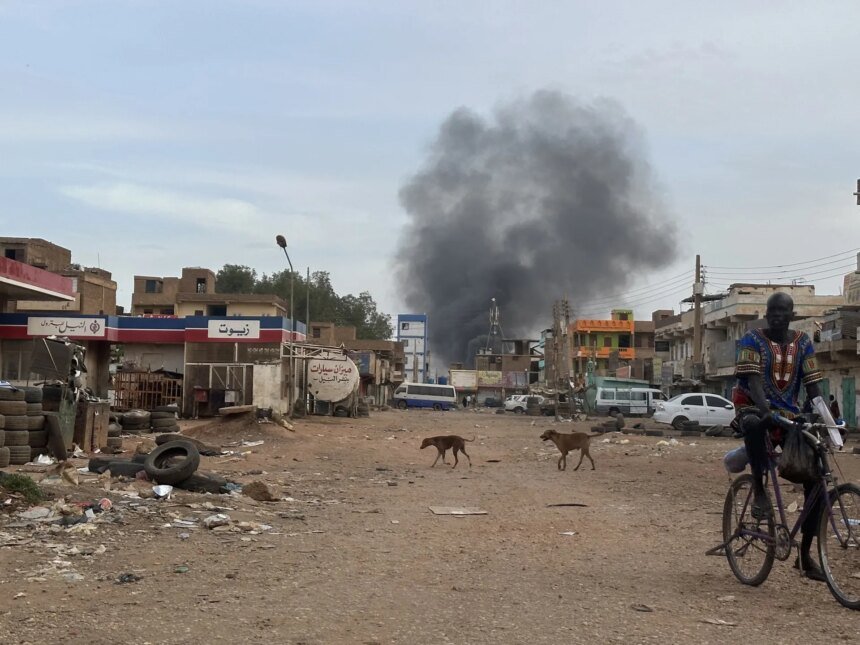
Al-Obeid is facing an imminent humanitarian catastrophe due to the siege imposed by the Rapid Support Forces for 18 months, which prompted the United Nations High Commissioner for Human Rights, Volker Türk, to issue a cry of alarm from Geneva. Turk confirmed the occurrence of field atrocities, including intense bombardment with marches targeting infrastructure, field executions, and sexual violence on civilian displacement routes.
Meanwhile, Western diplomatic moves, led by Britain, are accelerating to issue a UN resolution imposing an urgent humanitarian truce to save the city, its residents, and those displaced there from the guillotine of the “war economy.”
The crisis worsened as the Rapid Support Forces gathered around it, and the United Nations Mission in Sudan warned of the dangers of escalation in the city, and called for urgent action to protect civilians for fear of a repetition of the atrocities that occurred in El Fasher.

White is not besieged
But there are those who defend the Rapid Support and deny its besiegement of the city, and among them is the writer and political analyst Mustafa Muhammad Ibrahim, who said that Al-Obeid is not besieged, and that it is the army that is taking civilians as human shields.
During his participation in the “Beyond the News” program, Ibrahim called on the army to withdraw from the city “if it was concerned about the lives of civilians,” accusing it of storing weapons in civilian facilities, which leads to “some damage among citizens.”
He even went on to say that the Rapid Support Forces did not announce the siege of El-Obeid, as the army itself admitted, describing the UN reports as false, because the Rapid Support “is actually planning to liberate some cities, including El-Obeid, but has not moved towards it yet.”
Accordingly, Ibrahim says that the Rapid Support “targets the army’s hard power in El-Obeid very precisely, in order to prevent it from advancing towards Kordofan and Darfur. He believes that “there is no solution for El-Obeid except for the army to leave it and leave it to the Rapid Support to manage it as it did in El-Fasher.”
False narrative
On the other hand, the researcher in strategic studies, Moatasem Abdel Qader Al-Hassan, believes that there is a fallacy that deepens the Sudanese crisis, which is considering that it is a conflict between two parties and not between a government and a rebel group.
There are also fallacies that Al-Hassan describes as major, “because what is currently happening in El-Obeid is the bombing by marches of gas stations and tankers, and relief materials coming from outside the city, as well as the electricity stations that operate water stations and trade convoys, which has created a humanitarian catastrophe.”
More importantly, in the speaker’s opinion, what happened in El Fasher previously made the world certain that Rapid Support is responsible for any humanitarian disaster that befalls any city, and this is what prompted the Human Rights Council to focus on its crimes in its latest statement, which Al-Hassan says is a first step on the path to correcting the narrative.
Al-Hassan adds that it will not be possible to solve the problem “unless the narrative of the existence of a conflict between two parties is overcome, because what happened is that there is a militia rebelling against the state and targeting civilians, and what is happening in Sudan must be dealt with from this standpoint.”
The world does nothing
As for the director of the Horn International Institute for Strategic Studies, Hassan Kananji, he believes that what El-Obeid is experiencing is what El-Fasher experienced before the humanitarian catastrophe occurred there, and that the international position has not changed, which means “we are heading towards a new catastrophe.”
The world does not wake up until the disaster strikes, says Kanenji, who said that the international community must pressure the external supporters of the two sides of the fighting to stop supplying them with weapons, because statements will not stop the war.
The current situation does not allow for an independent investigation of what is happening in Al-Obeid, which Kanenji said is an important city because it connects the region to Darfur, and if this road is cut off, a humanitarian catastrophe will occur.
Therefore, the world’s contentment with statements without action will reinforce the idea among both sides of the conflict that they will escape punishment, and then they will continue the war and commit atrocities, after international and regional mechanisms failed to end the conflict, according to Kanenji’s words.