
Published On 1/7/2026
|
Last update: 7/2/2026 06:40 (Mecca time)
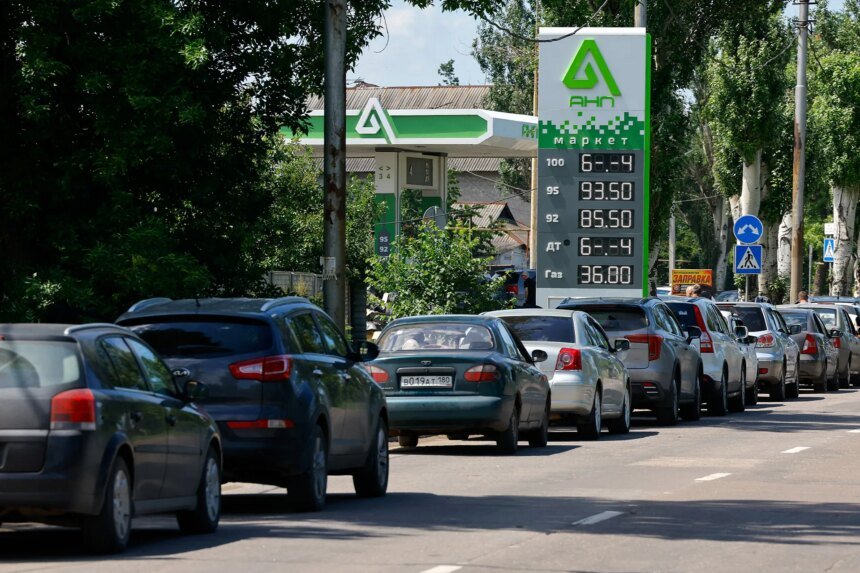
Russian writer Alexei Slonov believes that the fuel crisis in Russia, even if it was orchestrated by Ukraine and the West, has much deeper roots.
Slonov wrote an article on the “Svobodnya Pressa” website in which he explained that Russia, which pumps millions of tons of oil, is suffocating due to a severe fuel shortage, which has shocked residents and gas stations alike, especially since the problem is not only related to the high price, but to its disappearance completely.
Read also
list of 2 itemsend of list
The writer wonders how it is possible for a gasoline rationing system to be established in a country that possesses huge reserves of hydrocarbons, only to answer that the answer lies in the structural defect of the economy.
Empty tanks
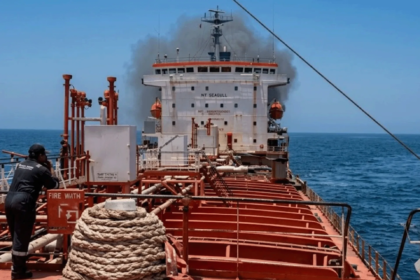
The writer pointed out that Russia acts as a global exporter of raw materials, and pumps and exports huge quantities of crude oil, which essentially supports the development of foreign petrochemical complexes, but Ukraine – at the request of the West – is trying to take revenge on Russian gas stations.

The writer explains that raw materials for refineries are sold at net prices, which makes refining them for local consumption unprofitable in light of the rise in global prices, and therefore the authorities are trying to alleviate the situation with a complex manual control mechanism.
However, this system – according to the author – is seriously flawed, because as soon as the budget tries to reduce huge payments to oil companies, these companies redirect their investments towards exporting raw materials instead of flooding the local market with gasoline, and the result is empty tanks.
Resource curse
The writer continues that Russia has fallen into a trap in which the state pays additional sums to giant companies so as not to leave citizens without fuel, but even this aid no longer guarantees stability.
Moreover, attacks on oil refineries revealed the government’s inability to manage the fuel and energy sector efficiently, leaving it at the mercy of monopolistic financial and economic groups.
This problem is chronic in Russia – as the author describes it – over the past 5 to 15 years the country has constantly suffered from severe fluctuations during peak periods, as jet fuel prices rise insanely in the summer and during the holidays, or with the approaching harvest season.
High fuel prices also push the agricultural sector to the brink of collapse, and gas station prices rise suddenly and illogically, even though this was happening at a time when there were no drone attacks on oil refineries.
The author summarizes the solution in three main points:
- First, nationalize strategic industries, so that natural resource revenues go directly to the public treasury instead of escaping abroad
- Secondly, the state’s monopoly on raw material exports. This entails a sharp reduction in crude oil exports, with priority given to refining within the country
- Third, stabilizing local prices, as raw materials are produced within the country, and therefore their cost in the local market must be fixed, and the market cannot be calculated according to a global equation based on speculation.
The writer believes that it is time to stop begging giant oil companies for loyalty in exchange for trillions of dollars from the state budget, to finance corporate greed.
The writer concluded that Russia remained hostage to a model in which crude oil exports generate huge profits for a small group, and imposes gasoline rationing. This problem must be viewed from the perspective of the state’s interests, otherwise there is no way to end the “empty tanks” in an oil-producing state.
Hasty cheer
In an article on the “Anti-Fascist” website, writer Alexei Belov discussed the issue of Western media coverage of Ukrainian strikes on Russia and how they focus on them with excessive enthusiasm to the point of glee.
The writer believes that there is a clear implicit message in this method, which is that the Russian government is losing control of the situation and the people are losing their patience and trust in it, pointing out that information about the Russian government’s support rates is not a new issue, and that the official channels do not talk about it, but they do not hide the data either.
The latest opinion poll – according to the author – showed a decline in Russian citizens’ support for President Vladimir Putin’s policies, from 74% to 69%. It also indicated that society is suffering from severe pressure as a result of the rise in gasoline prices and the escalation of drone and missile attacks.
As a result, levels of confidence in the government – as the author points out – and Russian citizens’ support for its performance are declining to 44% instead of 48%, as well as the ruling United Russia Party, whose popularity in opinion polls decreased from 38% to 35% in one week.
Fallacies
According to the author, commentators and analysts in the West face a major problem that prevents them from accurately assessing the importance of this “decline in popularity.” They neglect to point out that the increasing Russian dissatisfaction with the current situation bodes ill for the West, given the high percentage of supporters of strikes against military targets, including in the European Union.

The decline in Putin’s popularity did not come because the people opposed the war, but rather because they preferred a more stringent approach and a real war, not only with Ukraine, but also with its supporters, according to the writer’s opinion.
If an opinion poll were conducted in Russia now asking who supports a nuclear strike on London, for example, the result would be shocking to the Europeans, and thus either the West is unable to understand this clear idea or does not want to understand it, continuing its reckless escalatory path, according to the writer.
Alexei Belov pointed out that the first attempt to wake the “arrogant” European military personnel from their slumber came from the British newspaper The Telegraph – in an article entitled “Ukrainian attacks on Crimea may force Putin into a dangerous escalation” – in which it stressed that Russia’s current problems will not lead to abandoning the goals set with Ukraine, but rather to a change in the methods of achieving them.
As Ukrainian strikes continue on targets deep inside Russia and in the Crimean Peninsula, Putin can no longer convince his people that Russia is winning this war. Indeed, there are fears that the Russian leader will panic, and at the instigation of extremists, commit an extremely reckless act, such as escalating attacks on Kiev or even using tactical nuclear weapons.
In this context, Alexei Belov believes that it is not in vain that voices are rising in Europe, calling for a deep understanding of the decline in Putin’s popularity, and the need to study and evaluate the readiness of the North Atlantic Treaty Organization (NATO) for a sharp confrontation with Moscow.