Published on 6/30/2026
Britain is facing a rise in hate speech and racist incidents linked to immigration, amid warnings from experts and union leaders that anti-immigrant policies and rhetoric have created an environment more tolerant of public expressions of racism.
These warnings come after rare incidents of violence, but they sparked widespread tension, and right-wing activists and politicians exploited them to focus on crime and link it to immigration, in a country that for years has been seen as a stable haven for many immigrants and ethnic minorities.
Reuters spoke to policy experts and 10 trade unions whose members said they had observed an increase in racist incidents.
These incidents include some patients refusing care because of the nurse’s race, an increase in racist statements in the workplace, and migrant workers reporting exposure to racism on the job.
Exploitation of violence
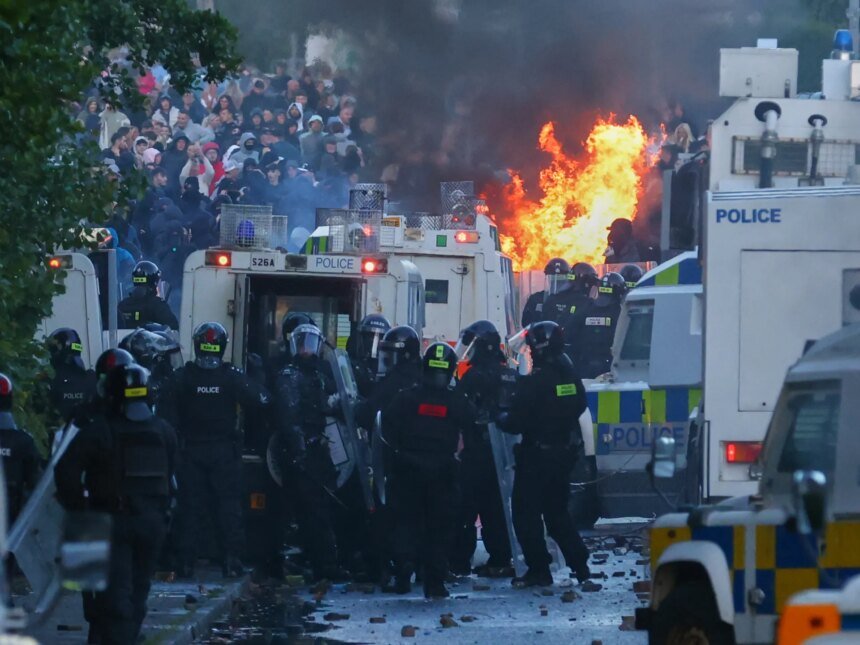
In the coastal city of Southampton in southern England, violent protests broke out on June 2, a day after a British-born Sikh man was sentenced to life imprisonment for the murder of student Henry Nowak, after he had falsely accused his white victim of committing a racist attack.
The issuance of the ruling in early June coincided with the publication of a video clip showing the police handcuffing the victim as she was dying, which sparked widespread anger and calls from various parties to cancel guidelines requiring police to take racial background into account when dealing with some incidents.
A week later, gangs of masked men roamed homes in Belfast, Northern Ireland, searching for immigrants, after a white man was stabbed and lost an eye in an attack by a Sudanese immigrant.
Although these cases are rare, they have become an area that attracts right-wing activists and politicians who focus on crime and have exploited the existing tension over national identity and immigration.
The result – according to those who spoke to Reuters – was that Britain became more hostile to some minorities.
“I wish I could disappear”
Ali Haider (44 years old), a Muslim taxi driver who moved from Bangladesh to Britain when he was five years old, said that he now has days when he wishes he could hide the dark color of his skin.
“Any person of color is at risk right now. As much as we love our heritage and our identity, sometimes I wish we could just hide it,” he added.
Haider explained that his experiences with racism declined since the mid-1990s, before returning in politically charged moments, as happened when the 2016 vote on Britain’s exit from the European Union focused on the issue of immigration.

Tougher positions
According to the Migration Observatory, in the early 2010s Britons were more open to immigration than most countries in Europe, but multiple opinion polls suggest that attitudes have become tougher since 2022.
Opinion polls typically show that younger, left-leaning voters are more supportive of immigration than older or right-leaning groups.
Surveys by the British Center for Social Behavior indicate that a large part of the anxiety may be related to asylum seekers who arrive in small boats, and not to those who come to the country to work or study.
In the nursing sector, the Royal College of Nursing reported that the number of workers exposed to racial discrimination has increased by 55% since 2022.
Nursing and Midwifery Council Chairman Paul Rees said that a third of workers in this sector in 2025 were black, Asian or from ethnic minorities, and that many of them say that “they are currently exposed to a type of abuse that they have not been exposed to for decades.”
Pressure on social cohesion has increased as the focus on crime has increased, even if this does not reflect the behavior of the vast majority of immigrants.
Hate crimes recorded by the police in England and Wales rose for the first time in three years in the year ending March 2025, and racially motivated crimes increased by 6% to reach 82,490 incidents.
Political difference
Resigned British Prime Minister Keir Starmer repeatedly denounced all forms of racism, violence and chaos associated with it, and warned against the return of racist rhetoric.
But union leaders and experts said political rhetoric from the government and other politicians helped create an environment more tolerant of overt racism.

Following the clash of demonstrators in Southampton with the police, populist political leader Nigel Farage said that British institutions are biased against whites.
Starmer strongly rejected this claim, and said that Farage was seeking to exploit a tragedy in order to further divide.
While the government emphasizes its rejection of racism, experts and trade unionists believe that anti-immigrant policies and the political rhetoric associated with them exacerbate the feeling of danger among minorities, and increase the fragility of social cohesion in Britain.