The growing tension between Russia and Europe is no longer just a direct reflection of the war in Ukraine. Rather, it has transformed – with the passage of time – into a broader scene that redraws the features of European security, in light of an open confrontation in which politics, economics, history, and military considerations intersect.
While mutual warnings escalate between Moscow and Western capitals, Europe appears to be facing Russia with a completely incoherent front, permeated by historical discrepancies and different political approaches to the nature of the threat and how to deal with it.
In this context, French President Emmanuel Macron announced that the French Navy intercepted an oil tanker suspected of belonging to what is known as the Russian “shadow fleet,” in a move he described as part of escalating European efforts to impose sanctions on Moscow.
Macron considered that these measures reflect the Europeans’ determination to prevent Russia from circumventing economic restrictions and financing its war in Ukraine.
Variations in European positions
This French move comes within a series of similar measures implemented by other European countries, including Britain, Germany and Italy, as part of a strategy aimed at tightening the economic stranglehold on Russia.
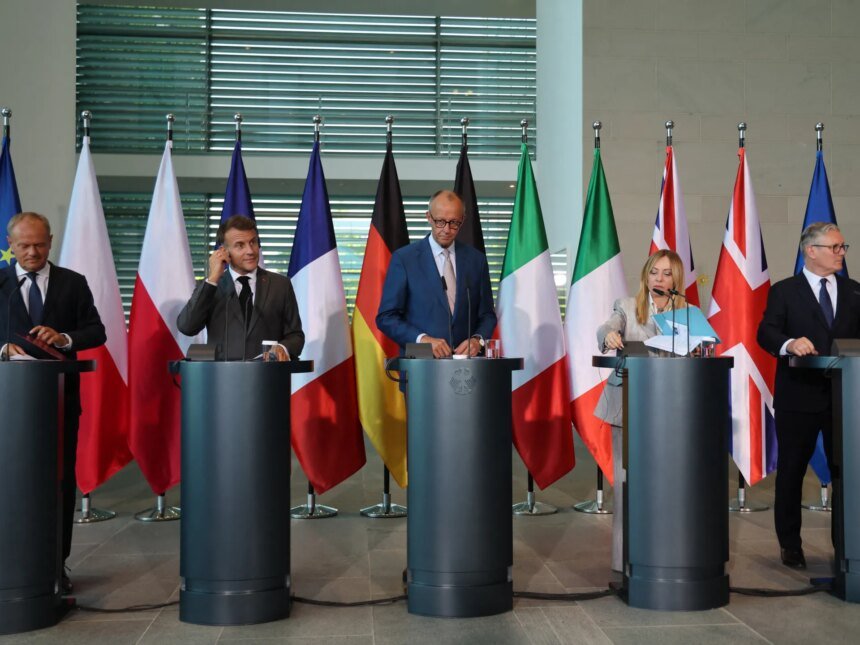
In the same context, the meeting of leaders of Germany, France, Britain, Italy and Poland focused on three main files:
- The future of support provided to Ukraine in the face of Russia.
- Strengthening European defense capabilities.
- Coordinating positions with the North Atlantic Treaty Organization (NATO) and the United States in light of the ongoing transformations in the European security system.
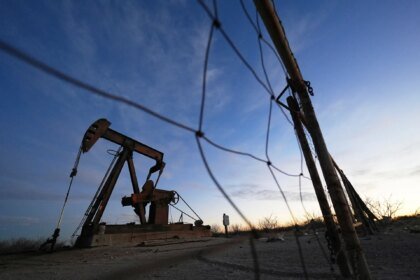
However, Moscow rejects these measures and describes them as illegal, which reflects the widening scope of tension between the two sides, not only at the military level in Ukraine, but also in the maritime, commercial and energy fields.
In parallel, escalating diplomatic tensions are emerging, including Russia summoning the Romanian ambassador to Moscow in protest against Bucharest’s decision to close a Russian consulate, after the incident of a Russian drone falling on the roof of a residential building, an incident that prompted Romania to take the decision to close the consulate.
This reveals the features of a deeper European division in the approach to the Russian-Ukrainian war. While countries such as France and Poland are leading a tougher path towards Moscow, other European countries are adopting more cautious approaches, driven by economic, historical, or internal considerations, which makes the European position a “multidirectional front” rather than a unified position.
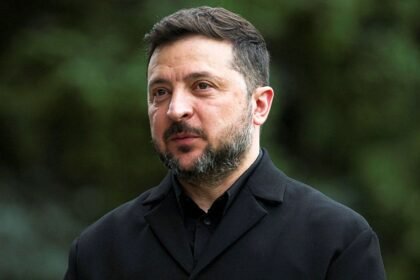
These discrepancies appear clearly in how the Ukraine file itself was dealt with, as an international conference was held in Poland on the country’s reconstruction amid the absence of Ukrainian President Volodymyr Zelensky, against the backdrop of diplomatic disputes with Warsaw.
During the conference, Polish Prime Minister Donald Tusk stressed that building the future of Ukraine and Europe cannot be done without “understanding of history and mutual respect.” Disagreements also emerged related to historical descriptions of Ukrainian military units during World War II, which led to symbolic tension between Kiev and Warsaw.
Poland had withdrawn the “White Eagle” medal from Ukrainian President Volodymyr Zelensky due to historical and symbolic differences. He later returned the medal in a move of a symbolic nature aimed at containing tension.

Communication channels with Moscow
Earlier, the President of the European Council, Antonio Costa, announced – a few days ago – the establishment of a diplomatic communication channel with Moscow to exchange views, in a move that comes amid European fears of international movements that may push towards a negotiated path to end the war without the effective participation of the European side.
Although European officials affirmed continued financial and political support for Kiev, the disputes between some European capitals and Ukraine reflect additional complications within the camp supporting it.
On the other hand, Russia continues to employ political rhetoric linking the expansion of the North Atlantic Treaty Organization (NATO) with the current escalation of tension, as President Vladimir Putin warned of what he described as the West’s readiness for a military confrontation with Moscow, while the alliance and its allies justify the boost in defense spending as a response to the “Russian threat.”
In parallel, the European Union is working to strengthen its defense capabilities and reformulate its security role, by increasing military spending and developing defense industries, in a step that reflects a gradual shift from complete dependence on NATO to building a greater internal deterrence capacity.
Former Russian diplomat Benjamin Popov believes that the time has come for Europe to reconsider its role in the world and improve its relations with Russia.
Popov explained in an article in the Russian New East magazine that this is due to what he described as the decline of Europe due to the policies of incompetent elites, internal problems, and external factors. Given the increasing problems facing the European Union today, it can be confidently predicted – according to Popov – that the crisis of the Western European powers will be severe and disastrous.
The writer believes that the pace of deterioration of the major powers in Western Europe is accelerating, due to short-sighted policies, incompetence, and a widening gap of mistrust between the peoples and their rulers. According to his opinion, the situation is also getting worse due to the ongoing dispute between America and Western Europe.
The war caused enormous damage to Ukraine’s economy, which became dependent on external financing in light of the increasing costs of confronting the invasion and Russian missile strikes.
According to observers, the confrontation between Russia and Europe appears to be in a restructuring phase, as it is not limited to a military front in Ukraine, but rather extends to the areas of economics, energy, politics, and even history.
While Europe seems more determined to strengthen its defense capabilities and impose more economic pressure, Moscow continues to test the cohesion of the European position through energy, sanctions, and diplomacy issues. In light of this scene, the confrontation between the two sides seems likely to extend for a longer time, even if the intensity of the battles on Ukrainian territory decreases.