Published on 6/30/2026
|
Last update: 19:40 (Mecca time)
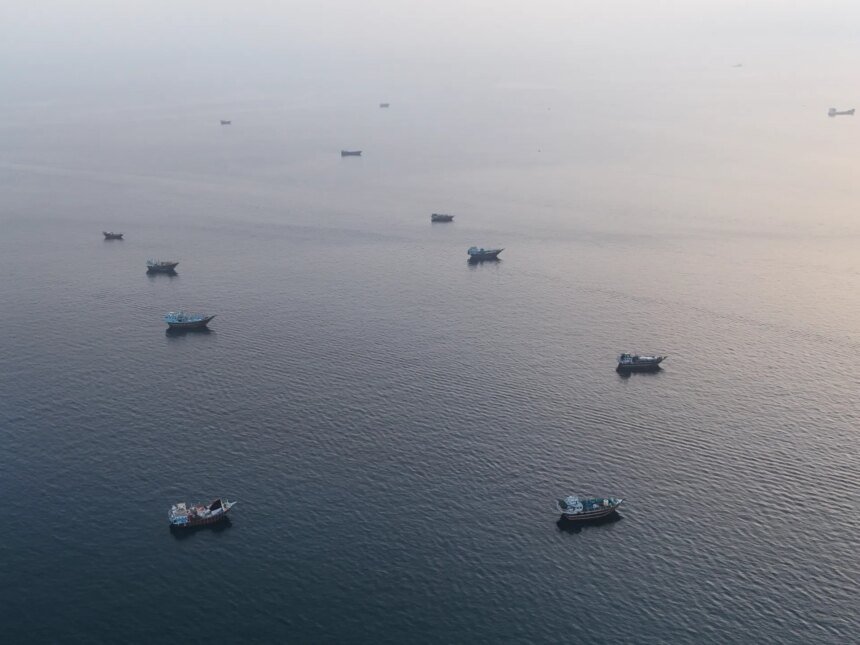
The United Nations warned in a report issued on Tuesday that reopening the Strait of Hormuz, although it represents an important step to restore global trade and energy flows, will not end the economic repercussions left by more than 100 days of navigation disruption, noting that developing and more fragile economies will continue to face inflationary and food pressures that may continue for months.
According to the report issued by the United Nations Conference on Trade and Development (UNCTAD), the Secretary-General of the United Nations, António Guterres, said that the resumption of navigation “represents a first step towards the gradual recovery of energy markets and international trade,” but he stressed that the shocks caused by the disruption of shipping through the strait have already transmitted to the global economy, calling on all parties to adhere to the ceasefire and redouble efforts to maintain it.
Read also
list of 3 itemsend of list
He explained that the most fragile economies were particularly exposed to the rise in oil and fertilizer prices, which was reflected in inflation rates and led to an increase in the cost of food, health care, and basic goods, especially for low-income families.
Gradual recovery
United Nations data shows that ship traffic through the Strait of Hormuz was about 125 ships per day before the outbreak of the crisis, before falling to about 20-25 ships per day during the period of unrest, and then began to recover after the announcement of the reopening of the strait.
Oil markets also witnessed a rapid decline in prices following the announcement of the resumption of navigation, after they jumped during the escalation period to between $100 and $120 per barrel. However, the organization indicates that maritime transport costs did not decrease at the same pace, as grain and oilseed shipping indicators remained at high levels, reflecting the continued pressure on global supply chains.

61 threatened economies
According to the report, 61 weak economies face rising energy and food prices, because they depend at the same time on importing oil and grains.
This group includes 35 least developed countries and 26 small island developing States, while the number of economies with limited exposure is only one.
The report pointed out that this dual dependence makes these economies more vulnerable to rising import bills and accelerating inflation, at a time when they suffer from limited financial resources and a weak ability to absorb shocks.
The report indicates that a number of economies rely heavily on importing basic grains, and Yemen tops the list with net grain imports equivalent to 10.8% of GDP during the period 2022-2024, followed by Kiribati (6.1%), Lesotho (5.8%), Benin (4.8%), and Somalia (4.7%).
The report confirms that this dependence makes any increase in transportation costs or global food prices quickly move to local markets, exacerbating living pressures.
Extended repercussions
The United Nations warns that energy and food price shocks are no longer temporary as they were before the Corona pandemic, as their effects on inflation have become more permanent, while food prices take a much longer time to decline even after global oil and grain prices decline.
The report also indicates that rising food prices for short periods may have long-term health effects, as a 5% increase in real food prices raises the risk of severe wasting in children by 9% for those under five, 11% for children under one year, and 15% for poor children, while it rises to 26% among children from poor rural families who do not own land.
The report explained that the ability of many developing countries to confront these shocks has become limited due to the high burden of external debt service, the risks of exchange rate fluctuations, the difficulty of mobilizing domestic and external resources, in addition to the decline in financial transfers and official development aid.
The United Nations called for strengthening the ability of fragile economies to confront future shocks by diversifying sources of trade and energy, strengthening local production, and increasing investment in the flexibility of supply chains, in addition to providing international financial support to the countries most exposed to risks.
The report stressed that the reopening of the Strait of Hormuz represents the beginning of recovery, but it does not mean the end of the crisis, as the repercussions of the trade and energy disruption will continue to extend over the coming months, with developing countries continuing to bear the largest share of its economic and social costs.