Published on 6/30/2026
|
Last update: 08:48 (Mecca time)
Canada officially launched the first national nuclear energy strategy in the country’s history, marking the beginning of what it described as a “nuclear renaissance” aimed at transforming this sector from a traditional source of energy generation, into a major engine for driving sustainable growth.
Through this comprehensive vision, Ottawa seeks to enhance energy security and sovereignty, raise national productivity levels, in addition to enhancing the competitiveness of the Canadian economy on the international scene, with the aim of transforming Canada into one of the most prominent global leadership powers in the fields of clean energy and advanced nuclear technology.
Read also
list of 4 itemsend of list
The strategy comes at a critical economic time in which Canada is facing a mild technical recession after the GDP contracted for two consecutive quarters, with expectations of modest growth ranging between 1.1% and 1.5% during 2026, amid challenges that include high youth unemployment, skills shortages in specialized sectors, and external trade tensions.
Main axes
The strategy is based on 4 main axes through which it seeks to achieve a balance between energy security, reducing emissions, and driving sustainable economic growth, according to the government statement, and the axes are as follows:
- Construction of local reactors: Construction of up to 10 large nuclear reactors, with construction of two to begin by 2035.
- Expanding electrical capacity: Double the capacity of the electricity grid by 2050 to meet growing demand from industry, artificial intelligence, and electric cars.
- Promote exports and production: Expanding exports of nuclear technology and increasing the production of uranium and nuclear fuel.
- Future innovation: Development of the Darlington project for small reactors and nuclear fusion technologies.

For his part, Conservative Party leader Pierre Poilievre criticized the plan and said, “The announcement will not build anything,” considering that Prime Minister Mark Carney’s government presents promises as achievements without achieving real results on the ground.
Poilievre added in press statements that the conservatives’ approach will focus on repealing laws that hinder development, and depoliticizing the Canadian Nuclear Safety Commission, to accelerate project construction and produce cheaper and more abundant electricity.
Sustainable economic catalyst
Regarding the expected impact of this plan on macroeconomic growth, economist Dr. Ziad Al-Ghazali believes that the nuclear energy program is likely to become one of the most prominent engines of economic prosperity in Canada in the coming years. He expects it to attract huge capital towards infrastructure projects, create thousands of highly skilled positions, and stimulate the engineering, manufacturing and technical innovation sectors.
Al-Ghazali explained in an interview with Al Jazeera Net that providing reliable, low-emission electricity will enhance the competitiveness of Canadian industry and open the door to additional investments, which will raise the size of the national economy and reduce the risks of recession by stimulating investment and internal demand.

Associate Professor of Global Communication at Simon Fraser University in Canada, Adel Iskandar, agreed that the nuclear strategy is a strong economic stimulus that enhances GDP growth and helps confront the recession, through investments exceeding $100 billion to build it, and doubling the number of jobs, as it is expected to create thousands of annual jobs during construction and operation, with the provinces of Ontario and New Brunswick benefiting greatly from construction and rehabilitation projects, and Saskatchewan from the expansion of uranium mining, which supports local demand and economic stability.
Strengthening the trade balance
Al-Ghazali pointed out that Canada has a strong global competitive advantage in uranium production, and the new nuclear strategy seeks to enhance this advantage by increasing exports of uranium, nuclear fuel, and nuclear technology, which contributes to diversifying sources of foreign revenues, and reducing dependence on limited markets and goods, which strengthens the trade balance and mitigates the repercussions of any decline in exports resulting from trade disputes or the imposition of customs duties.
As for Academician Iskandar, in his interview with Al Jazeera Net, he expected that it would contribute to the flow of foreign currencies and diversify markets, by exporting Canadian nuclear technology and engineering services to at least 4 new markets by 2040, while targeting 6 to 10 other promising markets.

He added that in this way, Canada compensates for export losses resulting from trade tensions, reduces its dependence on the American market, and builds long-term partnerships that exploit nuclear energy as a geopolitical tool, especially as Western countries seek to reduce dependence on Russia.
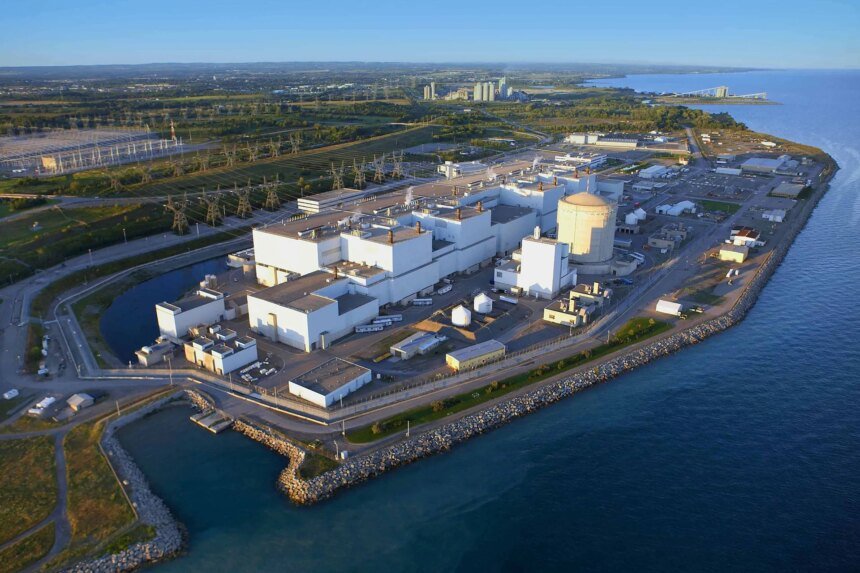
Canada currently has 17 operating CANDO reactors (pressurized heavy water reactors), which are located in the provinces of Ontario (the majority) and New Brunswick. These reactors produce between 13% and 15% of the total electricity in Canada, and are a reliable source of low carbon emissions.
Reduce external shocks
Regarding the extent to which the strategy reduces the impact of external shocks on the Canadian economy, Iskandar said that the project constitutes a protective shield for the economy by enhancing energy sovereignty and diversifying sources of income and commercial partners. It reduces dependence on American energy imports by providing clean and reliable local electricity.
He continued, saying: “The strategy promotes self-sufficiency in sensitive supply chains, such as reactor technology and uranium fuel, which protects energy security and prices from global fluctuations and geopolitical tensions. Thus, Canada is building a more resilient and diversified economy, capable of compensating for any shock in the oil and gas sector with continued growth in the nuclear sector and its new international partnerships.”

In turn, Professor of Economics at McMaster University, Atef Qebrousi, believes that Canada has great potential to increase nuclear exports, but compensating for the decline in exports to the United States of America will not be easy. According to him, these exports will only contribute to limited partial compensation, and will not be sufficient for total dependence on them.
He added, in his conversation with Al Jazeera Net, that Canada must continue to diversify its markets outside North America to achieve better trade security, adding: “There is no doubt that nuclear exports will contribute to filling some of the gap resulting from the customs tariffs imposed by US President Donald Trump, but they will not be a complete substitute for trade losses with the United States.”
Uranium production constitutes a fundamental pillar of Canada’s nuclear strategy, as all production comes from high-quality mines in northern Saskatchewan, where Canada produced in 2024 about 14.3 to 16.9 thousand tons, with a value of approximately 3 billion Canadian dollars (about 2.14 billion dollars), according to government reports.
With about 90% of it exported to the markets of North America, Europe and Asia, Canada strengthens its position as one of the largest producing and exporting countries in the world, which supports its economy, consolidates its strategic role as a reliable energy power, and opens new horizons for enhancing energy sovereignty, diversifying the economy, and protecting it from external shocks.