Published on 6/29/2026
|
Last update: 19:43 (Mecca time)
The government of Burkina Faso announced the severing of its diplomatic relations with France with immediate effect, in a move that deepens the rift with the former colonial power after years of escalating tension against the backdrop of issues of security, sovereignty, and foreign interference.
The government said in a statement broadcast on state television last Friday that it “decided to sever diplomatic relations with France.” Communications Minister Gilbert Ouedraogo explained that “the basic conditions for strengthening relations based on mutual respect and trust and respect for the principle of non-interference in internal affairs and national sovereignty are not available,” accusing Paris of supporting “subversive networks” and “terrorists.”
On the other hand, the French Foreign Ministry described the decision as “hostile and baseless,” and said that it “reflects the disturbing deviation of the Burkinabe authorities,” adding that “the necessary reciprocal measures are under consideration.”
A loop in a longer path
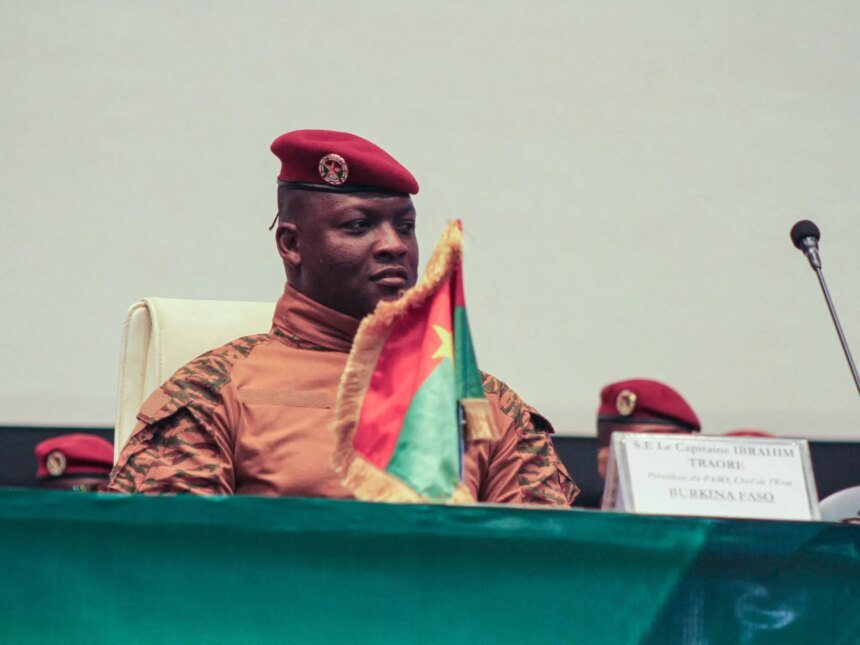
The decision does not come separate from a process that began since Captain Ibrahim Traoré came to power in Burkina Faso following a coup at the end of September 2022. In January 2023, Ouagadougou informed Paris of the cancellation of the 2018 agreement regarding the status of French forces, and in February of the same year it announced the official end of the operations of French forces on its territory, according to Al Jazeera Net.
Burkina Faso was the second stop in this decline after Mali, which expelled the French ambassador in early 2022 and witnessed the withdrawal of French forces in the same year. Then Niger followed in 2023, when French Ambassador Sylvain Et was expelled and French forces were withdrawn at the end of that year.
Since September 2023, the three capitals, Bamako, Niamey, and Ouagadougou, announced the formation of the “Coalition of Sahel States,” before announcing their collective withdrawal from the Economic Community of West African States (ECOWAS) on January 29, 2024.
The decision to break with the European Union was preceded by an escalation, as Ouagadougou summoned, last Monday, the head of the Union delegation, Philippe Bronchin, in protest against a resolution adopted by the European Parliament by a majority of 476 votes to 11, with 75 abstentions, criticizing the dissolution of political parties, the suspension of the activity of civil society organizations, and the threat to freedom of the press in Burkina Faso. Burkina Faso’s Foreign Minister, Jean-Marie Traoré, denounced statements by French Member of the European Parliament, Christophe Gomart, considering them to carry a “neo-colonial tendency.”

Review without interruption
Ouagadougou’s step differs from the path of other countries in the region that reviewed their military relationship with Paris without severing it diplomatically. In November 2024, Chad ended its defense agreements with France dating back to the 1960s, and the French withdrawal was completed with the handover of the last base in early 2025, while its Foreign Minister described France as an “essential partner.”
In Côte d’Ivoire, President Alassane Ouattara announced in early 2025 a “coordinated withdrawal” of French forces, and Paris handed over its only base in the country in February 2025. As for Senegal, President Basserou Diomaye Faye confirmed the end of all foreign military presence on its territory as of 2025, and the last French sites were returned in the middle of the same year with the two countries announcing work on a “new defense and security partnership,” according to Euronews. In all three cases, diplomatic relations remained in place, unlike the countries of the Sahel Alliance.