Published on 6/28/2026
|
Last update: 21:52 (Mecca time)
An account affiliated with China Central Television stated that China is capable of withstanding further deterioration, and even the freezing of economic and trade relations with the European Union, if the ongoing negotiations between the two sides are limited to formal procedures without achieving actual progress. The Europeans are seeking through negotiations to reduce the trade deficit between them and China, which amounts to approximately one billion euros every day.
The “Yuyuantantian” account linked to Chinese Central Television reported from informed sources that Beijing believes that the European Union has changed its approach in dealing with it since the opening of the investigation into subsidies for Chinese electric cars, adopting a policy based on imposing pressures and conditions to strengthen its negotiating position.
Read also
list of 3 itemsend of list
The account accused the European Union of becoming a “violator of the rules,” considering that its regulatory influence is declining as a result of its use of regulatory standards and procedures to impose restrictions on the entry of products into the market and obtain approvals.
These statements come a day before an expected meeting in the Belgian capital, Brussels, tomorrow, Monday, between Chinese Minister of Commerce Wang Wentao and European Trade Commissioner Maroš Šefčović, as part of efforts to contain the escalating trade tensions between the two sides.
Trade imbalance
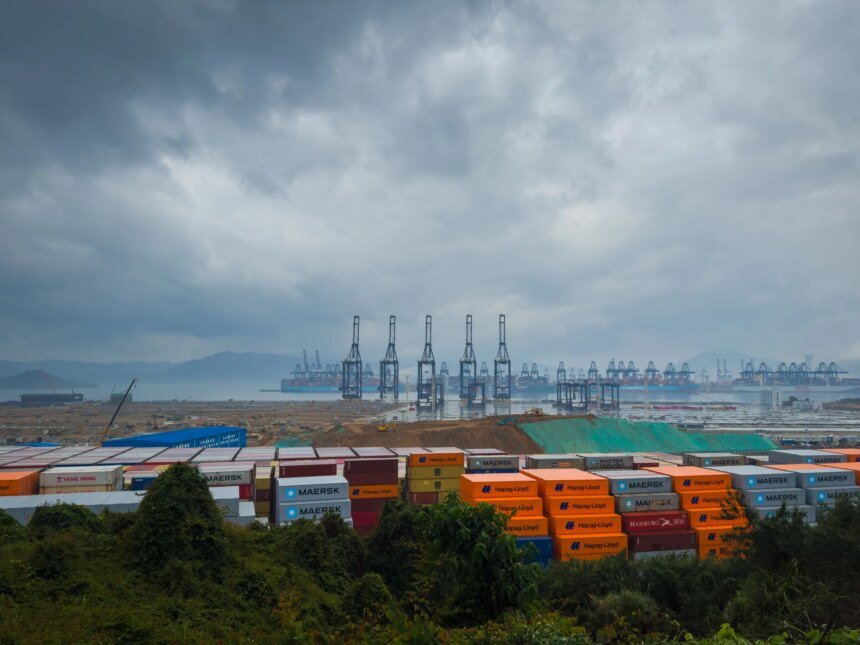
Brussels is pressuring Beijing to address the trade imbalance, after China’s surplus in goods trade with the European Union reached about 360 billion euros ($410 billion) in 2025, with the gap continuing to widen during the current year.
Union leaders had called on the European Commission – the executive arm of the bloc – to continue dialogue with China, in parallel with preparing defensive measures to protect European markets, amid fears of subsidized Chinese imports, heavy reliance on Chinese supply chains, and the possibility of European companies being exposed to retaliatory measures if trade disputes escalate.
On the other hand, Beijing indicated that Chinese companies are now giving the European market less priority compared to other markets, considering that the European Union’s influence on Chinese investment decisions is declining, despite the continued implementation of joint projects in the fields of electric cars, batteries, and the automobile industry, which are sectors to which European countries seek to attract more investments.
China warned that the European Union’s continuation of its current approach may make the prospects for expanding economic and trade cooperation between the two sides more ambiguous in the next stage.
European deficit
The latest data from the European statistical agency Eurostat supports Brussels’ position on the trade imbalance, as the European Union recorded a record deficit in goods trade with China amounting to 98 billion euros (about 112 billion dollars) in the first quarter of 2026, which is the highest level since the third quarter of 2022, when it reached 107 billion euros (about 122 billion dollars).
This came as the Union’s imports from China increased by 3.4% compared to the previous quarter to about 145 billion euros (about 165 billion dollars), compared to a decline in European exports to China by 4.8%, which led to a widening of the trade gap between the two sides.
Eurostat data showed that electrical equipment, machinery, and mechanical parts topped the list of goods exchanged between the two sides during the year 2025. The European Union also recorded the largest increase in its imports of machinery and mechanical parts, at a value of 8.4 billion euros (about 9.6 billion dollars), followed by organic chemicals, at about 8 billion euros (about 9.1 billion dollars).
While the bloc’s exports of vehicles and spare parts to China declined by 8.5 billion euros (about 9.7 billion dollars), compared to an increase in exports of aircraft and spacecraft by about 2.4 billion euros (about 2.7 billion dollars).