Published on 6/29/2026
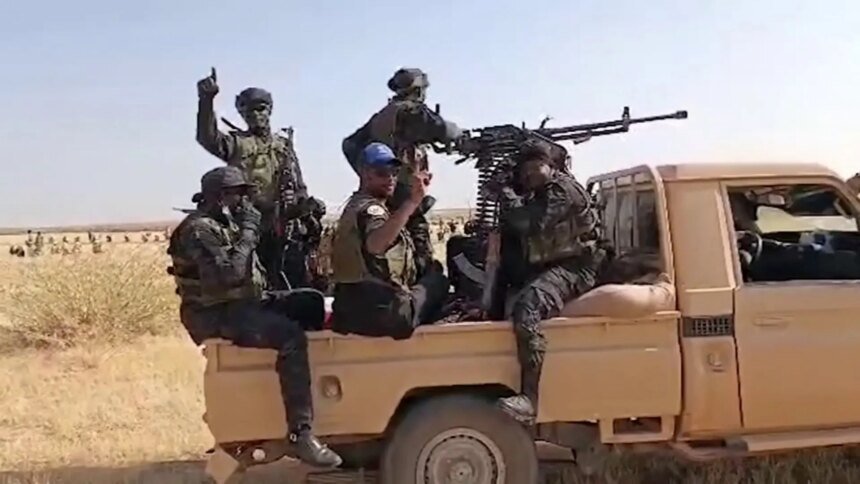
The Sudanese army announced the control of its forces over two strategic areas in Blue Nile State, southeast of the country, after battles with the Rapid Support Forces and the Popular Movement-North.
He said in a statement, “The Sudanese Armed Forces and the forces supporting them were able to clear the areas of Muqja and Sarkum, after fierce battles confronting the rebel militia.”
The army explained that this comes as a continuation of its victories in the Blue Nile axis, noting that “the forces of the army’s 4th Infantry Division and the support forces fought a fierce battle that ended with control of those areas, and the militia inflicted heavy losses in lives and equipment.”
He added, “Army forces continue combing operations and chasing the enemy to secure the areas that have been cleared, and field deployment to ensure stability and security, and to prevent any infiltration attempts or repositioning of fleeing elements.”
There was no comment from the Rapid Support Forces regarding what the army said, as the Sarkum region is considered a strategic area, because it paves the way for the army forces to advance to the city of Kurmuk, adjacent to the Ethiopian border, while the Muqja region of Bao Governorate represents a crossroads in the south of the Blue Nile State, and is located on the way to the city of Kurmuk.
For months, Blue Nile State has witnessed escalating clashes between the Sudanese army on the one hand, and the Rapid Support Forces and the People’s Movement-North on the other hand, which led to the displacement of thousands of people from several regions and cities in the state.
The Sudanese army controls large parts of the Blue Nile, while the SPLM-N has been fighting the government since 2011, to demand autonomy in the states of South Kordofan and Blue Nile.
Of the 18 states in the country, the Rapid Support Forces control the five states of Darfur in the west, with the exception of parts of North Darfur that are still under the control of the army, which imposes its influence on most of the remaining states, including the capital, Khartoum.
Since April 2023, the Rapid Support Forces have been engaged in confrontations with the Sudanese army following a dispute over their integration into the military establishment, which led to a famine that is considered among the worst in the world, in addition to the killing of tens of thousands and the displacement of about 13 million people.