Published on 6/29/2026
|
Last update: 21:31 (Mecca time)
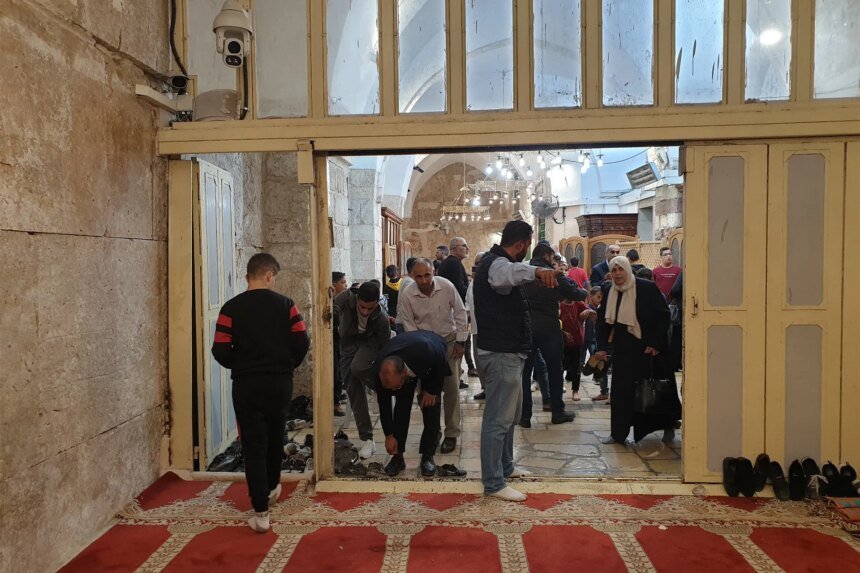
Within a few weeks, Israel in the city of Hebron moved from decisions on paper to changes on the ground. After the Minister of Finance and Minister in the Ministry of Defense, Bezalel Smotrich, announced the withdrawal of planning and building powers from the Hebron municipality, the Israeli army began removing the canopy in the courtyard of the Ibrahimi Mosque in preparation for roofing it, and approved the first Jewish religious building in the city without the approval of its municipality.
Three successive steps, in which the Palestinians read a dismantling of the framework that organized the administration of the city for nearly three decades, and an imposition of a Judaizing reality within one of the holiest Islamic sites in Palestine.

How did we get here?
The June move did not come suddenly, but was the last stop in a gradual process over months:
- Last January: The Supreme Planning Council of the “Civil Administration” of the Israeli army approved the withdrawal of planning powers related to the mosque from the Hebron Municipality, under the pretext of “facilitating the issuance of a building permit for the roofing project of the courtyard of the mosque,” after the municipality rejected repeated Israeli requests to implement it.
- Last February: The Cabinet approved a package of decisions, including the abolition of the Jordanian law prohibiting the sale of Palestinian lands to Jews in the West Bank, and the transfer of building licensing powers in Hebron from the municipality to the Israeli Civil Administration.
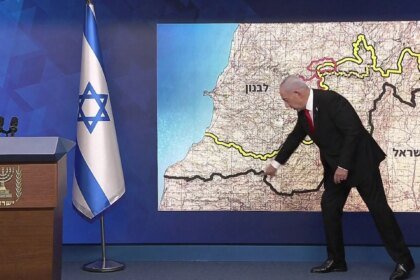
- June 15 of this year: Smotrich announced, during the inauguration of the “Doreen” settlement in Mount Hebron, the completion of procedures for canceling the urban planning and construction provisions stipulated in Hebron Agreement of 1997, and transferred full responsibility to Israel, according to Israeli Channel 12.
- The day after the announcement: The Supreme Planning Committee approved the construction of the “Shavei Hafron” religious school, with an area of about 1,000 square meters, near the “Beit Romano” settlement, without the approval of the municipality, as part of a package that included 576 new settlement units in the West Bank, in addition to 456 units in “Mitzpe Yericho” and 120 in “Karnei Shomron,” according to the Hebrew Channel 7.
Smotrich said at the time: “We are implementing effective sovereignty through settlement“. - June 23 of this year: The Palestinian Ministry of Endowments said that the army began removing the canopy in the courtyard of the Ibrahimi Mosque in preparation for roofing it.

Hebron and exceptional sensitivity
To understand the sensitivity of the recent Israeli decisions, we must stop at the specificity of Hebron itself, as it is not an ordinary city in the West Bank, and the Ibrahimi Mosque is not just a religious site, but rather the center of an open conflict over sovereignty, identity, and management of the place.
The mosque is located in the Old City of Hebron, in an area under Israeli control, where about 400 settlers reside, guarded by approximately 1,500 soldiers.
Hebron is also the only Palestinian city in the West Bank in which settlers live within its old center, making it a permanent point of friction between Palestinians, settlers, and the occupation forces.
In 2017, UNESCO included the old city, including the mosque, on the World Heritage and Danger Lists.
This sensitivity is not the result of the moment, but rather its roots go back to 1994, when a Jewish settler committed a massacre inside the mosque in which 29 Palestinian worshipers were killed. After that, Israel divided the mosque 63% for Jews and 37% for Muslims, and imposed a spatial and temporal reality that allowed it to be closed to Muslims on Jewish occasions and opened to settlers.
This reality still exists amid increasing restrictions on the entry of worshipers, the army controlling the entrances and barriers leading to it, and repeatedly preventing the call to prayer.

Hebron Protocol.. What does withdrawing powers mean?
The “Hebron Protocol” was concluded on January 17, 1997 between the PLO and Israel within the Oslo arrangements, after tensions that followed the 1994 massacre.
Accordingly, the city was divided into “H1”, which is under Palestinian civil and security control (about 80% of the area), and “H2”, which is under Israeli security control, and includes the Old City, the mosque, and settler areas.
Despite security control over H2, the protocol stipulated that civil powers remained in the hands of the Palestinians, including construction, planning, infrastructure, water, electricity, and services, with the exception of what relates to Israelis and their property.
This authority is specifically targeted by the latest decision.
Palestinian officials believe that the move is a political one aimed at reducing the role of Palestinian institutions and expanding the influence of settlers. They fear that it will integrate with settlement expansion to change the status quo in the mosque, leading to converting it into a “Jewish synagogue,” emptying the area of its population, and paving the way for the official annexation of the West Bank.

Palestinian reactions
The director of the Ibrahimi Mosque, Moataz Abu Sneineh, accused Israel of “exploiting political circumstances to impose new realities inside the Ibrahimi Mosque,” and said that the occupation “is racing against time and exploiting difficult circumstances at the global level to pass its Judaization plans.”
The Ministry of Endowments confirmed that the mosque is “a pure Islamic endowment with all its courtyards, corridors and walls,” and described the removal of the canopy as “a new Judaizing crime.”
The mayor of Hebron, Yousef Al-Jaabari, said that withdrawing powers affects agreements signed under international sponsorship and with the participation of the American administration, and constitutes a “dangerous transgression,” calling on Washington to assume its responsibilities, prevent unilateral measures, and maintain the status quo.
The Palestinian Foreign Ministry confirmed that “Israel has no sovereignty over any part of the city of Hebron,” and that the rights of the Palestinians there “are much greater than the agreements signed, including the Hebron Agreement.”
As for the Hamas movement, it considered Smotrich’s measures an “unprecedented political and field escalation” aimed at accelerating annexation and displacement. It called for an escalation of the confrontation and called on the international community and the United Nations to take urgent action.

The Israeli narrative and the internal paradox
The Israeli narrative was not unified in describing the step. While Smotrich announced the cancellation of provisions of the Hebron Agreement, the Israeli Foreign Ministry issued a statement in which it said that “contrary to what the Minister of Finance stated, the Hebron Agreement was not cancelled,” and that what happened was a decision taken by the “Cabinet” months ago, and related to planning and building powers regarding “the Jewish community in Hebron and Jewish heritage sites.”
However, this difference in wording does not change the essence of the path on the ground. Whether the step is presented as a cancellation of provisions of the agreement, or a transfer of specific powers in the planning and construction files, the practical result is the same: reducing the role of the Hebron Municipality in the heart of the Old City and the Ibrahimi Mosque, and transferring the planning decision to the Israeli authorities.
The impact appeared quickly with the approval of the first Jewish religious building in Hebron without the approval of the municipality.
With the transfer of the planning decision into the hands of Israel, the way becomes open for more settlement projects and engineering changes, most notably the roofing project for the courtyard of the Ibrahimi Mosque, the preparations for which began with the removal of the canopy.