Published on 6/28/2026
|
Last update: 08:35 (Mecca time)
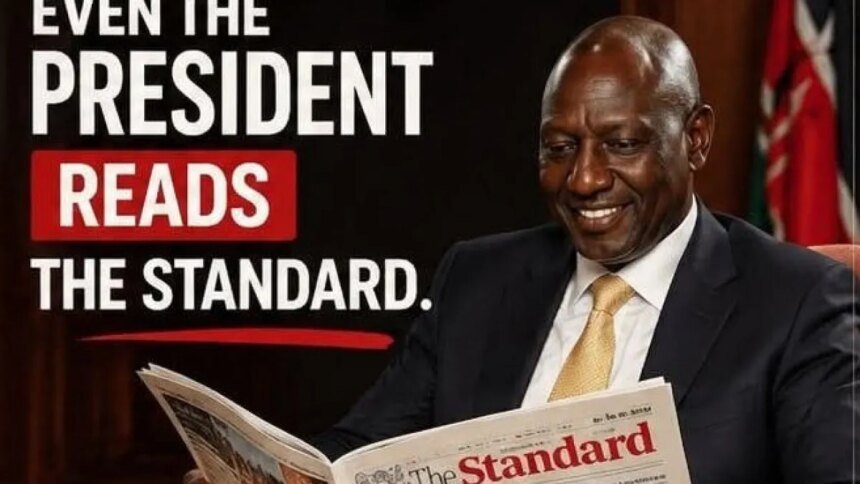
Kenyan President William Ruto entered into a public debate with the Standard media group after he accused it of waging a “blackmail” campaign against his administration, in a verbal escalation that came on the eve of the second anniversary of the “Generation Z” protests against the Finance Law.
Ruto wrote, in a post on the “Do the worst you can,” he added, addressing Moi.
The newspaper responded to the president in the same sarcastic tone, publishing a short message in which it said: “Due to the increasing demand, we print the Standard eight days a week at your request. Orders from above,” while emphasizing its description of itself as “reliable, trustworthy and respectable.”
The debate came at a time when national tensions were increasing ahead of the “Generation Z” anniversary protests, as the newspaper’s edition published last Wednesday carried a headline on its front page about “Protest Anxiety,” addressing that rising tension. Recent months have witnessed a series of reports and investigations critical of the performance of the Ruto administration.
Ruto linked his attack by accusing Gideon Moi of “hiring” the newspaper to pressure him. In October 2025, a few months before the quarrel, the two men had concluded a “reconciliation” agreement in Kabarak, the stronghold of the Moi family, under which the KANU party joined the expanded government and Moi withdrew from the Senate race in Baringo, after years of competition between the two parties, before the relationship later deteriorated, as Ruto said that “greed” spoiled his relationship with Moi after months of reconciliation.

Background to the decline of press freedom
The incident intersects with a broader debate about the conditions of journalism in Kenya. Reporters Without Borders recorded a decline in the country’s ranking from 69 to 116 in the World Press Freedom Index for 2023, the third largest decline in that year’s index, during the first year of Ruto’s rule, who took power in September 2022.
The organization monitored an increase in police attacks on journalists during protests, as more than 20 journalists were arrested or injured during a wave of protests in March 2023, in addition to the dismissal of executive officials in major media groups. Three of the Standard TV Group’s four channels (KTN News, KTN Borodani and KTN Farmers), as well as Vibes Radio, will also be closed in 2024.
The incident also reveals an ambiguous structure in the Kenyan media scene, where ownership of the most prominent media institutions is linked to influential political and economic families, including the Moi family, to which the Standard Group is attributed. While Ruto reads the critical coverage as a leverage tool in a political dispute with Moi, the newspaper maintains that it is fulfilling its professional role. The Kenyan newspaper “Daily Nation” described the Ruto-Moi agreement as “a deal that did not happen,” in reference to the fragility of the rapprochement that preceded the recent debate.