Published on 6/27/2026
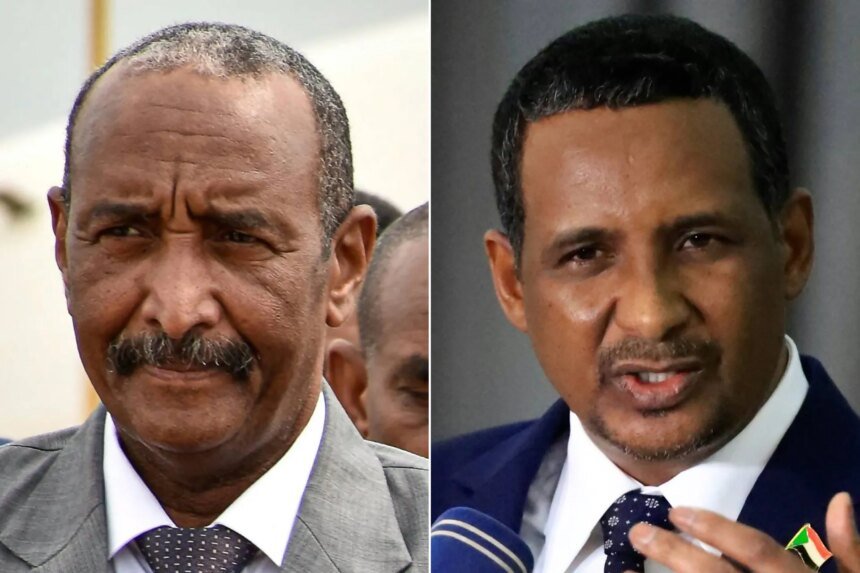
While international warnings are increasing about the serious dangers that may face civilians in Sudan due to the possible escalation of fighting between the army and the Rapid Support Forces in North Kordofan state, each side continues to search for a military victory that will not be achieved in a war that analysts say stopping is dependent on stopping external support.
At a time when clashes are escalating in the city of El-Obeid, the capital of North Kordofan State, voices calling for the need to stop the fighting and spare civilians from potentially great danger are rising.
The city, which is considered a vital transportation node between the Darfur region and the capital, Khartoum, and includes the headquarters of the 5th Infantry Division of the Sudanese Army (Hagana), faces a continuous siege by the Rapid Support Forces, bombardment, and the warnings of a possible ground attack, which warnings are rising that might make it a new “Fasher.”
On the other hand, the Sudanese army continues to launch air strikes on the forces besieging Al-Obeid, which has turned into a fateful front in the course of the war, with it becoming a last refuge for hundreds of thousands of displaced people fleeing the fire of battle.

Non-deterrent solutions
With the increasing reliance of the army and the Rapid Support Forces on drones, the expansion of the war in the city has become a major threat to the lives of thousands of civilians, said Rosemary DiCarlo, Under-Secretary-General of the United Nations for Political Affairs and Peacebuilding.
It was not possible for the two sides of the conflict to continue fighting at this pace without obtaining external support. DiCarlo said – during a session designated by the UN Security Council to discuss the situation in Sudan yesterday, Friday – that stopping the war depends on stopping it.
The United States announced the imposition of new sanctions on leaders and entities of the army and Rapid Support, which it said were obstructing a ceasefire, putting civilians in greater danger and potential atrocities.
However, these sanctions and warnings do not seem important to the two parties, which former Assistant Secretary of State David Shin believes are not interested in stopping the war, and each of them is looking for victory.

Stop external support
Even the United States’ attempts to temporarily stop the fighting were not sufficient, and it seems that they will not be unless external parties stop providing military support to one or both of the parties, according to what Shin said during his participation in the “Beyond the News” program.
Consensus between all parties involved in this conflict is the only way out at the present time, and without it, the Sudanese will not be able to stop the war, because both parties cannot manufacture marches that enhance their ability to continue fighting, as Shin said.
However, the warnings, fears, and the humanitarian situation, which the United Nations says is the worst in the world, do not seem sufficient to convince the combatants to take even one step back and look at the negotiating table instead of the battlefield.
The editor-in-chief of Al-Wasat newspaper, Fathi Abu Ammar, believes that peace is the only solution to this crisis, but he blames the army, which he accused of preventing civilians from leaving the city of Al-Obeid.
Investment in war
Indeed, the Sudanese journalist accused the head of the Transitional Sovereignty Council, Lieutenant General Abdel Fattah Al-Burhan, of investing in the war, citing Al-Burhan’s statement that the army is practicing the policy of digging with a needle in this battle.
Abu Ammar did not find a better way to hold the army responsible for the continuation of the war than the speech of Musaad Boulos – the US President’s senior advisor – who accused the army of obstructing the arrival of aid to some Sudanese regions.
As for the Rapid Support, which faces international accusations of committing war crimes against civilians, it “defends the homeland, has legitimate historical demands, and accepted the truce that Al-Burhan rejected,” according to the words of Abu Ammar, who said that Al-Obeid will fall to the Rapid Support as Al-Fasher fell, and that the war may extend to more cities.
On the other hand, writer and political analyst Youssef Abdel Manan accuses the Rapid Support, which he said killed 7,000 civilians in El Fasher, including 300 patients who were liquidated inside the Saudi hospital.

Peace, not a truce
Just as Abu Ammar spoke about peace, Abdel Mannan also spoke, saying that the truce “is not a solution, because it will not stop the war,” and that a comprehensive peace based on principles that preserve each party’s rights is the only way out of this conflict, and not the sanctions that Abdel Mannan believes “will not change anything in reality.”
Sudan needs a comprehensive political settlement that resolves the roots of the crisis and not a truce that temporarily soothes its wounds, in the opinion of Abdel Manan, who said that the Security Council and the United Nations are not serious about the Sudanese issue, and accused Musaad Boulos of bias towards rapid support.
Abdul Manan not only accused the American official, but also accused Abu Ammar of promoting lies and dreams instead of facts, describing him as a “militia representative (in reference to Rapid Support).”
The Sudanese army is open to dialogue, as Abdel Mannan says: “It did not threaten the civilians trapped in Al-Obeid or prevent them from leaving, as Abu Ammar said, but rather the people are the ones who refuse to leave their homes and leave them to the militia.”