Published on 6/27/2026
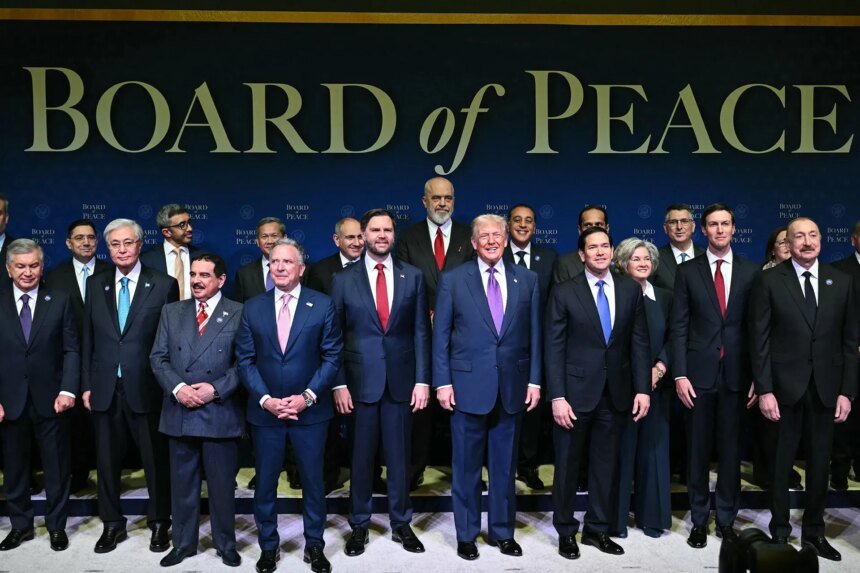
The British Guardian reported that a draft resolution it obtained reveals a controversial approach within the “Peace Council” announced by US President Donald Trump to manage the Gaza Strip, granting himself, his members, his forces, and the contractors working with him broad legal immunity, in addition to the authority to obtain public facilities and property inside the Strip for free, which sparked criticism and legal warnings about the lack of accountability and the possibility of violating the rights of Palestinians.
The 4-page draft, classified as “sensitive but not classified,” according to the Guardian report, stipulates that Council members, the Office of the High Representative, international forces, contractors and employees involved in Gaza reconstruction missions will be exempt from any legal procedures, including arrest, detention, or prosecution before Gaza’s courts. It also gives the President of the Council, Donald Trump, the power to lift the immunity of any person, provided that a majority of the members of the Executive Council approve.

The majority of council members
The Executive Council includes 7 members, including Jared Kushner, Trump’s son-in-law, Special Envoy Steve Witkoff, White House Chief of Staff Susie Wiles, and National Security Advisor Marco Rubio.
Read also
list of 2 itemsend of list
Although a number of countries have pledged billions of dollars to support the reconstruction of Gaza, most of these pledges have not turned into actual funding, and the Council has not yet awarded major contracts to implement its projects.
An official in the Peace Council denied the existence of any effective legal framework that grants these immunities, stressing that what was stated in the document is “incorrect and misleading,” and that the Council will ensure that all workers and contractors are subject to applicable laws and clear mechanisms for oversight and accountability, without clarifying the nature of those mechanisms.
Guardian:
The draft raised widespread concerns among international law experts, as a number of them believed that it might open the door to exempting the Council and its forces from any accountability if shooting incidents, deaths, or damage to civilians occurred during reconstruction operations.
Broad concerns
According to the newspaper, the High Representative of the Council, Bulgarian diplomat Nikolai Mladenov, is holding meetings in Cairo with Palestinian officials chosen by the Council to participate in the management of Gaza, with the aim of completing the regulatory framework for its work within the Strip, but the draft immunity resolution has not yet been presented to them.
The draft raised widespread concerns among international law experts, as a number of them believed that it might open the door to exempting the Council and its forces from any accountability if shooting incidents, deaths, or damage to civilians occurred during reconstruction operations.
A specialist in international humanitarian law issues, lawyer Emily Schiffer Omar Mann, said that the document appears to be a clear attempt to exempt the Council and all those working with it from responsibility for any potential legal violations, while international law professor Noura Erekat considered that the project creates “its own legal system,” far from any external oversight or application of international law.

Free offices and headquarters
The draft also stipulates that the council, its offices, and the headquarters of its international forces will be provided with “buildings and public facilities free of charge” to carry out its tasks in Gaza, which legal experts have warned may allow the seizure of Palestinian property without the consent of its owners or compensation, in the absence of any legal agreement defining the powers of the council or the status of international forces within the Strip.
According to contractors participating in the project, the Council intends to establish a base for international forces and logistical centers, with these forces being responsible for supporting the process of disarming the Islamic Resistance Movement (Hamas), as it is an essential pillar of Trump’s plan for managing the post-war period.
Critics believe that the document reflects a trend that grants the Council broad powers without a clear legal framework or independent oversight, while ambiguity remains regarding the legality of these procedures, especially since the proposed decision will enter into force once the High Representative of the Council signs it, without clarifying whether there are other parties that will sign it or recognize it.