For many decades, metal has been the undisputed master of the automotive industry. Traditional metals, especially steel, have given cars the strength, solidity, and ability to withstand roads, collisions, and harsh conditions of use, but this strength carries with it an equally important problem: weight.
The heavier the car, the more energy it needs to move, the higher the fuel consumption, the lower the performance, and the more difficult the goal becomes to achieve efficiency. So the question arose that has preoccupied automotive engineers for decades: How can a car be made that is more powerful, but at the same time lighter and more efficient?
The answer was not in developing the engines alone, nor in improving the aerodynamics only, but in rethinking the material from which the car body itself is made, so that fiberglass and carbon fiber enter the scene, not only as alternative materials, but as the beginning of a profound transformation in the philosophy of design and production.
These materials opened the door to a new generation of cars, the superiority of which is not measured by strength alone, but rather by its ability to combine high performance, light weight, fuel efficiency, and a better level of safety and design.

Fiberglass…a coincidence that created a revolutionary material
The story of fiberglass began in the 1930s, when chance led to one of the most important discoveries in the world of modern industrial materials.
During one of the experiments, Dale Kleist, a worker at the American company Owens Corning, was trying to connect two blocks of glass. While working, he noticed that directing a stream of compressed air at the molten glass turned it into fine, smooth, fiber-like threads.
From that unexpected moment, the idea of a material was born that would later find its way into dozens of industries, including the automobile industry. After years of development, the material was patented in 1938, and was released commercially under the name “fiberglass,” beginning a new phase in the use of light, solid, and easy-to-form materials.
The strength of fiberglass is that it combines qualities that at first glance seem contradictory. It is lightweight, but able to withstand various uses. It is also resistant to rust and corrosion, acts as a good insulator of heat and electricity, and can be formed more easily compared to many traditional metals.
For these reasons, fiberglass has found a clear place within the automobile industry, especially in parts that need lightness and lower cost, such as front and rear shocks, engine hoods, some external parts, and trunk lids, in addition to internal components such as parts of the dashboard or internal supports, especially in economical cars.

Carbon fibre..a material of the future
Unlike glass fibers, which were discovered by chance, the development of carbon fibers came as a result of scientific experiments and gradual development that went through several basic stages, until it reached its known form today.
The idea began with the American inventor Thomas Edison in 1879, when he used carbon filaments in an electric light bulb, which represented an early use of carbon in industrial applications.
In 1958, American physicist Roger Bacon succeeded in producing the first high-quality carbon fibers in the laboratory by heating carbon-rich materials under certain conditions to transform into very fine threads of carbon. Japan and Britain later entered the development line and contributed to improving the properties of these fibers and expanding their industrial use.
Carbon fiber has properties that make it more of a “material of the future” than a traditional material. It is remarkably light, yet possesses exceptional strength and rigidity. It also shows high resistance to heat and environmental factors, and does not rust like metal, which gives it a longer lifespan.
Carbon fiber gives the car a modern and elegant aesthetic appearance, as it gives its exterior structure or even the interior cabin distinctive touches that reflect the sporty and advanced technical character of the car, which attracts attention and enhances its striking and luxurious presence on the road.
Carbon fiber is used in the manufacture of the bodies of modern cars, especially sports and electric cars, or parts thereof, as well as the doors, the roof, the hood, the rear wings (spoilers) to improve aerodynamic flow, the steering wheel and cabin decorations to give a sporty and luxurious character to the interior design. In racing cars, it is used in seats to reduce weight and increase safety.

Why do car companies bet on these materials?
Car companies’ turn to fiberglass and carbon fiber was not just a desire to reduce weight. Composite materials have fundamentally changed the way designers and engineers think about cars.
It gives greater freedom in shaping the body, allows for the design of more streamlined and bold lines, and also helps improve the distribution of mass inside the car, which is reflected in stability, control and overall performance.
From a security perspective, these materials have an important ability to absorb shocks and distribute their energy in ways different from traditional metals. While metal structures rely on specific collapse zones to mitigate the impact of a collision, composite materials provide more advanced solutions to control the transmission of impact forces and reduce their impact on the cabin.
Composite materials also have a natural ability to absorb vibrations and reduce road noise compared to aluminum and steel, which is reflected in a quieter and more comfortable driving experience, especially in luxury and electric cars that are looking for a more insulated and smooth cabin.
Thanks to the high stiffness of carbon fiber, designers were able to reduce the size of some components without sacrificing strength. The most prominent examples of this are the seats, as this material helped replace bulky metal structures with thinner and lighter seats, providing more space for passengers without the need to increase the size of the car.

Cars made carbon a major champion
As the use of carbon fiber has evolved, models have emerged that have become clear examples of what this material can do when deeply embedded in a car’s structure. In the world of supercars in particular, carbon is no longer just a luxury detail, but has become an essential part of the speed, stability and power equation.
-
McLaren P1.. a carbon icon in the world of supercars
The McLaren P1 is one of the most prominent cars that embody the advanced use of carbon fibre. It relied on a carbon monocoque structure known as “MonoCage”, whose weight does not exceed 90 kilograms, while the outer body panels were also made of carbon, with a total weight of approximately 90 additional kilograms.
The obsession with reducing weight in this car went down to minute details, such as eliminating the interior carpets and using a windshield that was only 2.4 mm thick. As a result, the weight of the car reached 1,395 kilograms, even though it includes a full hybrid system.
This combination of lightness and power gave the car an exceptional power-to-weight ratio of 656 horsepower per ton, which enhanced its dynamic performance and made it one of the icons of supercars in the modern era.

-
Ferrari LaFerrari…carbon engineering at its finest
LaFerrari represented an important milestone in the company’s history with composite materials. Not only did Ferrari engineers use a traditional carbon structure, but they employed six different types of carbon manufactured by hand in ovens similar to those used in Formula 1 cars.
The result was a structure that was 27% stiffer and 22% more durable compared to the previous Ferrari Enzo, with a weight of 1,255 kilograms, despite the car containing a hybrid battery that weighs 146 kilograms alone.
This advanced design, combined with a highly efficient hybrid system, gave the car tremendous power, lightning acceleration, and remarkable stability at high speeds, cementing LaFerrari’s position among the most exciting supercars in the history of the Italian brand.

-
Lamborghini Aventador… carbon power with aggressive design
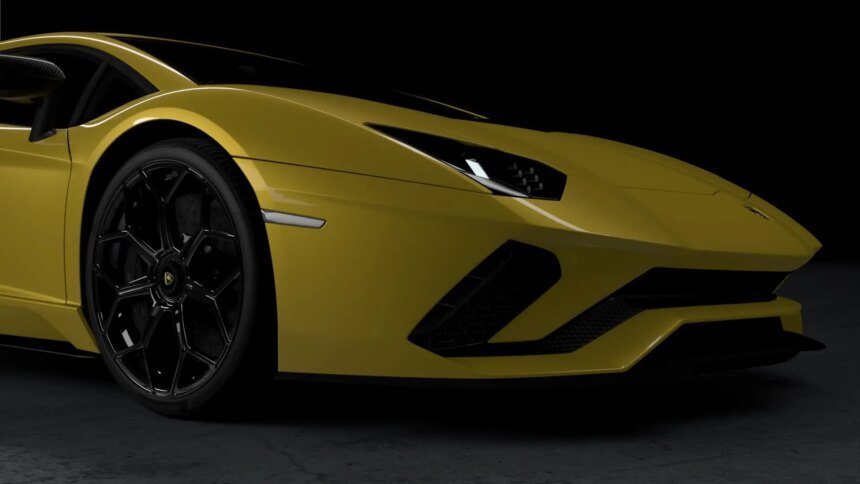
The uniqueness of the Lamborghini Aventador lies not only in its use of carbon fibre, but also in the fact that its monocoque body was designed and manufactured within the Lamborghini factories in Sant’Agata Bolognese, rather than relying entirely on external suppliers.
This decision gave engineers greater control over the integration of the chassis with the engine and axle mounting points, which was reflected in stability at high speeds, and in the overall sense of cohesion and strength.
The Aventador’s carbon effect is not only geometric, but also visual. The material contributed to highlighting a sharp, aggressive design and bold, flowing lines, reflecting the extreme sporting character for which Lamborghini is famous.

-
Bugatti Chiron… when carbon meets luxury
In the Bugatti Chiron, the challenge was different; What was required was not only to build a light and powerful car, but also to build a supercar with a power exceeding 1,500 horsepower, while maintaining a level of luxury befitting a car whose price starts at millions of dollars.
To achieve this, Bugatti combined a carbon fiber monocoque body with an aluminum substructure, in a careful attempt to balance rigidity, vibration absorption and stability at extreme speeds.
This combination gave the Chiron a tremendous ability to handle high performance, with a luxurious and isolated cabin, making it one of the most advanced cars of its era, where carbon appears not only as a symbol of speed, but also as part of luxury engineering.
-
Koenigsegg Jesko.. When speed is made of carbon
Koenigsegg Jesko offers a different philosophy in the use of composite materials. The car, which weighs about 1,320 kilograms, relies on a carbon fiber monocoque structure, supported by aluminum elements to achieve high rigidity with low weight.
With an advanced 9-speed transmission, lightness here becomes part of the driving experience itself, not just a number in the technical specifications. The car responds very quickly to the driver’s directions, and gives him a sense of precise control even at speeds that seem closer to the limits of flying than to traditional driving.

Materials similar in appearance, different in cost
Although fiberglass and carbon fiber belong to the world of composite materials, the difference between them becomes clear when talking about cost and usage.
Fiberglass remains the most economical option, so many companies rely on it for large-scale production and for parts that need lightness and good resistance without a high cost.
Carbon fiber is a high-performance option, but it is expensive due to the complexity of the manufacturing processes and its exceptional properties. Therefore, its use remained associated for a long time with sports cars, luxury cars, and racing cars, before it began to gradually move to wider models, especially with the rise of electric cars and the increasing need to reduce weight.
This variation gives each material a different role inside the car. Glass fiber serves economic efficiency, while carbon fiber serves superior performance and advanced design.
A future that starts from matter
The automobile industry no longer revolves around the engine alone, nor is it only about the exterior appearance. The material from which the car’s body is made has become a decisive factor in determining its performance, efficiency, level of safety, and even its character on the road.
As companies continue to look for ways to reduce the cost of carbon fiber and improve the production of composite materials, these technologies may transform from a privilege reserved for supercars and luxury cars to a common component in the cars of the future.
The path to a more efficient car does not always start from a more powerful engine, but sometimes from a thin thread of glass or carbon, capable of changing the shape of the entire industry.