Bogotá- Colombia woke up on Monday, June 22nd, unlike what it was the day before. The second round of elections held on Sunday, June 21st, produced a new political image for the South American country.
According to the initial count numbers, after four years of a leftist government led by outgoing President Gustavo Petro, the far-right candidate, Abelardo de la Espriria, won the presidency, although the leftist camp is still waiting for the final results – which may be issued within a few days – to recognize this victory.
Extreme right and opposition left
The difference between de la Esperría and the leftist candidate, Ivan Cepeda, was very small, as de la Esperría received nearly 13 million votes, while 12.7 million voters voted for Cepeda.
The difference between them did not exceed 250,000 votes, which confirmed the feeling of many Colombians that the country was divided into two parts between a unified left and a more extreme right. According to statements made by political commentator Ariel Barrera Haddad to Al Jazeera Net, Colombia today is divided into two contradictory camps that are close in size.
De la Esparilla is the country’s first right-wing president who is not affiliated with the traditional right-wing parties or the party of former right-wing president Alvaro Uribe, who was until now the most prominent figure of this political trend in the country.
De la Esparilla emerged backed by a force with connections to regional leaders, including Argentine President Javier Milley, El Salvador’s President Nayib Bukele, and US President Donald Trump.
The victory of this candidate, who is originally a lawyer, can be read as the fact that his “extremist” rhetoric in the areas of security and economics, which is identical to the new and “more extreme” right-wing discourses in the region, was able to convince millions and build a real electoral base that will transform into a governmental force that includes the entire country.
On the other hand, the result achieved by the left, which is very close to the winner’s result, shows that President Gustavo Petro is leaving his political bloc (Historic Pact) as a “large and organized opposition force”, now led by Ivan Cepeda.
Happiness of “Tiger” supporters
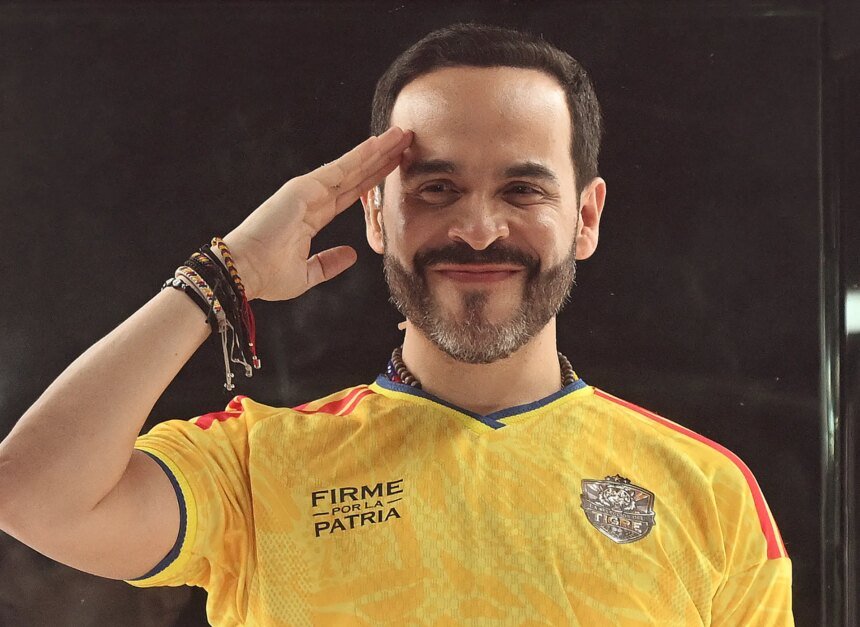
From Ciudad Bolivar, one of the poorest neighborhoods of Bogotá, José León Munca does not hide, He is a member of the reserve forces in Colombia. He is satisfied with the election results. He was a local coordinator in the De la Espriria campaign, known among its supporters as the “Tiger Campaign.”
Monca tells Al Jazeera Net that “all the Abelardians (supporters of Abelardo de la Espriria) are very happy” with the electoral result achieved by the “Defenders of the Homeland” movement (the name of the de la Espriria movement), and he mainly mentions the military, retirees and reserve personnel, considering that they were among the groups that were most “marginalized and insulted” during the era of the current government.
Monca does not present his vote for de la Esparía as mere political bias, but as a punitive vote against the government. He says that many chose the right-wing candidate because they saw in him “transparency and harmony,” and because, in his words, he confronted the traditional parties that “did nothing but lie to Colombia.” So, he adds, they voted for a “new candidate” who they hope will change the direction of the country.

Fears from the left
For Monca, the election was not just a choice of president, but a moment linked to what he calls “the defense of freedom and democracy” and the future of children. He talks about health, security, and new generations, and says that what happened at the ballot boxes was an expression of “awareness” and feelings that had accumulated over the past years.
Not everyone agrees with this reading. Speaking to Al Jazeera Net, political observer Haddad refuses to consider the election results as a vote in favor of De la Espriria’s political program, and says that many of his voters do not know the details of his proposals, but rather were influenced by what he describes as a “media intimidation campaign” that linked the left to historical fears related to armed conflict and socialist experiments.
He adds that the word “communism” still arouses fear among a large part of society more than other descriptions such as corruption or association with paramilitary groups.
While Monca believes that De la Esperría’s proposals seemed “coherent and intelligent,” and that they not only attracted right-wing voters, but also people who were close to other parties and movements.

Sadness and frustration among left-wing voters
Haddad says that the other part of society, that is, almost half of it, is very concerned about de la Espriria’s rise to power. Lechia Suarez, a domestic worker who also lives in Ciudad Bolivar, embodies this position, which is the exact opposite of Monca’s. It did not understand the results of the elections.
She said in an interview with Al Jazeera Net that she spent the voting day expecting the leftist camp to win, before the result turned into a source of frustration and anger for her and her family.
She does not hide her doubts about the integrity of the electoral process. She is convinced that votes were stolen and that vote buying affected the final result, but there is still no direct evidence of this.
But what dominates her talk to Al Jazeera Net is not anger as much as it is sadness. She says that she has never felt in her life as a citizen and voter what she felt on the evening of the announcement of the results. “I felt great sadness and dismay. I could not understand how people voted against the continuation of this path, despite everything that was achieved for the poor, rural residents, breadwinning mothers, and the elderly,” Lekhia explains that this was what pained her most about the outcome.

In harmony with the rise of the right
Lejia Suarez’s concerns go beyond internal affairs to include foreign policy as well. In her opinion, the new president may lead the country to become more dependent on the United States. “We don’t know what could happen,” she says, anticipating the next stage. “This is what scares me most today.”
Haddad supports this proposition in his analysis for Al Jazeera Net, linking the rise of de la Espriria to the role of the United States and the support he received from the regional right. He says that the statements of American officials, led by US Secretary of State Marco Rubio, reflected a desire to confront leftist governments in Latin America.
Haddad adds that the United States still views Latin America as its sphere of influence. “In Colombia, we saw political support from American Republican figures for Abelardo de la Esperrilla, and the rhetoric directed against the left restores the language of the Cold War and portrays every progressive project as a danger that must be stopped.”
Haddad reads what happened as part of a broader political transformation in the region, and believes that Colombia today stands before a new stage in which, in his opinion, internal factors related to political polarization intersect with external factors related to regional and international balances.