Published on 6/17/2026
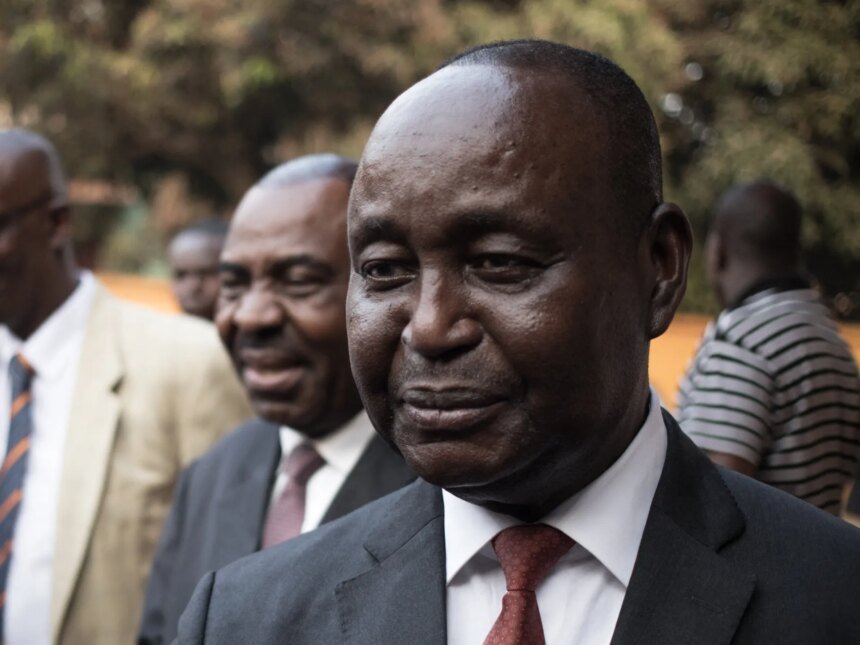
The UN-backed Special Criminal Court in the Central African Republic recently began a trial in absentia of former President François Bozizé on charges of crimes against humanity including murder, enforced disappearance, torture and rape.
The court, which is based in the capital, Bangui, includes a hybrid judicial body consisting of Central African judges and foreigners, and is charged with investigating war crimes committed in the country since 2003, a period in which Central Africa witnessed the worst waves of armed conflict since its independence from France in 1960.
The charges relate to violations attributed by the court to the Presidential Guard and other internal security forces, allegedly committed in a civilian prison and at a military training center in the central town of Bossembili, between February 2009 and March 2013 during Bozizé’s presidency, according to Amnesty International. The court had issued an international arrest warrant against the former president in April 2024, which has not yet been implemented, and referred his file to trial last January.
Bozizé (79 years old) has been residing in exile in Guinea-Bissau since March 2023, a country that does not allow the extradition of wanted persons despite the international arrest warrant issued against him. Bozizé is the highest-ranking official tried by the Special Criminal Court since its establishment, according to Amnesty International.
Along with him are three of his former senior military officers, Eugene Ngaikoseh, Vianney Simendero and Ferman Junior Danboy, who are in court custody and attending the trial sessions. They were arrested between 2021 and 2022, and face charges including murder, enforced disappearance, and torture.

Feedback
Amnesty International commented on the launch of the trial by saying that Bozizé’s trial on charges of war crimes and crimes against humanity “demonstrates the court’s great willingness to combat impunity and pursue justice for the benefit of the victims.” The organization quoted its Regional Director for West and Central Africa, Marceau Seville, as saying, “Trial of Bozizé in absentia greatly distorts this judicial process,” adding that “it is necessary that he be arrested, extradited, and appear before the court in person.”
Sifiud pointed out that more than 30 suspects against whom arrest warrants were issued by the court are still at large in other cases, stressing that the court “cannot carry out its mission unless the national authorities and all countries fully cooperate,” according to the organization’s statement.
The trial comes amid a financial crisis that threatens the continuation of the Special Criminal Court, which Amnesty International has warned is at risk of closure due to running out of resources. The organization explained that the only two donors to the court are the United Nations and the European Union, and that the court was forced to lay off a quarter of its employees, especially foreign experts, between August and September 2025, while its mandate extends until 2028.
Bozizé was sentenced in absentia to life imprisonment with hard labor in 2022 in a separate case on charges of conspiracy, rebellion, and murder.
Political background
Bozizé seized power through a coup in 2003, before he was overthrown 10 years later by the Seleka coalition, composed mostly of Muslim rebels, which sparked a civil war in the country. In response, Bozizé created predominantly Christian and animist armed groups known as “anti-Balaka” in an attempt to regain power.
Bozizé fled to Cameroon via the Democratic Republic of the Congo, then returned to Central Africa in 2019 to announce his candidacy for the elections, before the Constitutional Court decided that he did not meet the requirement of “good character” due to the crimes charged against him. In late 2020, he led a new rebel alliance, the “Alliance of Patriots for Change,” which threatened the authority of President Faustin Archange Touadera, before Russia deployed hundreds of mercenaries from the “Wagner” group to enable the government to repel the alliance, so Bozizé resorted to exile, first in Chad and then in Guinea-Bissau.