Published On 9/6/2026
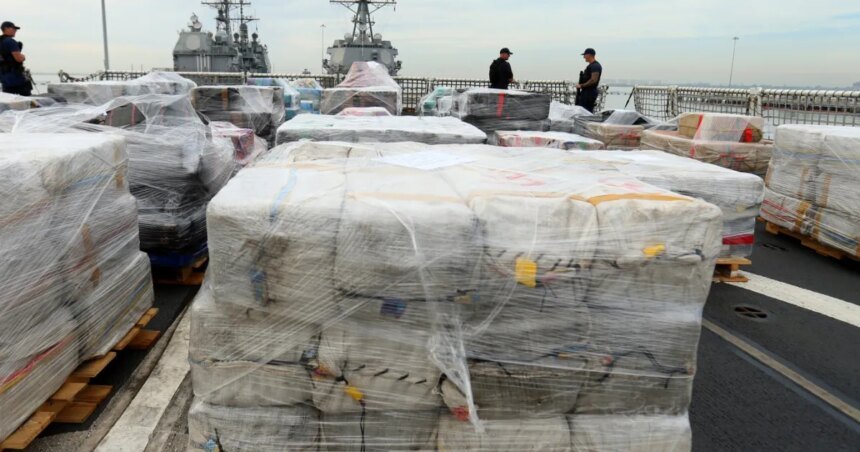
A new investigation by the Global Initiative Against Organized Crime (GI-TOC) revealed the growing role of West Africa in smuggling cocaine to Europe, following a record seizure early last May, when the Spanish authorities intercepted a cargo ship coming from Sierra Leone carrying more than 30 tons of cocaine, according to what Radio France Internationale reported.
The investigation revealed that Sierra Leone has become a pivotal link in a smuggling route that, until recently, was poorly documented. While investigators already knew how cocaine reaches West Africa from Latin America, today they are better able to understand the mechanisms of shipping it to Europe. The report indicated that cocaine is stored in Sierra Leone before being transported on small cargo ships to the European market, in a manner that is expanding. Data from the European Maritime Analysis and Operations Center also showed that the average volume of shipments seized via West African routes doubled between 2024 and 2025.

Arconian process
Regarding the Spanish authorities’ interception of the shipment coming from Sierra Leone, details reported that the Spanish Navy confiscated more than 30 tons of cocaine on board the ship “Arconian,” a cargo carrier flying the Comoros flag, which was intercepted off the coast of Western Sahara. The initiative described this operation as the largest single seizure of cocaine in history.
According to the initiative’s analysis, the shipment was “most likely” loaded from the port of Freetown, and was planned to be transferred to speedboats near the Canary Islands before being distributed in Europe. The ship had a Filipino crew on board, in addition to six armed men: five Dutchmen and one Surinamese, some of whom had previously been charged with cocaine smuggling and money laundering in the Netherlands.
The initiative indicates that “Arkonian” is not an isolated case, as it has monitored at least 8 voyages of small cargo ships since 2024, departing from Freetown or nearby waters towards North African ports. It is likely that the Dutch merchant Jos Liedkers, who has resided in Sierra Leone since mid-2022, is the coordinator of these trips, and that his network provides logistical services and may own part of the shipments.

Sierra Leone.. a center for storage and transshipment
According to the initiative, since 2020, Sierra Leone has become a major center for storing and transshipping cocaine, first for criminal groups from the Balkans, then for other networks after 2023. Criminal organizations have established money laundering companies and warehouses to store and repackage cocaine, and coordinated subsequent shipments through regular ports using legitimate goods, while making the port of Freetown a pivotal port for export.
One case documents the import of cocaine from Brazil via a fishing ship, then packing it in containers inside Sierra Leone, before exporting it hidden among cocoa shells to the Belgian port of Antwerp.
This comes within a broader trend observed by the initiative in a previous report issued last March, which concluded that the cocaine market in West Africa has witnessed a sharp expansion since 2019, and that at least 30 percent of the cocaine arriving in Europe is believed to pass through the region. The report considered that corruption is the most prominent factor that facilitates this smuggling.
The authors of the investigation believe that the record seizure reflects the growing confidence of criminal networks in their ability to deliver their shipments to Europe without objection, and that what happened represents only the tip of the iceberg.