Freezing foreign assets is no longer limited to being a punitive tool used by Western countries against their political opponents. Rather, in recent years, it has turned into one of the most influential tools of financial influence in the global economic system. It is no longer just a matter of depriving the targeted countries of access to their sovereign reserves and funds, but rather of creating a new reality in which those funds become a source of returns and investments within the countries that embrace them.
According to estimates announced by Russian Security Council Secretary Sergei Shoigu, the value of frozen foreign assets globally exceeds $590 billion, owned by Russia, Iran, Afghanistan, Venezuela, North Korea, Cuba, Libya, Iraq, and other countries that have been subject to sanctions or political disputes with the United States and its allies.
Read also
list of 3 itemsend of list
Russian assets
According to a study issued by the Brookings Institution, Russia is the owner of the largest block of frozen sovereign assets in the world, as between 300 and 330 billion dollars were frozen from the reserves of the Russian Central Bank following the outbreak of war in Ukraine in 2022.
Estimates of the international working group known as REPO, which includes the G7 countries, the European Union and Australia, indicate that about $280 billion of these reserves are still subject to freezing within Western jurisdictions.
These assets were distributed among the European Union countries, the United States, Britain, Canada, and Japan, while the bulk of them were concentrated within Europe.
According to Brookings, the Belgian Euroclear Foundation alone manages approximately $200 billion of these funds, or about 90% of the total frozen Russian reserves within the European Union, while France holds most of the remainder, while assets in the United States do not exceed about $5 billion.

As a large portion of Russian bonds matured and turned into liquid cash, Euroclear began depositing these funds in short-term money markets, which generated huge exceptional returns. The institution indicates that it achieved about $7 billion in interest in 2024 alone, while the Belgian government received about 25% of these returns in the form of taxes, that is, approximately two billion dollars, which Brussels pledged to direct to support Ukraine.
In May 2024, the European Union Council obligated the major central depository institutions to transfer part of the profits generated from the frozen Russian assets to the European Fund for Ukraine, and according to Euroclear data, two payments, each worth about two billion dollars, were transferred in July 2024 and March 2025.
Despite mounting political pressure, neither the G7 countries nor the European Union reached a consensus on the confiscation of Russian assets themselves, due to legal concerns related to sovereign immunity and the possibility of undermining confidence in the Western financial system.
Instead, Western countries agreed at the G7 summit in 2024 on a financing mechanism worth $50 billion for Ukraine, to be paid from future returns generated by frozen Russian assets, in one of the largest operations to employ returns on frozen sovereign assets in modern history.
Afghan precedent
According to data from the US Treasury Department and the Federal Reserve Bank of New York, the United States froze about $7 billion of the Afghan Central Bank’s reserves deposited with it after the Taliban returned to power in August 2021. These funds were part of external reserves amounting to about $9.5 billion, which formed a basic pillar of the stability of the Afghan financial system before the collapse of the previous government.
In February 2022, former US President Joe Biden signed an executive order to freeze these assets, announcing the allocation of half of them, or about $3.5 billion, to a trust fund established in Switzerland under the name “Afghan Fund” with the aim of supporting the economic stability of the Afghan people, while the other half remained hostage to judicial disputes related to lawsuits filed by victims of the September 11, 2001 attacks against the Taliban.
According to the US Agency for International Development, any disbursement of funds from the fund is conditional on the Central Bank of Afghanistan undergoing an independent evaluation in the areas of combating money laundering and terrorist financing and ensuring the independence of the monetary institution.
An American court also ruled that the assets of the Central Bank of Afghanistan enjoy sovereign immunity that prevents them from being directly confiscated, making the Afghan case the first prominent example of using frozen state assets within an international mechanism dedicated to economic and humanitarian support, instead of returning them to the ruling government or confiscating them completely.
Iranian money
A report by the Spanish newspaper El Pais indicates that the latest estimates of the value of frozen Iranian funds range between $100 and $120 billion, which is equivalent to about a third of Iran’s gross domestic product of more than $300 billion, making it one of the largest cases of frozen assets compared to the size of the national economy.
The newspaper explains that the bulk of this money results from revenues from oil and gas exports that could not be transferred to Tehran due to secondary US sanctions that targeted even foreign companies and banks dealing with Iran.
The newspaper believes that recovering part of this money represents a strategic priority for Tehran, not only to finance reconstruction after the recent war, but also to support the local currency and alleviate the economic and social pressures resulting from long years of sanctions. Despite the release of part of Iranian assets in recent years, the renewed US sanctions kept a large part of them out of Tehran’s reach, making Iran one of the countries longest suffering with the file of frozen assets in the world.
Some reports indicate that Iran’s frozen funds are distributed among several countries, most notably China, which retains about $20 billion in Iranian oil revenues, in addition to $7 billion in India, and $6 billion in Iraq linked to electricity and gas revenues, in addition to $6 billion that South Korea transferred to Qatar as part of previous understandings, in addition to other assets distributed in Japan, Luxembourg, and the United States.
Venezuelan gold
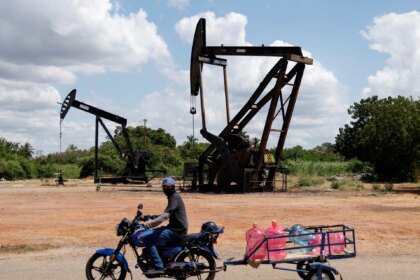
According to the Central Bank of Venezuela, the value of Venezuelan gold reserves held by the Bank of England is estimated at approximately two billion dollars.
This file is considered one of the most complex frozen assets files, as it was linked to the international dispute over political recognition of the Venezuelan government, which led to judicial disputes that lasted for years regarding the entity authorized to dispose of these reserves.
In return, the United States and other Western countries hold assets and funds belonging to North Korea, Cuba, Libya, and Iraq under various sanctions regimes imposed in successive decades.
Official Iraqi data published in 2021 indicate that the value of Iraqi funds frozen abroad amounts to about one billion and 417 million dollars.
In the Libyan case, the frozen assets are among the largest outstanding sovereign wealth files in the world. According to a study issued by The Sentry, based on an evaluation conducted by Deloitte in 2020, the value of assets amounts to about 62.85 billion dollars, of which between 40 and 43 billion dollars are subject to freezing under international sanctions imposed since 2011, while other assets worth between 20 and 23 billion dollars remain outside the scope of the freeze.

Uzbekistan
In 2012, Switzerland froze about $842 million during investigations targeting Gulnara Karimova, the daughter of the late Uzbek President Islam Karimov, who was accused by authorities in several countries of exploiting her influence to obtain bribes worth hundreds of millions of dollars from foreign telecommunications companies in exchange for facilitating their entry into the Uzbek market.
After Karimova was convicted in Uzbekistan in 2017 and the issuance of judicial rulings against her, long negotiations began between Tashkent and Bern regarding the fate of the frozen funds. Instead of returning them directly to the Uzbek government, Switzerland agreed in 2022 to transfer part of it to a trust fund managed by the United Nations, and $131 million was transferred in the first phase, before another $182 million was added in 2025.
According to the United Nations, the fund is subject to a multi-level oversight system that includes representatives of the Swiss and Uzbek governments, in addition to the United Nations, independent experts and civil society organizations, with the aim of ensuring that funds are directed to development and service projects that directly benefit citizens.
Who benefits from frozen funds?
According to studies issued by research centers and international financial institutions, host countries do not achieve direct gains from the frozen funds, but they benefit from the returns resulting from their investment and from the taxes imposed on those returns, in addition to strengthening the position of their global financial centers.
The banks and financial institutions incubating these funds also benefit from the fees and returns associated with their management, which explains part of the growing legal and political controversy over the future of frozen assets and the limits of their disposal.