Tehran – Nearly 100 days after the strikes on Iran and the outbreak of war in the region, the questions at the current stage focus on Tehran’s way of managing the post-war files:
- Political leadership website
- Limits of the role of military and security institutions
- The fate of the nuclear program
- The state’s ability to deal with economic pressures and reconstruction.
Official Iranian institutions present the current stage through titles related to “national unity,” “national security,” and “resistance economy.” The message of the new Iranian leader, Mojtaba Khamenei, on the occasion of the Iranian New Year 1405, named the year “Economy of Resistance in light of national unity and national security.” The message spoke about the crises and wars that the country witnessed in the previous year, and the necessity of maintaining internal cohesion.

Leading the country
Officially, the supreme religious and political leadership is in the hands of Mojtaba Khamenei, the son of the late guide Ali Khamenei, who was assassinated on the first days of the war on February 28. In his Nowruz message, Mojtaba Khamenei presented the issues of the economy, security, and internal unity as the priorities of the new phase.
In light of the leadership transition after the war, a question arose about the position of the Revolutionary Guard within Iranian decision-making, and whether the center of decision-making had moved from the leadership office to the military institution. However, in his interview with Al Jazeera Net, journalist and political analyst Reda Ghabishawi rejects this hypothesis, and believes that it is not based on the constitutional and political structure of the Islamic Republic.
Ghabishawi says that the guide, according to the constitution and political framework in Iran, remains the highest authority in the country, and possesses pivotal powers that include declaring war and peace, appointing senior military commanders in the army and the Revolutionary Guard, and making the final decision regarding the aims of the Supreme National Security Council.
He adds that the Revolutionary Guard itself is part of the structure subject to the Guide, and that the appointment of its leaders is made by a decision of the Guide, and therefore he does not see evidence of the transfer of the decision-making center from the leadership to the Guard in the sense of replacing it.
As for the comparison between the authority of Ali Khamenei and the authority of the current leadership, Ghubaishawi believes that it is still too early to make this comparison, as only a few months have passed since the beginning of Mojtaba Khamenei’s leadership, and therefore, in his opinion, there are not yet sufficient indicators to judge the differences between the two stages.
Regarding whether the role of the president and the government declined after the strikes, Ghabishawi says that there is no news or specific facts proving that such a decline occurred. However, he considers that the regime appears more cohesive, while acknowledging the existence of a degree of ambiguity imposed by the security conditions and the continuation of the unnatural state of war, explaining that complete transparency is not possible in such circumstances.

Nuclear programme
In the nuclear file, questions focus on the extent of the damage to the facilities, and the fate of the highly enriched uranium stock. Reuters reported, based on a report by the International Atomic Energy Agency, that the agency was unable to access the nuclear sites that were bombed, and that Iran has not yet provided sufficient information regarding the location or status of its stockpile of enriched uranium, including uranium enriched up to 60%.
The Associated Press also reported, based on a confidential agency report, that the agency cannot verify Iran’s current stockpile, its composition or location, and cannot confirm whether enrichment activities have stopped. It stated that Iran’s previously declared stock of 60% enriched uranium amounted to 440.9 kilograms.
These data come at a time when, according to Reuters, the United States of America pushed a draft resolution within the Board of Governors of the International Atomic Energy Agency demanding that Iran disclose information related to the sites that were bombed and the uranium stock that was stored there.
Deferred agreement
In parallel with the nuclear ambiguity, the negotiation path between Tehran and Washington remained open without reaching a final agreement. US President Donald Trump said, in an interview with NBC, the details of which were published by Reuters on Sunday, June 7, that he would not release Iranian assets or ease sanctions before concluding an agreement with Iran, indicating that any step of this kind must come after an agreement is reached and Iranian behavior improves.
At the same time, the United States pushed within the Board of Governors of the International Atomic Energy Agency a draft resolution requiring Iran to disclose information related to the nuclear sites that were bombed and the stock of uranium that was stored there, a step that Reuters said could complicate the course of talks between Washington and Tehran.
Internal control
Internally, the post-war phase appears to be governed by a combination of mobilization, pressure, and instability. On the one hand, the Iranian official discourse links the post-strike files to internal cohesion and national security, as the Iranian Leader’s message on the occasion of the New Year repeatedly talked about national unity and the need to avoid what might lead to internal division.
The same message also focused on the economic dimension, considering that citizens’ livelihood, infrastructure, well-being, and production lie at the heart of the confrontation with what Tehran calls “economic war.”
On the street, nightly pro-regime gatherings reflect part of the popular mobilization. One of the participants in a night gathering in Tehran said, in a testimony obtained by Al Jazeera Net, that his presence came “in support of the country in the face of war and external pressures,” adding that “this stage is not a time for division, but rather a time to stand with the state until it overcomes the crisis.”
But this picture does not negate the presence of other voices within society that say they have been greatly affected by the war and its economic and living repercussions.
A Tehran resident said, in a testimony obtained by Al Jazeera Net, that the war “changed people’s daily lives, raised prices, and increased fear of the future,” adding that many citizens “want an agreement that reduces pressure, because people can no longer tolerate more tension.”
In another testimony obtained by Al Jazeera Net, a young man from Tehran says that the security grip has become more clear after the war, and that “people speak more cautiously, and movement in the street is no longer what it was,” considering that the continuation of the current situation “increases people’s feelings of instability, even if this does not appear in large-scale protests.”
Between an official discourse focusing on unity and steadfastness, and a social mood varying between support, exhaustion, and anxiety, the Iranian interior remains under compound pressure: the effects of war, a decline in purchasing power, and a security tightening that the authorities justify by the necessities of the stage, while critics see it as an additional factor in deepening the feeling of instability.

Inflation pressure
On the economic level, inflation and exchange rate indicators show the extent of the pressures facing Iran after the war. According to free exchange market data published by the “Benbest” website, the selling price of the dollar today, June 7, reached about 177,600 tomans, noting that prices are published in tomans, and that each toman is equal to 10 riyals.
In his reading of the economic scene, economist Isaac Saedian, speaking to Al Jazeera Net, believes that the Iranian economy has entered a sensitive phase in which high levels of inflation, the decline in the value of the riyal, sanctions, and regional tensions coincide, which increases the pressure on citizens’ livelihoods and the stability of markets.
Saeedian believes that the arrival of inflation to levels approaching 50 to 60% indicates that the economy has entered a chronic stage of instability, as price increases are no longer the result of only temporary shocks, but rather have become linked to inflationary expectations and a crisis financial and monetary structure.
He adds that the decline in the value of the national currency cannot be explained by the war or recent security tensions alone, although these factors accelerate the crisis and increase its severity.
According to him, deeper factors, such as chronic budget deficits, liquidity growth, restrictions imposed on foreign resources due to sanctions, and fluctuations in monetary policies and the exchange rate, play the primary role in weakening the riyal.
Saeedian says that the war may accelerate the crisis, but its roots lie in the structure of the Iranian economy itself.
He believes that the government faces a difficult equation of financing reconstruction, social support and financial obligations, while at the same time controlling the currency market and curbing inflation.
He points out that the experiences of similar economies show that these two goals often conflict in the absence of sustainable resources, as financial pressure on the state can lead to an expansion of the budget deficit, and then fuel a new wave of inflation.
Regarding which is more dangerous, inflation or a shortage of foreign currency, Saeedian says that the answer is not simple, but inflation appears, from the perspective of daily life, to be the most direct and tangible danger, because it affects purchasing power, savings, and the cost of living. As for the shortage of foreign currency, it first appears at the aggregate level, but is later transmitted to prices through the rise in the price of the dollar.
He adds that the two phenomena are not separate, but rather form one episode in which each party reinforces the other.
Saeedian believes that any political agreement or reduction in external tension could quickly be reflected in the exchange rate and inflation expectations in the short term, but he stresses that this effect remains mostly psychological and temporary, and is not sufficient alone to produce sustainable stability.
He says that the market will not reach long-term equilibrium unless improving external relations is accompanied by structural reforms in the budget, the banking system, monetary policy, and the production sector.
He concludes that the Iranian economy stands at a point where political, monetary, and financial variables are closely intertwined, such that any decision in one of these files can quickly be reflected in the entire economy.

Reconstruction
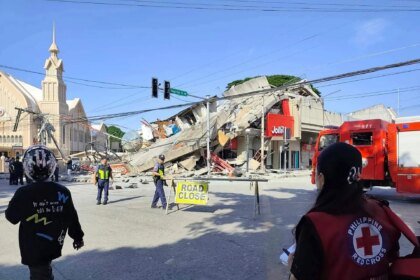
In the reconstruction file, Iranian authorities say that restoration operations for war-damaged units are underway. IRNA reported in May that the Tehran Municipality announced that the status of about 50,000 housing units damaged in the war had been determined, within the framework of the reconstruction file.
The Iranian government also published a report on a meeting to follow up on accelerating the rebuilding of units affected by the war, which included discussing the damages, operational challenges, compensation mechanisms, and accelerating relevant decisions.
The cost of recovery remains linked to the general economic situation. According to economist Isaac Saedian’s reading, financing reconstruction and social support in light of inflation, deficit, and lack of foreign resources may put the government under additional financial pressure.
Resilience test
100 days after the strikes, the Iranian authorities present an image of a country that continues to manage its institutions, and is pursuing the files of leadership, the nuclear program, reconstruction, and the economy.
On the other hand, the published data highlights clear pressures in the exchange rate, ongoing questions regarding the status of nuclear facilities and uranium stocks, and existing risks if the negotiating path falters.
While Reza Ghubishawi asserts that the constitutional structure does not support the hypothesis of the transfer of the decision-making center from the leadership to the Revolutionary Guards, Isaac Saedian believes that the Iranian economy is facing a crisis deeper than the effects of the war alone, linked to financial, monetary, and structural factors that have accumulated over the past years.
Between an official speech focusing on unity and reconstruction, and economic and nuclear data that keep the questions of this stage open, Iran appears, after 100 days, facing a long management test:
How do you maintain state order, deal with a pressing nuclear issue, and at the same time reduce the cost of war on the economy and society?