Published On 4/28/2026
Navigation traffic in the Strait of Hormuz is witnessing a sharp decline, in light of the escalation of tension between the United States and Iran, as reports indicate that the number of ships passing through has decreased to unprecedented levels since the outbreak of the crisis.
Despite the announcement of the crossing of a Japanese oil tanker in coordination with Tehran, field data indicate a different reality, as the strait has become “almost closed” in practice, with limited crossing of between 5 and 8 ships per day, compared to 135 and 145 ships before the crisis.
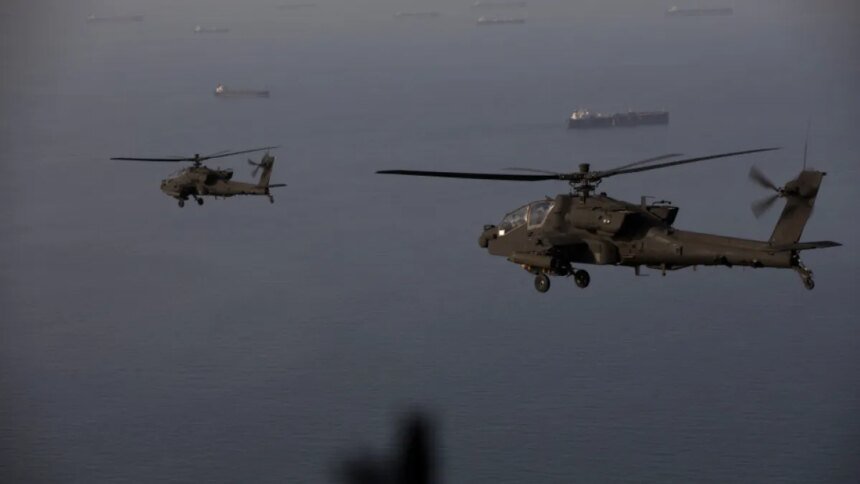
This decline comes in the context of a double blockade, imposed by Washington on the one hand by preventing and intercepting dozens of ships, and is matched by Iranian field measures that include detaining ships and shooting at others, which reflects a state of complex escalation affecting one of the most important arteries of global trade.
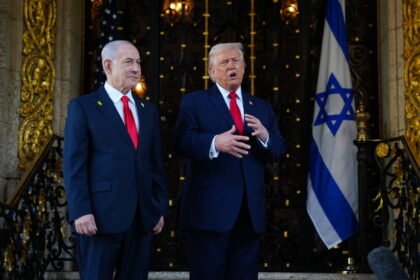
In the midst of these developments, statements by US President Donald Trump emerged in which he considered that his country “does not need” the Strait of Hormuz, calling on those who depend on it to defend it.
However, this rhetoric contradicts the increasing US military movements in the region, including sending ships specialized in clearing mines and strengthening the naval presence.
This contradiction reflects a clear gap between political discourse and strategic reality, as the data confirm that Washington deals with the Strait as a security and economic priority that cannot be neglected.
Why does Washington need the Strait of Hormuz?
In this context, the expert in strategic affairs and maritime security, Major General Muhammad Abdel Wahed, said that the United States “is in dire need of this strait,” explaining that its importance is not limited to being a corridor for transporting oil, but rather extends to being part of an international geopolitical game.
He added in his speech to Al Jazeera, “This strait is not only considered a regional oil corridor, but rather it is part of an international geopolitical game to control narrow points, that is, control of international trade,” pointing out that it represents an arena of competition between the United States and China over sea lanes.
He also pointed out that Washington realizes that any disturbance in the Strait leads to a rise in oil prices and affects the financial markets, which puts international pressure on it, in addition to its obligations towards its allies in the Gulf and its keenness to secure its military presence, especially the Fifth Fleet.
On the other hand, Abdul Wahid pointed out that Iran “caught up” on this American awareness of the importance of the Strait, and invested in it by presenting proposals through mediators, stipulating the complete opening of the Strait in exchange for stopping the war, lifting the blockade, and postponing the discussion of the nuclear file.
He explained that this proposal reflects Tehran’s awareness of the extent of the pressure that the Strait represents on the United States, at a time when the American administration is facing internal criticism and pressure from its allies.
Conflicting statements
In turn, our colleague Abdul Qader Aradah reviewed Trump’s recent statements in which he said that “Iran is collapsing” and that it is calling for the opening of the Strait, while Tehran confirmed that it has complete control over the Strait, indicating that the Revolutionary Guard is responsible for securing the western side, while the Iranian army is responsible for the eastern side.
Arada stated that the strait is currently witnessing a naval blockade, as Iran faces restrictions preventing its ships from entering or exiting. In this context, he referred to what was reported by Bloomberg regarding the monitoring of about 8 oil tankers via satellite in the strategic port of Chabahar, suggesting that these tankers are in the process of loading Iranian oil, despite their position near the scope of the American blockade.
In a remarkable development, Arada pointed out that the Japanese oil tanker “Idemitsu” had crossed the Strait of Hormuz, in a move described as rare under the current circumstances.
On the other hand, he pointed out that the US Central Command announced preventing an Iranian ship called “Stream” from continuing its course, as part of broader operations that included preventing about 38 cargo ships and oil tankers, according to official figures.
Arada touched on the escalation of talk about ship escort and mine clearance operations, explaining that the US Secretary of Energy stated the possibility of opening the strait without removing all the mines, which reflects the complexity and sensitivity of this issue, in light of the exchange of statements between Washington and Tehran regarding it.
In the same context, he referred to American military reinforcements, including the amphibious helicopter-carrying ship “Miguel Keith,” which moved to the Arabian Sea and is tasked with detecting and clearing mines.