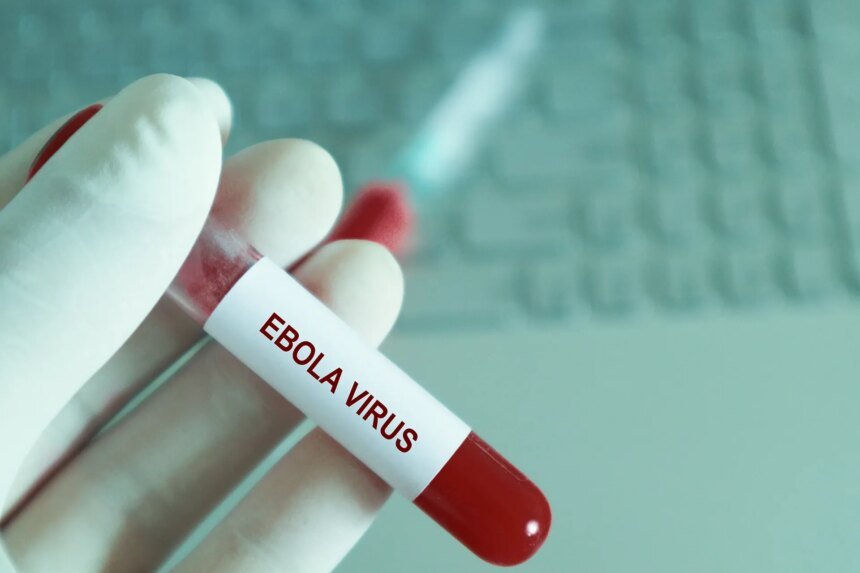
Highly dangerous viruses that infect humans, and the average death rate due to them is about 50%. The majority of recorded cases and outbreaks occurred in sub-Saharan African countries, so types of this virus were named by their names.
Ebola viruses are transmitted through contact between various bodily fluids, such as blood and saliva, or contact with contaminated surfaces and tools. It is not transmitted through the air like the influenza virus, and the infected person is not contagious until symptoms appear. Its symptoms begin in the form of fever and severe fatigue, and in its advanced stages, it may lead to deterioration of liver and kidney functions.
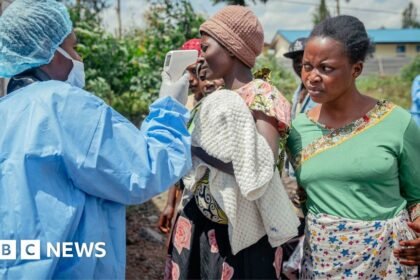
An outbreak of the disease was reported in the Democratic Republic of the Congo and Uganda in 2026, prompting international health authorities to declare a public health emergency, raising concerns, especially with the participation of the Democratic Republic of Congo in the World Cup tournament held in three countries: the United States, Canada and Mexico.
Ebola viruses
Ebola viruses are scientifically known as “Orthoebolaviruses”, and they are among the most deadly pathogenic viruses in humans, due to their high ability to cause severe disease and high mortality rates.
These viruses belong to the family of filoviruses (Filoviridae), and include several species, four of which have been proven to infect humans: Ebola virus (Zaire), Sudan virus, Tai Forest virus, and Bundibugyo virus.
There are also other types, such as the Reston virus, which infects monkeys and pigs, and the Bombali virus, which was discovered in bats, but they have not been proven to cause human diseases.

The virus is transmitted from one person to another through contact with blood or various body fluids, such as saliva, vomit, feces, and semen, or through contact with surfaces and tools contaminated with these secretions. It is not transmitted through the air like the influenza virus, and the infected person does not become contagious until symptoms appear.
Ebola virus disease is classified as a very dangerous disease, as the average death rate resulting from it is about 50%, while in some outbreaks the rate reached about 90%. The majority of recorded cases and outbreaks are concentrated in sub-Saharan Africa, where the region has witnessed some of the largest epidemics associated with the disease.
One of the characteristics of the Ebola virus is its ability to remain inside the body even after clinical recovery. Studies have shown that it can continue to be present in semen for periods of up to 15 months after recovery. It can also remain in breast milk and the placenta, which poses additional challenges to efforts to combat transmission of the infection and prevent the emergence of new cases.

Infection and spread
The Ebola virus was first discovered in 1976 in two simultaneous outbreaks of hemorrhagic fever in Central Africa. The first outbreak occurred in the city of Nzara in Sudan, which later became located within the territory of South Sudan, and was caused by the type known as the Sudan virus. The second outbreak occurred in the village of Yambuku in the Democratic Republic of the Congo (formerly Zaire), and was caused by the Zaire type of Ebola virus. The virus’s name was derived from the Ebola River near the outbreak area in the Democratic Republic of the Congo, and since then several African countries have witnessed repeated waves of the disease’s spread.
The outbreak that struck West Africa between 2014 and 2016 is considered the largest and most deadly in the history of the disease. It began in rural areas of the Republic of Guinea before quickly spreading to Liberia and Sierra Leone. Limited cases were also recorded in other countries as a result of infected people traveling there, including Nigeria, Mali, and the United States.
This epidemic resulted in more than 28.6 thousand infections and 11.3 thousand deaths, and was caused by the Zaire type Ebola virus, which is known for its high death rate.
Several factors contributed to the worsening of the West African crisis, including weak health control systems, fragile health care infrastructure, and lack of infection control measures.
In light of the seriousness of the situation, the World Health Organization declared in August 2014 a public health emergency that raised international concern, before the epidemic was officially declared over in June 2016.

The Democratic Republic of the Congo witnessed another major outbreak between 2018 and 2020, with about 3,470 cases recorded, but its size remained much smaller than the West African epidemic.
In 2026, a new outbreak was reported in the Democratic Republic of the Congo and Uganda caused by Bendibugyo virus, a species known to cause large outbreaks. This prompted international health authorities to declare a public health emergency in May 2026, and launch a series of international measures, recommendations, and joint response plans to limit the spread of the virus, especially with the participation of the Democratic Republic of Congo in the World Cup tournament held in three countries: the United States, Canada, and Mexico.
Symptoms
Symptoms of Ebola virus disease appear after an incubation period of 2 to 21 days, with an average of 8 to 10 days.
The infection usually begins with general and sudden symptoms, including fever, high temperature, extreme fatigue, muscle and joint pain, headache, and sore throat. As the disease develops, the condition moves to a more serious stage in which symptoms of vomiting, diarrhea, abdominal pain, and skin rash appear.
In advanced stages, the virus may lead to severe complications, including deterioration of liver and kidney functions, in addition to neurological disorders such as confusion and irritability. Some patients may also suffer from internal or external bleeding that appears in the form of bleeding from the nose or gums, or the presence of blood in vomit and stool.

Vaccines
In terms of prevention, the vaccines approved until 2026 are limited to the Ebola virus of the Zaire type (Orthoebolavirus zairense), which is the type responsible for most major outbreaks.
The ERVEBO vaccine is the most prominent of these vaccines, as it has been approved by health regulatory authorities and is widely used to respond to outbreaks and limit the spread of infection. Other approved vaccines are also available, including Zabdeno and Mvabea, which were developed to prevent the same type of virus.
In contrast, vaccines for other types, such as Sudan virus and Bendibugyo virus, are still in the research, development and clinical trial stages.